
Subaru's switch to CVTs was primarily driven by their fuel-economy benefits and the smooth, linear acceleration they offer. Their lightweight and compact design translates to lower manufacturing costs. This early adoption of CVT technology made for an attractive proposition in a market dominated by traditional automatics.
The modern Lineartronic version debuted in the fifth-generation Legacy back in 2010, replacing a belt, chain, and pulley system with a more efficient belt, chain, and pulley system designed to deliver better performance and drivetrain efficiency. Subaru's CVTs have become an integral part of their lineup, offering improved fuel economy and reduced emissions.
Subaru's Lineartronic technology comes in two basic flavors, the TR580 and TR690, with the latter being physically larger and designed for heavy-duty applications. The technology found its way into nearly all automatic Subarus by 2014, with Subaru starting to offer it as a sole option on certain models in 2015.
The shift towards CVTs has been a significant change for Subaru, offering improved fuel efficiency and reduced emissions. However, this transition has also led to some reliability issues, particularly with early TR690 versions, which were known to have torque converter clutch failures.
Some of the common reported Subaru CVT issues include shuddering, stalling, overheating, hesitation to accelerate, and a high-pitched whining noise. Early TR690 versions were particularly prone to these problems, but modern models have largely addressed these concerns. Despite these challenges, CVTs remain a popular choice for Subaru due to their fuel economy benefits.
Subaru's decision to switch to CVTs has had a significant impact on the market, offering consumers improved fuel efficiency and reduced emissions. The technology has become an integral part of Subaru's lineup, with nearly all automatic models featuring Lineartronic transmissions.
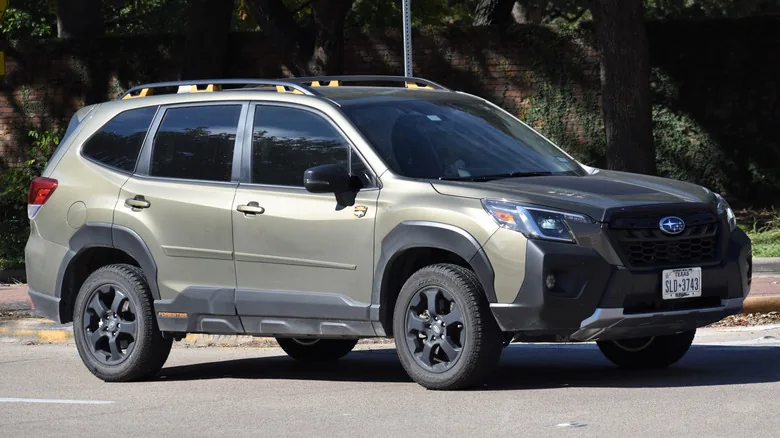
The shift towards CVTs has also led to changes in manufacturing costs, as Subaru's lightweight and compact design reduces production expenses. This cost savings is passed on to consumers, making Subaru models more competitive in the market.
As Subaru continues to evolve its CVT technology, it remains to be seen whether these benefits will outweigh any potential drawbacks. However, one thing is clear: Subaru's CVTs have revolutionized the way they approach fuel efficiency and drivetrain performance.
The shift towards CVTs has been a game-changer for Subaru, offering improved fuel efficiency and reduced emissions.