


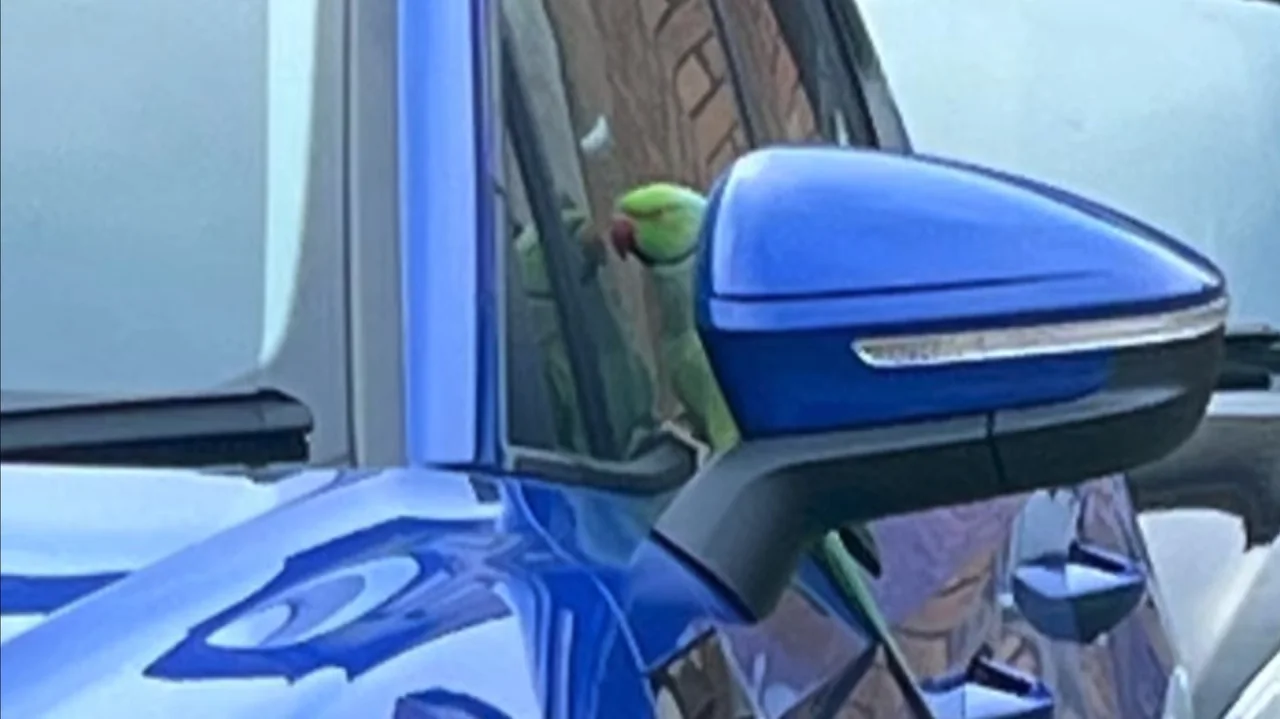
The residents of Lochardil, Inverness, are facing an unexpected challenge as a rogue parakeet has been wreaking havoc on their vehicles. The little green-feathered bird has been pecking away at window seals and rubbery parts of windshield wipers, causing thousands of pounds in estimated damages. This brazen behavior has left the community scratching its head, wondering what could be driving this bird's destructive antics.
The parakeet's actions have made it a local nemesis, with residents referring to it as a 'menace' and even using the word 'parakeet' as if it were a forbidden term. The bird's behavior is not just limited to its attacks on vehicles; it also seems to be targeting cars in stints, disappearing for weeks before returning to continue its destructive campaign.
Despite efforts by nature experts to identify the cause of the parakeet's behavior, the Royal Society for the Protection of Birds (RSPB) has confirmed that the bird is a naturalized parrot, common in London and southeastern parts of the UK. However, it is believed to be an escaped pet, which could explain its presence in Scotland.
The RSPB has offered several theories as to why the parakeet might be eating or dismantling the rubber parts of cars, including territorial behavior and a desire for fats and minerals. While these explanations may seem plausible, they also raise questions about the bird's cognitive abilities and motivations.
Manufacturers have made concessions in recent years to use natural products in their rubbers and plastics, which could potentially explain the parakeet's attraction to these materials. For example, soy-based products are now commonly used in car wiring sheathing, a favorite among mice.
In the meantime, residents are left to deal with the consequences of the parakeet's actions. Some have turned to innovative solutions such as covering their cars with tarps or brushing peppermint oil into the rubber, which seems to repel the bird.
The feral parakeet's behavior is a reminder of the complexities of human-wildlife interactions and the need for effective management strategies. As the situation continues to unfold, it will be interesting to see how the community responds to this unexpected challenge.
Meanwhile, the estimated damages caused by the parakeet's actions are likely to continue mounting, with residents facing significant costs to repair their vehicles. This incident highlights the importance of being prepared for the unexpected in our increasingly urbanized environment.
As the situation remains unresolved, one thing is clear: the feral parakeet has become a local legend, with its name becoming synonymous with mischief and mayhem in the Scottish suburb of Lochardil.
The feral parakeet's behavior is a reminder of the complexities of human-wildlife interactions.