

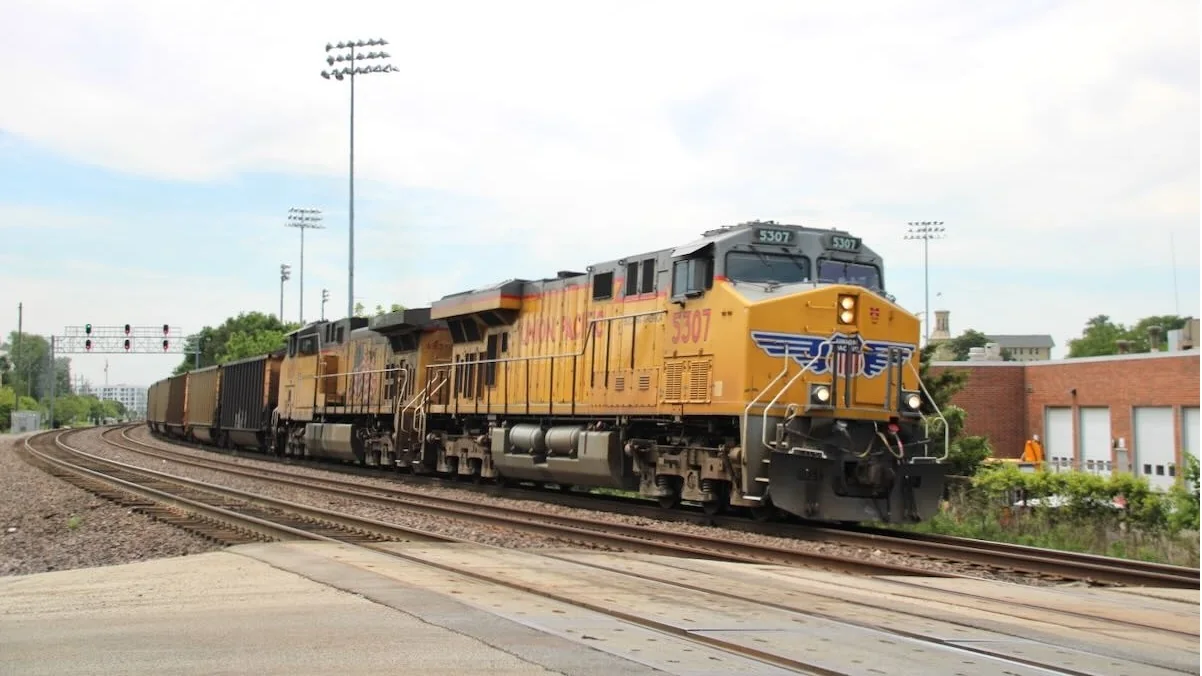
Union Pacific Corporation, a leading railroad company in the US, has made it clear that it does not need any financial assistance from the federal government to complete its $85 billion merger with Norfolk Southern. According to Jim Vena, the CEO of Union Pacific, the company is confident in its ability to handle the costs associated with the deal.
The statement comes after President Donald Trump had raised the possibility of the government acquiring a stake in the railroad as part of the merger in a May interview with Fortune magazine. However, Trump did not mention Union Pacific or Norfolk Southern by name. Vena's comments suggest that the company is taking a cautious approach to the potential involvement of the government.
Despite this, Vena expressed his appreciation for Trump's interest in the deal, stating that it was comforting to see the President's support. He also noted that he had not received any direct communication from the White House regarding the idea of the government becoming a partner.

The US government has been actively involved in investing in various companies through direct ownership deals since January 2025. According to the Council on Foreign Relations, these investments total almost $21 billion across 16 deals involving direct ownership. These include stakes in chip maker Intel and nuclear power specialist Westinghouse.
The recent surge in government involvement in the rail industry has raised questions about the potential impact of such investments on the sector's future. With Union Pacific's rejection of government investment, it remains to be seen how this will shape the trajectory of mergers and acquisitions in the industry.
In related news, the US Senate has endorsed a 25-year-old rule for rail merger review, which aims to ensure that any potential deal is thoroughly examined before approval. This move may further increase scrutiny on Union Pacific's merger with Norfolk Southern.
Meanwhile, the rail freight category continues to experience double-digit growth, driven largely by the rise of trucking. However, this trend may be subject to fluctuations in the coming months due to various factors affecting the industry.
As the rail industry continues to evolve, it is essential for companies like Union Pacific to stay adaptable and responsive to changing market conditions. With its rejection of government investment, the company has demonstrated its commitment to self-sufficiency.
The future of government involvement in mergers and acquisitions remains uncertain, but one thing is clear: the rail industry will continue to be shaped by a complex interplay of economic, regulatory, and technological factors.
In conclusion, Union Pacific's decision not to accept government investment in its merger with Norfolk Southern sends a clear message about the company's confidence in its ability to navigate the challenges of the rail industry. As the sector continues to evolve, it will be fascinating to see how this move impacts the future of mergers and acquisitions.
This move may impact the future of government involvement in rail mergers.