
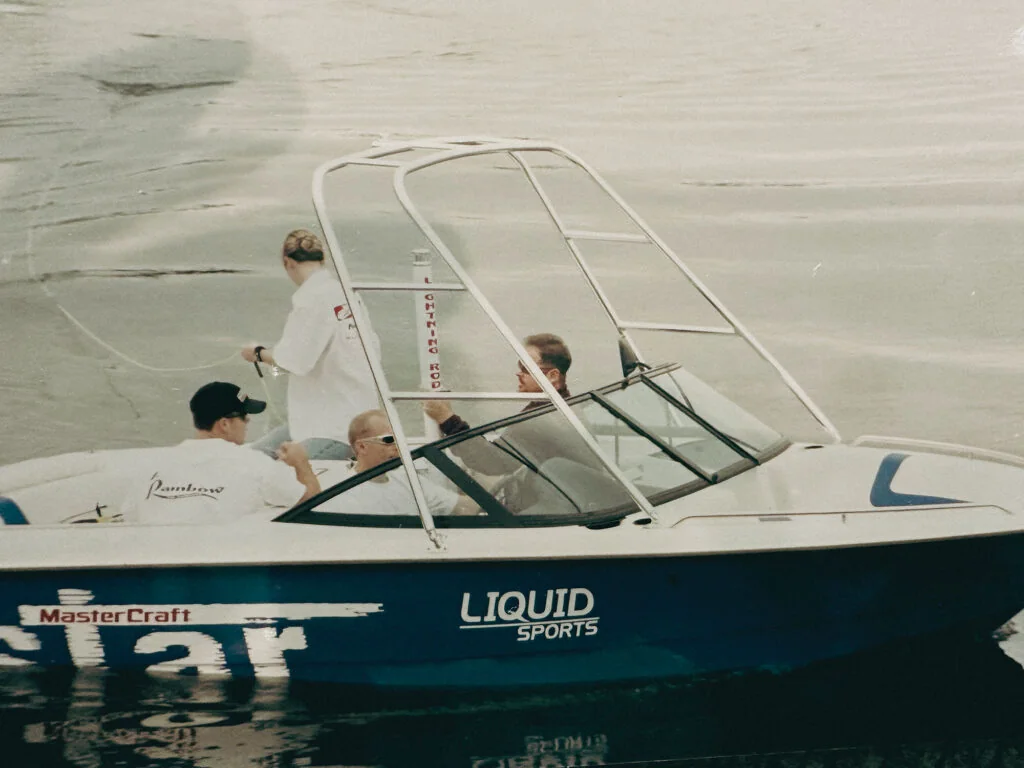
Wakeboard towers have undergone significant transformations since their inception in the 1990s. The first tower was developed by Mark Watts, a MasterCraft dealer and enthusiast from Orlando, Florida. This early structure consisted of an aluminum pipe fabrication with four legs, serving as a basic attachment point for the towline. Over the past three decades, this fundamental concept has remained unchanged, but the style and features have undergone substantial evolution.
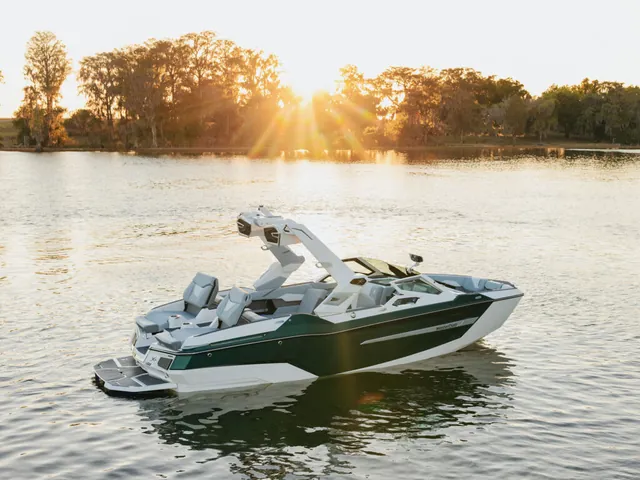
The original wakeboard tower was a far cry from the sophisticated design elements seen today. Mark Watts' early innovation paved the way for more advanced structures that not only provide an elevated point of attachment but also integrate luxury amenities and cutting-edge technology. Modern towers often feature telescoping legs, integrated sunshades, LED ambient lighting, logo projection, swiveling 'board racks, and high-quality audio systems.
The development of wakeboard towers is a testament to the innovation and entrepreneurial spirit of watersports enthusiasts like Tony Finn. Finn's serial entrepreneurship played a significant role in popularizing 'skiboarding' through his marketing efforts for the Skurfer, a roto-molded mini surfboard equipped with elastic foot straps.
Tony Finn's introduction of the pylon extension in 1995 marked a significant milestone in wakeboard tower design. This adjustable structure raised the towline to enable passengers to be placed in the rear of the boat, while also providing upward pull to help riders become airborne.
The evolution of wakeboard towers has been shaped by various manufacturers and innovators. Correct Craft earned the utility patent for its Flight Control Tower in 1999, while Barefoot International offered a similar pylon extension called Fly High.
The early adopters of wakeboard towers were often watersports enthusiasts who experimented with different designs and materials. Tom King, a Water Ski Hall of Fame photographer, recalls that budding 'board pros Dave Reinhart and Dean Lavelle asked him to attach a towline to the tower of his photo boat and pull them during lunch breaks at WaterSki magazine's boat tests.
The development of wakeboard towers has not only been driven by innovation but also by practical considerations. The initial designs were often braced with cables and straps, which required adjustments depending on the type of boat or towline used.
Today, wakeboard towers are an integral part of the watersports experience, offering a range of luxury amenities and advanced technology. As the industry continues to evolve, it will be interesting to see how these structures adapt to changing demands and technological advancements.
The evolution of the wakeboard tower reflects the growth and sophistication of the watersports industry, driven by innovators like Mark Watts and Tony Finn. As the sport continues to gain popularity, we can expect to see even more advanced designs and features that enhance the overall experience for riders.
The evolution of the wakeboard tower reflects the growth and sophistication of the watersports industry.