


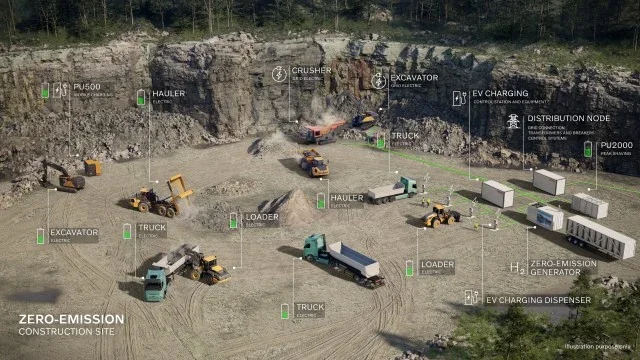
Volvo CE has announced a significant partnership with Hitachi Energy to accelerate the transition to zero-emission construction sites. The two companies have signed a Memorandum of Understanding (MoU) aimed at simplifying the process of adopting emission-free operations on construction sites. This move is part of Volvo CE's broader strategy to reduce its environmental impact and contribute to a more sustainable future.
Zero-emission construction requires a comprehensive approach that involves not only the adoption of electric machines but also the integration of electrical infrastructure, energy management systems, and other technologies. The partnership between Volvo CE and Hitachi Energy aims to provide customers with a complete, integrated solution that addresses these complexities. By doing so, the companies hope to give customers the confidence and security needed to adopt emission-free operations on construction sites.
The transition to zero-emission construction is crucial for reducing greenhouse gas emissions in the construction sector. According to industry estimates, the adoption of electric machines and other low-carbon technologies can help reduce emissions by up to 90% compared to traditional fossil fuel-based equipment. Volvo CE and Hitachi Energy's partnership is an important step towards achieving this goal.
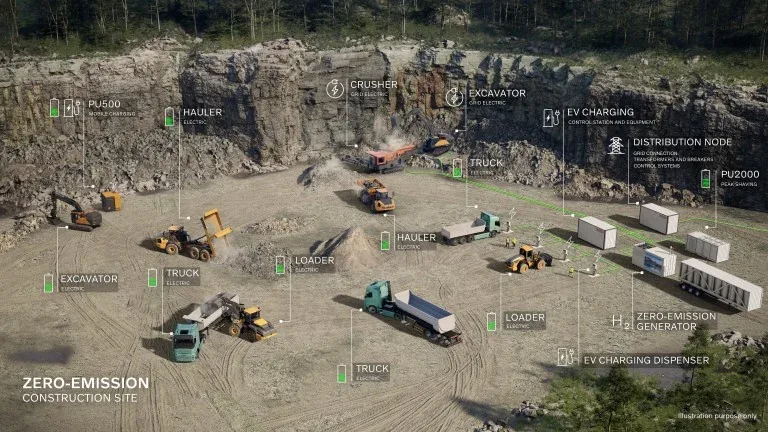
The partnership between Volvo CE and Hitachi Energy will focus on providing practical, plug-and-play solutions for customers. The companies aim to simplify the transition process by offering easy-to-use machines, electrical infrastructure, and energy management systems that can be integrated seamlessly. This approach will help customers reduce their environmental impact while also improving operational efficiency.
Beyond the initial focus on business-oriented solutions, the partnership between Volvo CE and Hitachi Energy aims to establish a deeper technical engagement over time. The companies plan to explore more advanced capabilities, including connected machines, digital integration, and expanded service offerings. This will enable customers to take advantage of the latest technologies and improve their overall performance.
The collaboration between Volvo CE and Hitachi Energy is a significant step towards enabling zero-emission construction at scale. By working together, the companies can share knowledge, expertise, and resources to accelerate the adoption of low-carbon technologies in the construction sector. This partnership has the potential to transform the industry and contribute to a more sustainable future.
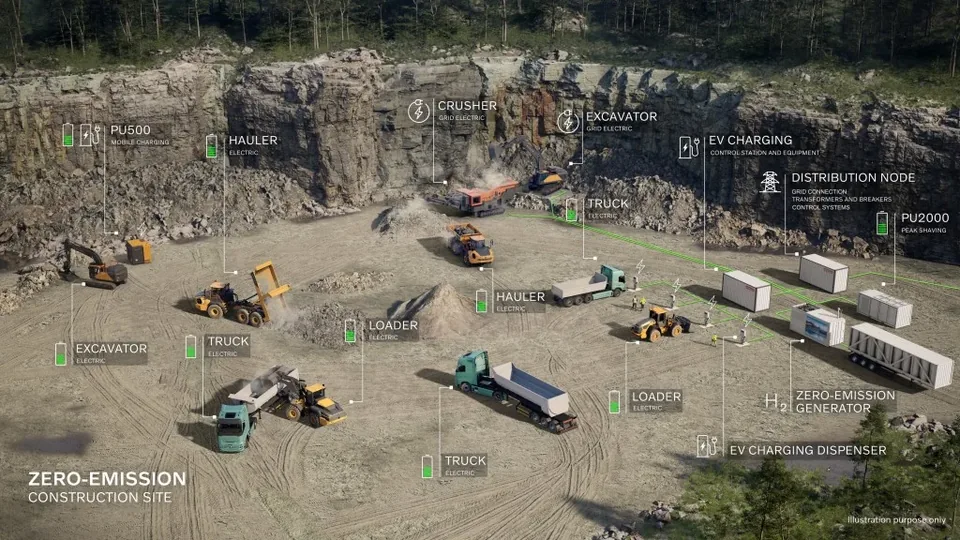
The success of the partnership between Volvo CE and Hitachi Energy depends on the ability of individual technologies to work together seamlessly. The companies recognize that system-level integration, strong execution, and close collaboration with partners are essential for achieving success in zero-emission construction. By working together, they can overcome the complexities associated with this transition and create a more sustainable future.
The partnership between Volvo CE and Hitachi Energy is a testament to the growing importance of sustainability in the construction industry. As consumers become increasingly environmentally conscious, companies must respond by adopting low-carbon technologies and reducing their environmental impact. The success of this partnership will depend on its ability to deliver practical solutions that meet the needs of customers while also contributing to a more sustainable future.
The adoption of zero-emission technologies in the construction sector is a critical step towards reducing greenhouse gas emissions and mitigating climate change. Volvo CE and Hitachi Energy's partnership has the potential to make a significant impact on this issue, and their collaboration will be closely watched by industry stakeholders and environmental advocates alike.

Strategic partnerships are crucial for accelerating the adoption of zero-emission technologies in construction.


