

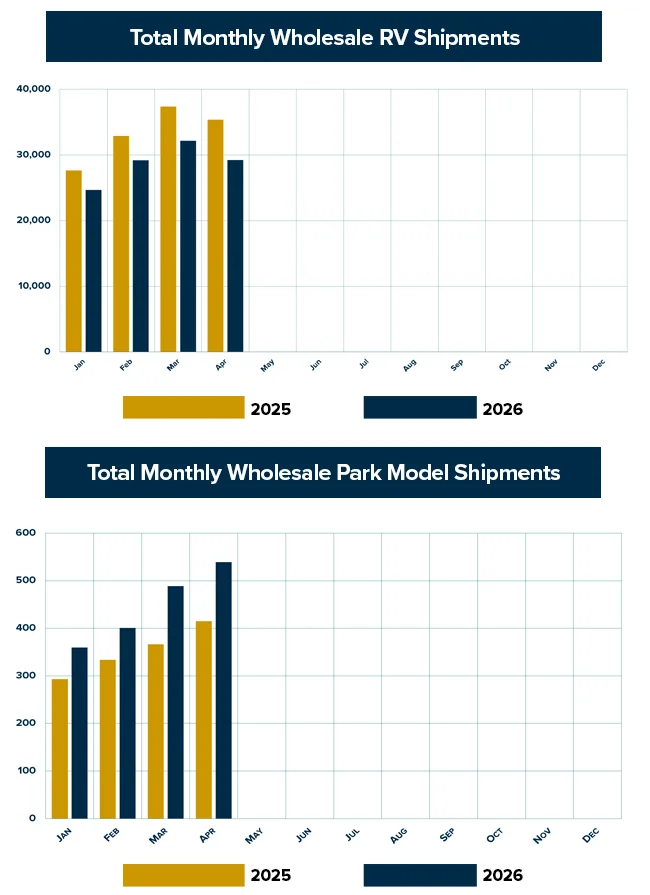
The RV Industry Association's April survey revealed a significant decline in total RV shipments, with 29,209 units shipped in the month compared to 35,375 last year. This represents a decrease of 17.4% from the same period last year. The decline is attributed to various factors, including market volatility and changing consumer preferences.
The year-to-date RV shipments are also showing a downward trend, with 115,260 units shipped through the first four months compared to 133,223 last year. This represents a decrease of 13.5% from the same period last year. The decline in year-to-date shipments may be attributed to the ongoing market volatility and changing consumer preferences.
However, motorhomes showed an increase of 13.0% compared to the same month last year, with 3,833 units shipped. This suggests that there is still demand for motorhomes, despite the overall decline in RV shipments. The growth in motorhome shipments may be attributed to the increasing popularity of long-distance travel and outdoor adventures.
The park model RV segment also showed a significant increase, with 539 wholesale shipments in March compared to 405 last year. This represents a growth rate of 29.9% from the same period last year. The growth in park model RV shipments may be attributed to the increasing demand for smaller, more affordable RV options.
The decline in towable RV shipments is also notable, with 25,376 units shipped in April compared to 31,633 last year. This represents a decrease of 20.7% from the same period last year. The decline in towable RV shipments may be attributed to changing consumer preferences and market trends.
The data highlights the importance of understanding consumer behavior and market trends in the RV industry. As consumers become more discerning about their purchasing decisions, manufacturers must adapt to meet their needs and preferences.
The decline in RV shipments also has implications for the overall economy and employment in the industry. The RV industry is a significant contributor to the US economy, with millions of jobs dependent on its success.
Manufacturers will need to carefully analyze the data and adjust their production strategies accordingly. This may involve investing in new technologies, such as advanced manufacturing processes or innovative materials, to stay competitive in the market.
The decline in RV shipments is a reminder that the industry is subject to fluctuations and uncertainties. As manufacturers navigate these challenges, they must remain agile and responsive to changing market conditions.
The decline in RV shipments may be attributed to market volatility and changing consumer preferences.