RV interior trends have evolved to prioritize relaxation, modern conveniences, and high-end aesthetics. As the demand for comfort and livability on wheels increases, RV owners are seeking interiors that feel like home away from home. This shift is driven by residential design trends that emphasize functionality, style, and durability.
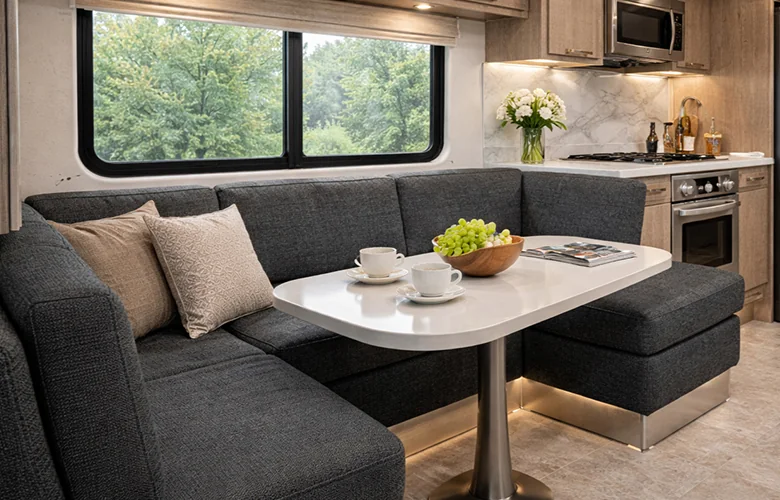
The latest trend in RV interior design focuses on soft neutral colors, such as terracotta, sage green, and chocolate brown. These warm, earthy hues create a cozy atmosphere and are often paired with heavy textures and nature-inspired patterns. The goal is to create a protective, cocoon-like environment that feels familiar and livable.
Residential-style appliances and furniture have become increasingly popular in RVs. This trend is driven by the desire for comfort and functionality on the road. Larger refrigerators, more comfortable seating, and stylish furniture are becoming essential for creating a space that feels like home.

The emphasis on heavy textures and nature-inspired patterns has led to a resurgence of classic designs, such as plaids, herringbones, and tweeds. These timeless classics are blended with contemporary faux leathers to create a sense of architectural depth and permanence. Velvets and high-pile fabrics add physical depth and refined luxury.
Beyond aesthetics, durability and sustainability have become crucial factors in RV interior design. Responsibly sourced materials, such as stain-resistant and scratch-resistant textiles, ensure a fresh, polished look that can withstand the rigors of the road without compromising on style.
The 'light and bright' trend has given way to warmer, richer palettes that add depth and dimension to RV interiors. Darker neutrals paired with cooler walnut finishes create interiors that feel intentional and elevated while still cohesive.

s see a shift towards tactile experiences, durability, and sustainability in RV interior design. This focus on functionality and style is driven by the growing demand for comfort and livability on wheels.
As residential design continues to influence RV interiors, designers are leaning into layered materials and subtle design elements. The result is a more intentional and elevated aesthetic that feels like home away from home.
Ultimately, the key to successful RV interior design lies in striking a balance between style, functionality, and durability. By embracing trends like soft neutral colors, heavy textures, and sustainable materials, RV owners can create spaces that feel familiar, livable, and luxurious on the open road.

s see a shift towards tactile experiences, durability, and sustainability.