

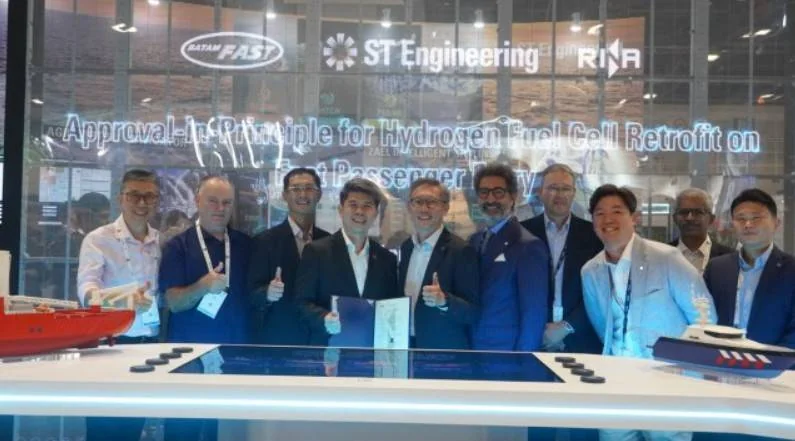
ST Engineering has received approval from RINA for a retrofit concept involving a hydrogen-powered fuel cell system on a fast passenger ferry. The concept replaces one auxiliary diesel generator with a hydrogen fuel cell system supported by lithium-ion batteries. This design aims to reduce carbon emissions while maintaining safety, performance, and regulatory compliance.
The approval was granted in line with RINA classification rules and international safety codes for ships using low-flashpoint fuels. This assessment demonstrates the feasibility of retrofitting existing vessels with new technologies, such as hydrogen fuel cell systems. The use of hydrogen fuel cells offers a cleaner alternative to traditional diesel engines, reducing greenhouse gas emissions and air pollution.
The Asean Raider I ferry will be the first vessel to benefit from this retrofit design. The approval represents a key milestone in expanding ST Engineering's capabilities to introduce hydrogen fuel cell technology into maritime operations. This project showcases the company's expertise in safely integrating new technologies into existing vessels.
Lim Nian Hua, Deputy President of Marine at ST Engineering, highlighted the significance of this achievement. He stated that the Approval in Principle validates the robustness of their retrofit concept and demonstrates their engineering expertise. This work will advance the adoption of lower-emission solutions for maritime applications while maintaining a strong focus on safety and regulatory compliance.
The collaboration between ST Engineering and RINA is crucial in facilitating the transition to alternative fuels and energy systems. By supporting this feasibility study, RINA aims to promote informed design decisions and help smooth the transition from concept to detailed engineering for novel technologies applied to existing vessels. This approval sets a precedent for other companies to follow suit.
The use of hydrogen fuel cells in maritime applications is gaining traction worldwide. As the industry continues to evolve, it's essential to adopt cleaner technologies that reduce carbon emissions and promote sustainability. The approval of ST Engineering's retrofit design is a significant step towards this goal.
ST Engineering's expertise in marine engineering and RINA's classification rules provide a solid foundation for the adoption of hydrogen fuel cell technology. This collaboration demonstrates the potential for innovative solutions to be integrated into existing vessels, reducing emissions while maintaining performance and safety.
The approval of ST Engineering's retrofit design is a testament to the company's commitment to sustainability and innovation. By adopting cleaner technologies, the maritime industry can reduce its carbon footprint and promote a more environmentally friendly future.
As the world shifts towards a low-carbon economy, the adoption of hydrogen fuel cell technology in the maritime industry will play a crucial role. ST Engineering's approval represents a significant milestone in this journey, paving the way for other companies to follow suit and adopt cleaner technologies.
RINA's support for innovative solutions like hydrogen fuel cell technology is essential in promoting sustainability in the maritime industry. By facilitating informed design decisions and supporting feasibility studies, RINA can help smooth the transition to alternative fuels and energy systems.
The adoption of hydrogen fuel cell technology is crucial for reducing carbon emissions in the maritime industry.