


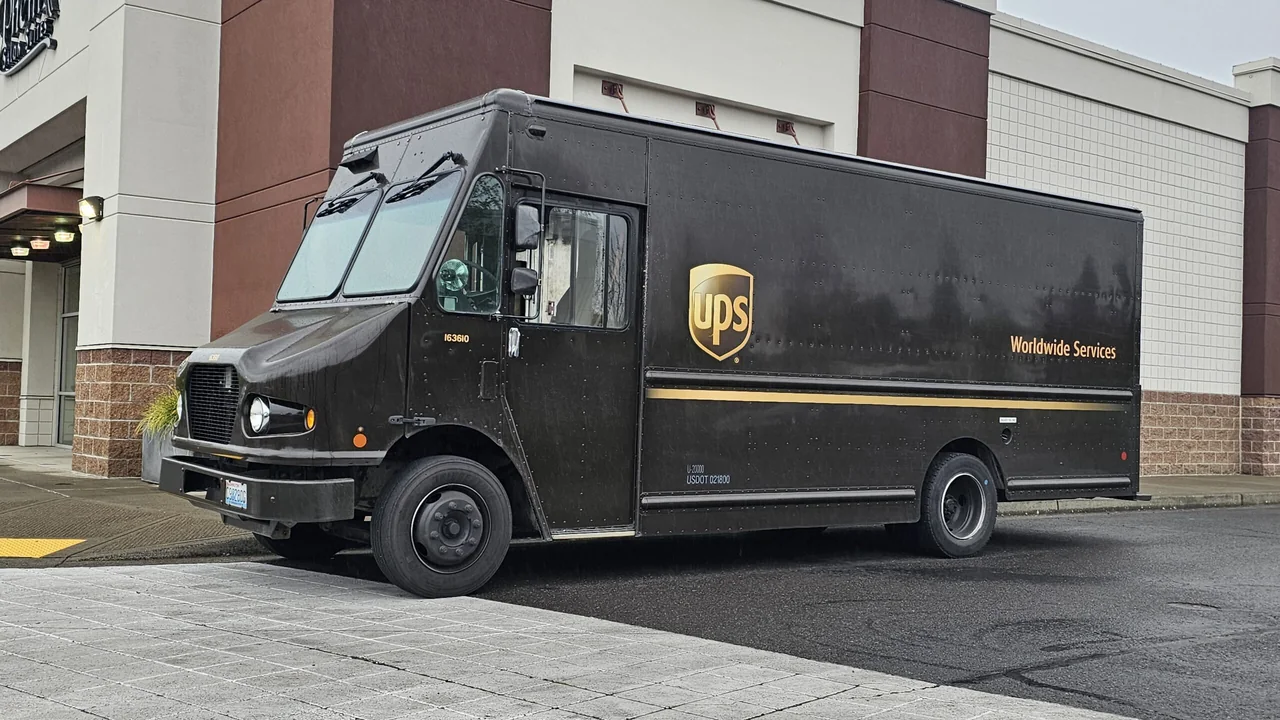
United Parcel Service has announced plans to close an additional 27 parcel distribution centers this year, as part of its aggressive cost restructuring efforts. The company aims to eliminate $3 billion in structural costs by the end of the year, which will help boost profitability. Despite a 25% revenue drop during the first quarter, UPS remains committed to its target. The integrated parcel delivery and logistics powerhouse has already completed 23 of 24 previously announced facility closures, with more to come this year.
The company's strategy is focused on premium segments such as small businesses, B2B, and complex healthcare. CEO Carol Tomé stated that the market has changed, and UPS is adapting to it by overturning the old industry assumption that scale alone drives profitability. Instead, the company is focusing on high-value customers and services.
Amazon's impact on UPS volume cannot be ignored, with the e-commerce giant representing 8.8% of UPS' volume down from over 13% prior to last year. However, this decline has been offset by growth in premium customer wins, driving meaningful revenue per piece growth.

UPS generated $3 billion in quarterly revenue from its healthcare logistics services for the first time during the January-to-March period. This growing trend of pharmaceutical companies shipping GLP-1 weight loss drugs direct to consumers is another opportunity for UPS to gain business in the sector.
The company's cost-cutting efforts are also driven by automation and labor hour reductions, with 25 million labor hours and 30,000 positions expected to be reduced through a combination of downsizing and automation.
Despite new expenses such as leasing third-party aircraft and transitioning Ground Saver volumes back to the U.S. Postal Service, UPS remains committed to its cost-cutting targets. The company's focus on premium segments and automation is a response to changing market demands.
The shift towards premium segments and automation is a response to changing market demands. As the logistics industry continues to evolve, companies like UPS must adapt to stay competitive. By focusing on high-value customers and services, UPS can drive growth and profitability in the face of declining volumes.
UPS' strategy is working, with improved domestic revenue per unit and increased average daily volume from smaller firms. However, the company's focus on cost-cutting must be balanced with investments in new technologies and services to remain competitive.
The parcel delivery industry will continue to evolve as companies like UPS adapt to changing market demands. With a focus on premium segments and automation, UPS is well-positioned to drive growth and profitability in the face of declining volumes.
The shift towards premium segments and automation is a response to changing market demands.