
Daily news
News
Daily updates from transport, logistics, equipment, and mobility.
Trucking
Back to homeLatest articles
FreightWaves·Trucking·Jun 12, 2026
Canada Post to Ditch Door-to-Door Delivery
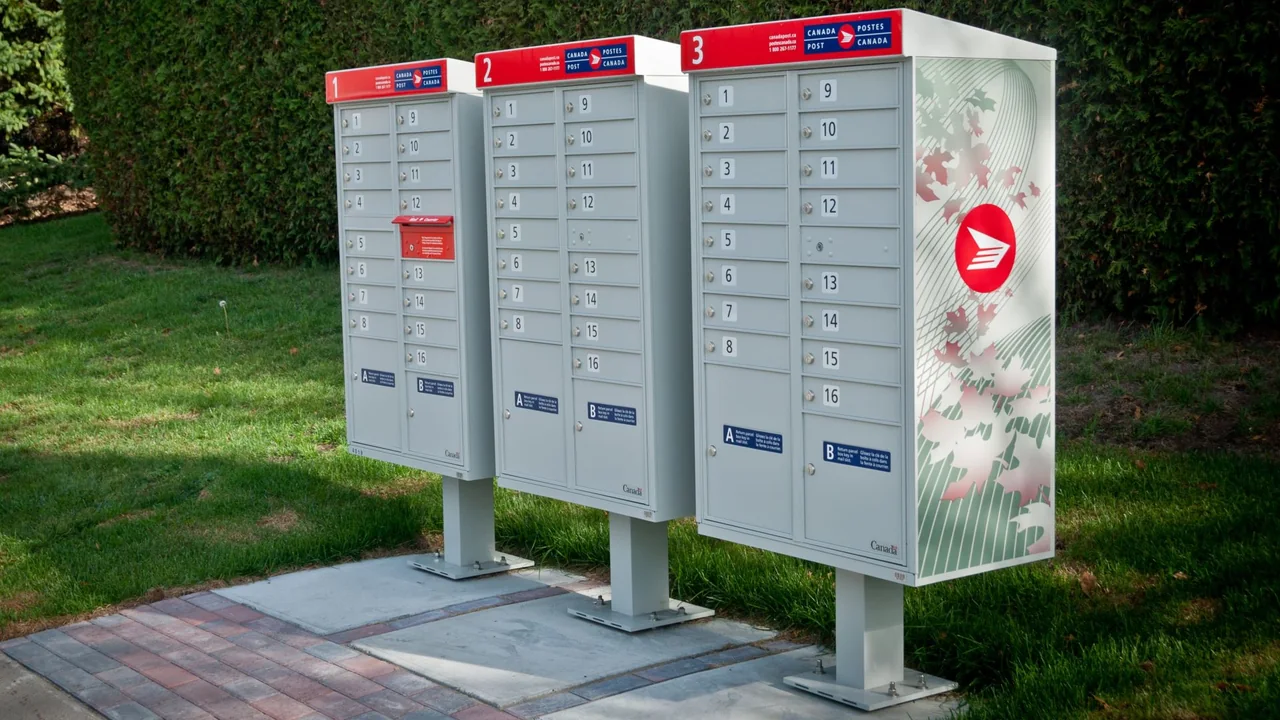
Canada Post has announced plans to convert 485,000 additional addresses in 37 communities from door-to-door delivery to community mailboxes by 2027. This move is part of a larger restructuring initiative aimed at modernizing the postal service and restoring its financial health. The plan builds on the existing conversion of 136,000 addresses that were previously announced for late 2026 or early 2027. By consolidating mail delivery to central neighborhood locations, Canada Post hopes to save considerable sums of money due to the high cost of delivering to individual homes and businesses. The decision comes after Canada Post recorded a record loss of US$1.15 billion in 2025 and a first-quarter loss of $147.5 million. The national post has struggled financially for eight consecutive years, highlighting the need for this transformation. By streamlining its delivery services, Canada Post aims to increase security and reduce costs. Canada Post is working with local governments in 13 initial communities scheduled for conversion to identify and finalize suitable locations for community mailboxes. As sites are finalized, residents will be notified of the location of their community mailbox and receive keys before any change to their delivery. This process is expected to take several months. The move to community mailboxes will also increase security by putting nearly all mail and parcels delivered by Canada Post under lock and key. This is a significant improvement over the current system, where mail and parcels are often left unattended on doorsteps. Earlier this month, more than 50,000 letter carriers represented by the Canadian Union of Postal Workers ratified a new contract after more than two years of labor uncertainty from strikes and other tactics that hurt revenues as businesses shifted mail and parcel volumes to alternative carriers. This contract approval has unlocked Canada Post’s ability to move forward with operational and other reforms. Nearly three quarters of Canadian addresses already receive mail and parcels through some form of secure, centralized delivery such as community mailboxes, apartment lobby boxes and post office boxes. This existing infrastructure will support the transition to community mailboxes in these areas. As part of its transformation plan, Canada Post is converting 4 million addresses that still receive door-to-door delivery to community mailboxes. The national conversion program is expected to take about five years, with different areas transitioning each year. This will require significant investment and planning from the postal service. Residential customers who are physically limited from accessing a community mailbox are eligible for accommodations, such as sliding trays, Braille features or a more accessible compartment. In some cases, weekly home delivery may be provided on a seasonal, temporary or permanent basis. These measures will help ensure that all customers have access to the new system. The shift away from door-to-door delivery is part of Canada Post’s efforts to adapt to changing consumer habits and technological advancements in the postal industry.
FreightWaves·Trucking·Jun 12, 2026
Faster Labor Contracts Act Passes House
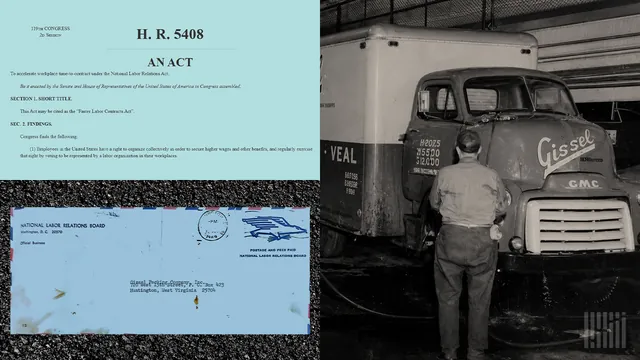
The Faster Labor Contracts Act has been passed by the House of Representatives, marking a major milestone in labor law reform. This new legislation aims to reduce labor disputes and promote faster resolution of collective bargaining agreements. The bill was introduced last year by Representative Donald Norcross of New Jersey and reached 218 signatures on a discharge petition before being voted on. The passage of the Faster Labor Contracts Act is seen as a major victory for proponents of labor reform, who argue that it will improve working conditions and reduce conflicts between employers and employees. By setting a compressed timeline for first contract negotiations, the law aims to minimize the time spent in dispute resolution. This new law is based on provisions lifted directly from the Protecting the Right to Organize Act (PRO Act), which failed to advance on a bipartisan basis across multiple Congresses. The Faster Labor Contracts Act has sparked debate among lawmakers and labor experts, with some arguing that it will lead to faster resolutions of collective bargaining agreements, while others express concerns about the potential impact on negotiations. As the law takes effect, employers and employees alike can expect a more streamlined process for resolving disputes and reaching agreements. The passage of this legislation marks an important step towards modernizing labor laws in the United States, prioritizing efficiency and speed over traditional negotiation processes.
FreightWaves·Trucking·Jun 12, 2026
Transportation Industry Shifts to Verified Trust
The transportation industry is facing a significant shift towards verified trust, as the need for verification grows in response to increasing instances of cargo theft and identity manipulation. This change is driven by decades of operating on trust, where relationships and reputation were enough to ensure safe freight movement. However, this environment has changed dramatically in recent years. The conversation highlighted the importance of verifying relationships in transportation, particularly when it comes to carrier selection and load coverage processes. Harris noted that bad actors are taking advantage of weaknesses in these areas to exploit opportunities for cargo theft and identity manipulation. As a result, many organizations are reevaluating their approach to risk management and operational efficiency. One of the key takeaways from the discussion was the need for verification to become a dedicated business function. Rather than relying solely on technology or individual experience, companies must invest in systems and processes that can detect and prevent cargo theft and identity manipulation. This shift towards verified trust requires a fundamental change in how transportation professionals operate. The industry's transition from assumed trust to verified trust is driven by the growing need for accuracy and verification. While rapid response times and operational efficiency remain important, companies are learning that accuracy must come first. Harris argued that the pressure to move freight quickly has created opportunities for bad actors to exploit weaknesses in onboarding, carrier selection, and load coverage processes. The conversation also explored how emerging technology is playing a role in this shift towards verified trust. While technology can provide valuable insights into cargo theft and identity manipulation, it must be used in conjunction with human expertise to detect and prevent these threats. Companies must invest in systems that can analyze data from multiple sources to identify potential risks. The impact of this shift on the transportation industry cannot be overstated. Cargo theft and identity manipulation are becoming increasingly common, and companies that fail to adapt to this new environment risk being exploited by bad actors. The pressure to move freight quickly is no longer enough for safe freight movement; accuracy and verification must come first. As the industry continues to evolve, it's clear that verified trust will become an essential component of transportation operations. Companies that invest in systems and processes that can detect and prevent cargo theft and identity manipulation will be better equipped to manage risk and ensure safe freight movement. The conversation also highlighted the importance of relationships in transportation, particularly when it comes to carrier selection and load coverage processes. While technology can provide valuable insights into these areas, human expertise remains essential for detecting and preventing cargo theft and identity manipulation. In conclusion, the transportation industry is shifting towards verified trust as a response to increasing instances of cargo theft and identity manipulation. This change requires a fundamental shift in how transportation professionals operate, with a focus on accuracy and verification. Companies that adapt to this new environment will be better equipped to manage risk and ensure safe freight movement.

FreightWaves·Trucking·Jun 12, 2026
Volvo to Remove Safety Drivers from Autonomous Trucks in 2027
Volvo Autonomous Solutions plans to remove safety drivers from its autonomous trucks and begin fully driverless operations on U.S. highways in the first quarter of 2027. The company detailed its timeline and scaling ambitions at its recent Capital Markets Day event. This move is part of Volvo's strategy to increase efficiency and reduce costs in the logistics industry. The company aims to have more than 300 autonomous trucks operating by the end of 2027, with industrial scaling beginning in 2028. Revenue from the autonomous business is projected to approach approximately $3 billion within five years. This growth is expected to be driven by increased demand for reliable and efficient logistics services. Currently, Volvo Autonomous Solutions operates commercially in Texas with safety drivers aboard. It moves freight daily on routes between Dallas and Houston, Fort Worth and El Paso, and most recently Dallas to Oklahoma City. The company's recent expansion into the Oklahoma City market represents an operational leap, as it now offers point-to-point delivery directly into customer facilities. Volvo Autonomous Solutions is moving towards full autonomy by leveraging its technology partners, including Aurora Innovation. In Q1 2027, the company will deploy trucks with no safety drivers in Texas, marking a significant milestone in its autonomous journey. The company's head of On-Road Solutions, Sasko Cuklev, emphasized the importance of asset utilization in driverless operations. Trucks that sit idle during parts of the day can operate around the clock with autonomous technology, doubling asset utilization and reducing costs. Cuklev noted that realizing these gains requires more than autonomous-capable trucks. The company has built an uptime network with its dealers across operating lanes to ensure high availability and minimize downtime. Volvo Autonomous Solutions is pursuing aggressive network growth based on customer demand. The company plans to expand its services to new locations, including Phoenix, Atlanta, San Antonio, and Laredo, in order to meet the growing needs of its customers. The company's focus on autonomous logistics is expected to have a significant impact on the industry, as it enables companies to operate more efficiently and reduce their costs. As autonomous technology continues to advance, we can expect to see even more innovative solutions from companies like Volvo. By removing safety drivers from its autonomous trucks, Volvo Autonomous Solutions is taking a major step towards increasing efficiency and reducing costs in the logistics industry. The company's commitment to innovation and customer satisfaction will be crucial in driving its growth and success.

FreightWaves·Trucking·Jun 11, 2026
Amazon's National LTL Network Expansion Leaves Analysts Seeking Premium Tier
Amazon's new LTL service is purpose-built for one part of the market. The expanded offering covers shipments of one to six pallets — 150 to 15,000 pounds — picked up, transferred at a nearby terminal, and delivered intact at what Amazon pitches as a lower cost than legacy carriers. The asset-light model across roughly 30 terminals stitched into a package-delivery network, with real density in the Eastern U.S. and a growing set of Western metros, is the right size for where it’s competing today. However, this model does not yet include a premium expedited tier on top, which would require significant investments in service centers and a more extensive reach across the US. A full national LTL carrier runs 200 to 300 service centers reaching nearly every U.S. ZIP code; FedEx Freight alone operates a 365-terminal network. Amazon's current 30-terminal footprint is smaller than what analysts expect for a premium expedited network, but it still offers a credible national entry in the economy LTL segment. The analyst community read Amazon’s footprint as not yet that of a “formidable full-fledged nationwide asset-based operator,” and characterized the current service as more akin to what brokers offer. This suggests that Amazon's initial focus is on the economy three-to-four-day sub-segment, where it can gain traction through its flexible and iterative operating model. However, some that even an asset-light model could be a disruptor, especially if Amazon can capture meaningful share in this segment without best-in-class service. The question is just timing: when will Amazon decide to invest in building out its premium expedited network?

Trucking Info·Trucking·Jun 11, 2026
Fleet Hiring Practices Under Scrutiny
The recent $5.5 million discrimination settlement between Central Transport and the Equal Employment Opportunity Commission (EEOC) has sparked a broader conversation about hiring practices, safety performance, and the risks associated with a fleet's recruiting process. The case raises important questions about how companies can ensure they are not missing out on qualified candidates due to biases or stereotypes in their hiring decisions. By examining this settlement, we can gain insight into the importance of creating a diverse and inclusive work environment that prioritizes safety above all else. The allegations against Central Transport suggest that the company may have been passing over experienced female applicants in favor of less-qualified male drivers. This is particularly concerning given the increasing scrutiny being placed on motor carrier safety. The EEOC's investigation revealed that the Phoenix terminal was not the only location where female driver applicants were ignored, with a similar incident occurring at the Detroit terminal. The case underscores the need for companies to regularly assess their hiring and HR processes to prevent accidents and lawsuits. By doing so, they can ensure that they are not creating a culture of bias or stereotypes that could lead to devastating consequences. This includes implementing diversity and inclusion training programs, reviewing applications thoroughly, and providing equal opportunities for all candidates. The settlement also highlights the importance of transparency in hiring practices. In this case, the EEOC discovered that Central Transport had been ignoring female driver applicants, including one woman who was told she would not get an interview due to her gender. This lack of transparency can lead to a culture of distrust and undermine efforts to create a safe and inclusive work environment. The recent Supreme Court decision has also increased the focus on safety performance in the trucking industry. With brokers screening companies more carefully, it is essential that fleets prioritize safety above all else. By doing so, they can reduce their risk of accidents and lawsuits while maintaining a competitive edge in the market. Research suggests that women drivers may have stronger safety and compliance records than their male counterparts. This is particularly notable at a time when safety performance is under increasing scrutiny. By recognizing the value of diverse perspectives and experiences, companies can create a safer and more inclusive work environment that benefits everyone. The EEOC's investigation revealed that Central Transport was not an isolated incident, with similar cases occurring at other terminals. This highlights the need for companies to implement comprehensive diversity and inclusion initiatives that address biases and stereotypes in hiring practices. Ultimately, this case serves as a reminder that fleet hiring practices have a significant impact on safety performance and liability. By prioritizing diversity, inclusion, and transparency, companies can reduce their risk of accidents and lawsuits while creating a safer and more competitive work environment. The settlement also underscores the importance of accountability in preventing discriminatory hiring practices. Central Transport's agreement to pay $5.5 million demonstrates that companies must be held accountable for their actions and take steps to prevent similar incidents from occurring in the future.

Trucking Info·Trucking·Jun 11, 2026
Mack Granite Cab Redesign Focuses on Driver Comfort
The automotive industry has long recognized the importance of driver comfort and satisfaction, but it's only recently that manufacturers have begun to prioritize these aspects in their designs. The latest example of this trend is the all-new Mack Granite vocational truck, which puts a strong emphasis on driver-centric cab design. By doing so, the company aims to attract and retain drivers who are increasingly hard to find and keep. The redesigned Granite was engineered from the ground up with extensive customer feedback and driver input, resulting in a wider cab, improved seating, intuitive controls, and enhanced ride technologies. These features were developed to make long days behind the wheel more comfortable and productive for vocational drivers. Mack Trucks' president, Jonathan Randall, stated that 'drivers are the heart of every vocational operation,' and that the company's goal with the Granite is to build a cab that drivers want to come back to every day. This sentiment is echoed by the extensive use of driver feedback in the design process, which included input from over 30 professional drivers. The interior design of the Granite was influenced by this feedback, resulting in several key production features such as a reinforced accessory rail across the instrument panel and a built-in metal ELD mounting plate. These details demonstrate a commitment to ergonomics and control placement that will appeal to vocational drivers. Other notable features include a new 12-inch Mack CoPilot digital instrument cluster paired with an optional 9-inch infotainment display, as well as a flat-bottom steering wheel providing additional knee room. The addition of multiple USB-C ports, 12-volt outlets, and wireless charging capabilities will also support mobile devices and worksite technology. The Granite's mDrive automated manual transmission controls are integrated into a steering-column stalk, allowing drivers to shift gears without removing their hands from the wheel. This feature, combined with the available premium air-suspension seat with heating, cooling, and massage functions, aims to reduce driver fatigue during long shifts. Seating and cab comfort have been upgraded in several ways, including the redesigned seat structure providing additional support for drivers' legs, backs, and lumbar regions. The door panels have also been redesigned to improve downward visibility and incorporate durable metal handles and ergonomically positioned controls. The all-new Mack Granite cab is a significant improvement in terms of driver comfort and productivity, and its focus on vocational drivers will likely resonate with fleets looking to attract and retain top talent. As the industry continues to evolve and prioritize driver satisfaction, manufacturers like Mack Trucks are taking note. The Granite's emphasis on comfort, ergonomics, and productivity sets a new standard for vocational truck design, and it will be interesting to see how other manufacturers respond to this trend.
FreightWaves·Trucking·Jun 11, 2026
US Approves $5B LNG Export Platform
The US has taken a major step forward in its efforts to increase energy exports, approving a $5 billion offshore liquefied natural gas (LNG) export platform. The project, spearheaded by Houston-based Delfin Midstream, was licensed by the Maritime Administration and received Department of Energy export approval for a total of three planned vessels. The platforms are projected to begin production by 2030, eventually ramping up to an export capacity of 1.8 billion cubic feet of natural gas per day. This significant increase in LNG production will help meet growing global demand for the fuel. The location of the platforms, 40 miles off the coast of Cameron Parish, Louisiana, was chosen due to its proximity to major energy infrastructure and existing pipelines. The South Korean-built platforms are expected to play a key role in reducing US dependence on foreign oil imports. The approval is also seen as a positive development for the US economy, which has been looking to diversify its energy exports. With the growing demand for LNG worldwide, this new platform will help meet that demand and create new opportunities for US energy companies. However, some industry analysts have raised concerns about the potential impact on domestic energy markets. The increased supply of LNG could lead to lower prices and reduced demand for domestic oil imports. Despite these concerns, the approval marks a significant milestone in the US energy sector. With the growing importance of LNG as a fuel source, this new platform will help meet global demand and support economic growth. The project is expected to create hundreds of jobs during construction and generate significant revenue for local communities. The platforms are also expected to have a positive impact on the environment, reducing greenhouse gas emissions from domestic energy production. Overall, the approval of the $5 billion LNG export platform is a major step forward for US energy exports. With its projected capacity to meet growing global demand, this new platform will play a key role in supporting economic growth and reducing US dependence on foreign oil imports. As the US continues to diversify its energy exports, projects like this one will be crucial in meeting growing global demand for LNG.

FreightWaves·Trucking·Jun 11, 2026
Trucking Reality Check
The world of trucking is often romanticized on YouTube. The idea of making six figures in just one year has captivated many viewers, leading some to quit their jobs and join the industry. However, this narrative glosses over the harsh realities of trucking life. For Victor Newton, a former barber with 28 years of experience, the decision to leave his stable career for a box truck was not taken lightly. He had built a loyal clientele and a successful business, but something sparked his interest in trucking. Newton's entry into trucking began on YouTube, where he stumbled upon an article about a box truck owner-operator claiming $20,000 in a month. The prospect of making such a high income without needing a CDL was too enticing to resist. A 2006 International with 500,000 miles on it, Newton bought his first box truck for $10,000. He took it without inspecting the vehicle thoroughly and relied solely on the seller's word. This decision would come back to haunt him in the long run. The first 90 days of Newton's trucking career were a baptism by fire. He encountered numerous challenges, including bad driver hires, repair bills, and dealing with new authority seasons where brokers treated him like an invisible entity. Despite these setbacks, Newton persevered and continued to learn from his experiences. He realized that the industry is not as straightforward as it seems on YouTube. One of the most significant lessons Newton learned was the importance of understanding the true costs associated with trucking. This includes not just fuel and maintenance but also the emotional toll of dealing with difficult customers and navigating complex regulations. Trucking requires a unique set of skills, including the ability to problem-solve, adapt to changing circumstances, and maintain a level head under pressure. For those considering leaving their stable careers for trucking, Newton's story serves as a warning: the reality is far from glamorous. Ultimately, Newton's experience highlights the need for a more nuanced understanding of the trucking industry. It is not just about making money or pursuing a dream; it is about being prepared for the challenges and uncertainties that come with this line of work.

Trucking Info·Trucking·Jun 11, 2026
Fleet Management Gets a Visual Boost
Fleetworthy has partnered with video telematics provider Lytx to bring video snapshots directly into its Safety+ platform. The new integration will allow fleet safety managers to view visual event data alongside driver risk information without switching between systems. This enhancement is designed to help safety teams review incidents more quickly and conduct more effective coaching sessions. The integration embeds time-specific Lytx video snapshots within Safety+ Map View, where fleets already monitor driver behaviors such as speeding and adverse-weather driving. By displaying Lytx video snapshots directly within Safety+, fleet managers can access visual evidence and driver behavior data in a single workflow. This seamless experience helps teams review events quickly, foster more effective communication, and ultimately enhance safety outcomes across the board. Until now, fleets using both Safety+ and Lytx cameras had to move between separate platforms to gather the information needed for driver coaching and event investigations. The process often delayed reviews and made it more difficult for managers and drivers to share a common understanding of what occurred during a safety event. By integrating video snapshots into Safety+, fleet managers can eliminate portal switching during coaching reviews. Fleetworthy said that key capabilities include Lytx video snapshots displayed within Safety+ Map View and synchronized to specific safety events, visual context showing road and traffic conditions at the time of an event, faster coaching reviews through a single-platform workflow, and compatibility with existing Lytx camera deployments on most ELD devices without additional hardware requirements. The integration is available at no additional cost to Safety+ subscribers using Lytx cameras. Fleetworthy Foundations users can upgrade to Safety+ to access the integrated coaching workflow. This capability is a significant step forward in fleet management, providing fleets with instant access to critical visual context during coaching sessions. The partnership between Fleetworthy and Lytx demonstrates the growing importance of video telematics in fleet safety solutions. The integration of Lytx video snapshots into the Safety+ platform is a testament to the power of collaboration in driving innovation and improving safety outcomes. With this enhancement, fleets can review incidents more quickly and conduct more effective coaching sessions. The ability to access visual evidence and driver behavior data in a single workflow will help fleet managers make better-informed safety decisions. The integration of Lytx video snapshots into Safety+ is a significant step forward in the use of technology to enhance fleet safety. By providing instant access to critical visual context, fleets can improve their safety outcomes and reduce the risk of accidents. As the demand for advanced fleet management solutions continues to grow, partnerships like this one between Fleetworthy and Lytx will play an increasingly important role in shaping the future of fleet safety.
Loading more news