
Daily news
News
Daily updates from transport, logistics, equipment, and mobility.
Automotive
Back to homeLatest articles
Autoweek (All)·Automotive·Jun 12, 2026
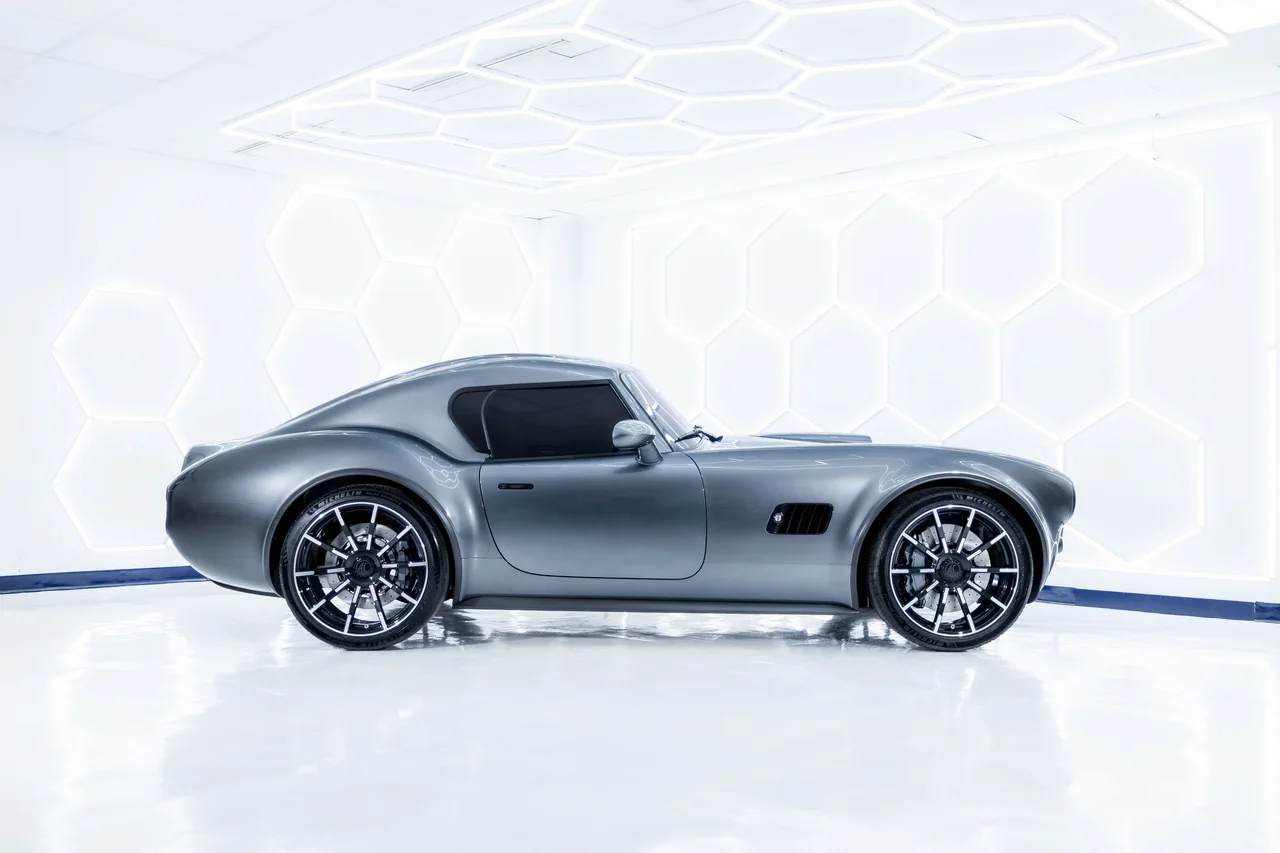
AC Brings Iconic British Brand to US Market with Luxury Cars
AC Cars America LLC is expanding its global presence by launching an official arm in the US market. The company is headquartered in West Palm Beach, Florida, and offers three luxury car models: AC GT Roadster, AC GT Coupe, and AC GT SuperSport. These cars are designed to showcase the brand's core strengths of performance, luxury, and craftsmanship. AC Cars America LLC will capitalize on its US market presence to reach a wider audience and expand its product offerings. The company is committed to ensuring its vehicles meet modern safety standards and incorporate advanced features. The AC GT Roadster and GT Coupe are powered by 5.0-liter V8 engines, with the Roadster producing up to 654 hp and the Coupe reaching speeds of 799 hp. The SuperSport model boasts a claimed 1,025 bhp and is set for delivery in 2027. AC Cars' decision not to use the Cobra name in the US is due to trademark issues. The company aims to educate its customers about its heritage and exclusive models. With this launch, AC Cars America LLC is poised to establish itself as a significant player in the US luxury car market.
Autoweek (All)·Automotive·Jun 12, 2026
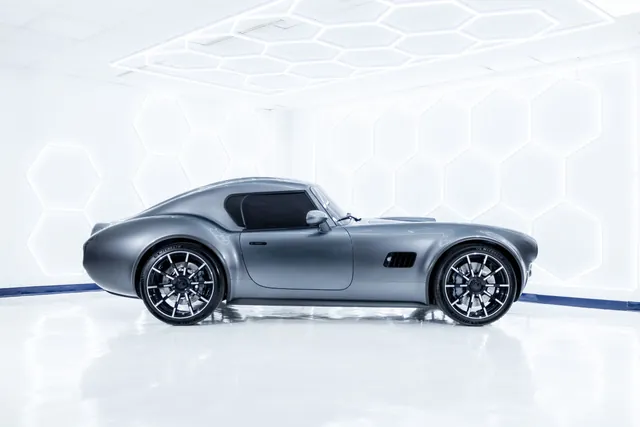
Legendary Journalist's Journey to Automotive Criticism
Mark Vaughn's introduction to automotive criticism began at a young age, surrounded by the sounds and smells of his family's Ford products. Growing up, he spent hours tinkering with engine components, developing a keen eye for detail and a deep understanding of the inner workings of vehicles. This early exposure laid the foundation for his future career as an automotive journalist. Vaughn's writing career took off when he started contributing to City News Service in Los Angeles. From there, he made the move to Europe, where he became editor of a car magazine called Auto. It was during this time that he decided to expand the magazine's coverage to include Formula 1, sports prototypes, and touring cars. This bold move marked a significant shift in his focus and helped establish him as a leading voice in the automotive industry. In 1989, Vaughn had the opportunity to interview with Autoweek at the Frankfurt motor show. This meeting would prove to be a turning point in his career, marking the beginning of a long and storied partnership that has spanned over three decades. Since then, he has become an integral part of the automotive journalism community. Throughout his career, Vaughn has demonstrated a commitment to objective and unbiased reporting. His experience covering Formula 1, sports prototypes, and touring cars has given him a unique perspective on the world of motorsports. He has interviewed some of the biggest names in the industry and has been at the forefront of many major stories. One of the key factors that have contributed to Vaughn's success is his willingness to take risks and challenge conventional wisdom. His decision to cover Formula 1, sports prototypes, and touring cars was not taken lightly, but it has paid off in a big way. He has established himself as a trusted voice in the industry and has built a reputation for being fearless and unafraid to speak truth to power. Despite his many accomplishments, Vaughn remains humble and grounded. He continues to be passionate about automotive journalism and is dedicated to sharing his knowledge with others. His dedication to the craft is evident in every article he writes and every interview he conducts. As an industry veteran, Vaughn has seen it all. From the rise of new technologies to the evolution of vehicle design, he has been a constant presence on the scene. He has witnessed the birth of new trends and the demise of old ones, and has emerged with a deep understanding of what drives the automotive industry forward. Vaughn's legacy extends far beyond his own writing. He has inspired a generation of journalists and has helped shape the course of automotive journalism as we know it today. His commitment to objectivity and his willingness to take risks have set a high standard for others to follow. Today, Vaughn continues to be an active participant in the automotive industry. He remains committed to sharing his knowledge and expertise with others, and is always on the lookout for new stories and opportunities to share his passion with the world.

Carscoops·Automotive·Jun 12, 2026
Genesis Unveils Magma GT Supercar Concept
The Genesis Magma GT Supercar Concept is a highly anticipated vehicle that has been making waves in the automotive industry. With its sleek and aerodynamic design, this supercar promises to deliver exceptional performance and handling on the road. The Magma GT's aggressive stance and bold features make it an instant head-turner. The Genesis Magma GT Supercar Concept boasts a range of innovative features that set it apart from other luxury sports cars. Its advanced all-wheel-drive system provides unparalleled traction and stability, making it perfect for both on-road and off-road driving experiences. Additionally, the Magma GT's sleek design is not just aesthetically pleasing but also highly functional. The production-ready electric supercar is expected to arrive in the US market by 2025, giving Genesis enthusiasts a lot to look forward to. With its impressive performance capabilities and cutting-edge technology, the Magma GT is poised to become one of the most sought-after luxury sports cars on the market. The fact that it's an all-electric vehicle also makes it an attractive option for environmentally conscious car buyers. The Genesis Magma GT Supercar Concept has been designed with both style and substance in mind. Its exterior design features a unique combination of aggressive lines, sharp angles, and sleek curves, creating a truly striking appearance. The interior is equally impressive, with premium materials, advanced infotainment systems, and ergonomic seating that provide an unparalleled driving experience. The Magma GT's electric powertrain is expected to deliver exceptional performance and efficiency. With its advanced battery technology and sophisticated motor system, the supercar promises to accelerate from 0-60mph in just a few seconds, making it perfect for thrill-seekers and car enthusiasts alike. The Magma GT's impressive acceleration capabilities also make it an excellent choice for those who value speed and agility. The Genesis Magma GT Supercar Concept is not just a vehicle but an experience. Its advanced features, sleek design, and exceptional performance capabilities make it an absolute must-have for luxury sports car enthusiasts. Whether you're cruising down the highway or carving through twisty roads, the Magma GT promises to deliver an unparalleled driving experience that will leave you breathless. The Genesis Magma GT Supercar Concept is a testament to the brand's commitment to innovation and excellence. With its cutting-edge technology, sleek design, and exceptional performance capabilities, this supercar promises to set a new benchmark for luxury sports cars in the market. The fact that it's an all-electric vehicle also makes it an attractive option for environmentally conscious car buyers. The Magma GT Supercar Concept is expected to be priced at a premium, reflecting its status as a high-end luxury sports car. With its advanced features, sleek design, and exceptional performance capabilities, the supercar promises to deliver an unparalleled driving experience that justifies its price tag. Whether you're a seasoned car enthusiast or simply looking for a luxurious ride, the Magma GT is sure to impress. The Genesis Magma GT Supercar Concept is an exciting addition to the luxury sports car market, offering a unique blend of style, substance, and exceptional performance capabilities. With its advanced features, sleek design, and impressive acceleration capabilities, this supercar promises to deliver an unparalleled driving experience that will leave you breathless.

Autoweek (All)·Automotive·Jun 12, 2026
F1 Monaco Podium Reinstated After Extraordinary FIA Review
Pierre Gasly's third-place finish at Monaco Grand Prix reinstated after FIA review. The Alpine driver was initially demoted due to speeding penalties, but an appeal led to a hearing and eventual reversal of the sanctions. The FIA's decision is a rare example of a penalty being rescinded due to new evidence coming to light. This highlights the need for accurate timing and measurement in F1, as even minor tweaks can significantly impact speed calculations. Gasly's reinstatement gives him his sixth career podium and marks Alpine team's first top-three finish since 2024. The win is a significant boost to Gasly's and the team's chances in the championship. The reversal of penalties also affects Red Bull driver Isack Hadjar, who drops from third place to fourth. Oscar Piastri moves up to fifth, while Racing Bulls duo Liam Lawson and Arvid Lindblad take sixth and seventh respectively. No other positions within the top 10 are affected by the decision, which is a testament to the FIA's thorough review process. The unusual nature of the penalty reversal stems from changes made to the pit lane and timing loops. The nine sets of timing loops detect average speed rather than radar gun or camera readings. According to the FIA, the barriers at the pit entry and pit loop 2 changed between 2025 and 2026, enabling a shorter trajectory in 2026 compared to 2025. The decision was made after race control queried stewards about reports of alleged breaches, which were later found to be accurate. The Official Timekeeper's report showed that the shortest distance between the first and second loops was only 77 cm less than the setup distance used for speed calculation. Overall, the FIA's decision demonstrates the importance of careful review and analysis in F1, particularly when it comes to timing and measurement.

Toyota USA Newsroom (All)·Automotive·Jun 12, 2026
Solar Energy Project Shines Bright
Vivid Solar Project Harvests Energy with Flair The project's innovative design and efficient materials make it a standout in the industry. This cutting-edge technology has the potential to revolutionize the way we generate energy. As the world shifts towards renewable sources, projects like this one are becoming increasingly important. The use of solar energy is not only good for the environment but also offers significant cost savings. Innovative solutions like Vivid Solar Project demonstrate a commitment to sustainability. The project's creators have pushed the boundaries of what is possible with solar energy technology. This achievement is a testament to human ingenuity and the power of collaboration. As we move forward, it will be exciting to see how this technology continues to evolve and improve. The impact of projects like Vivid Solar Project on the environment cannot be overstated. We can expect to see more innovative solutions like this one in the future. The potential for solar energy to transform our world is vast and exciting. The success of projects like Vivid Solar Project will pave the way for a greener, more sustainable future. As we look to the future, it's clear that innovation and sustainability will play a critical role. The Vivid Solar Project is an inspiring example of what can be achieved when creativity and technology come together. This achievement has significant implications for the environment and our daily lives. The impact of this project will be felt for years to come. We are eager to see how this technology continues to shape our world. As we move forward, it's essential that we prioritize innovation and sustainability. The potential benefits of solar energy are undeniable. This achievement is a shining example of what can be accomplished with dedication and hard work. The Vivid Solar Project is a beacon of hope for a brighter, more sustainable future. We can expect to see many more projects like this one in the years to come. As we look to the future, it's clear that innovation and sustainability will play a critical role. This achievement has significant implications for our daily lives and the environment. The impact of this project will be felt for generations to come. We are excited to see how this technology continues to evolve and improve. As we move forward, it's essential that we prioritize innovation and sustainability. The Vivid Solar Project is a testament to human ingenuity and the power of collaboration. This achievement has significant benefits for our planet and its inhabitants. The potential for solar energy to transform our world is vast and exciting. We can expect to see many more projects like this one in the future. As we look to the future, it's clear that innovation and sustainability will play a critical role. This achievement has significant implications for our daily lives and the environment. The impact of this project will be felt for years to come. We are eager to see how this technology continues to shape our world. As we move forward, it's essential that we prioritize innovation and sustainability. The Vivid Solar Project is a shining example of what can be accomplished with dedication and hard work.
Carscoops·Automotive·Jun 12, 2026
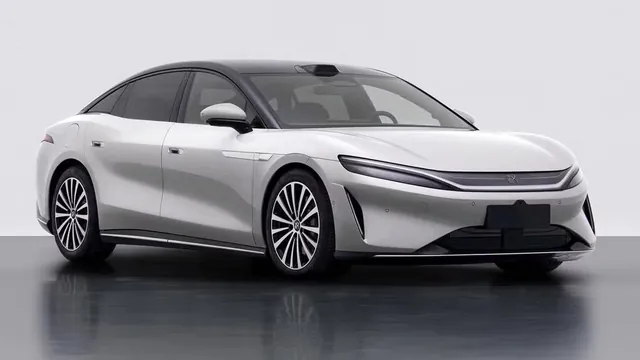
BYD's Electric Sedan Packs More Power Than McLaren 750S
BYD's new sedan, the Great Han, boasts a 626-mile range and 764 hp from two electric motors. The vehicle's weight of 5,522 pounds makes it less competitive in terms of performance, but its output is still impressive compared to other vehicles on the market. The Great Han sedan will be sold as both a battery-electric and a plug-in hybrid, offering buyers more flexibility in their choices. This approach also reflects BYD's focus on expanding its range of electric vehicles. While the name 'Great Han' may not accurately reflect the vehicle's capabilities, it does suggest a sense of grandeur and ambition from the manufacturer. The Great Han sedan's design is sleek and modern, with striking LED headlights and a shapely bumper. However, its size and weight make it less desirable in terms of performance. In comparison to other vehicles on the market, the Great Han sedan's 764 hp output is more than enough to outperform many rivals. This highlights the significant progress being made in electric vehicle technology and the increasing competition for manufacturers. The addition of a plug-in hybrid model further expands BYD’s range of options, allowing buyers to choose between different levels of efficiency and performance. This approach is likely to appeal to consumers who value flexibility and customization. BYD's second-generation Blade Battery technology will support the Great Han sedan, enabling fast charging capabilities of up to 1,500 kW. The Great Han sedan's pricing details have yet to be confirmed, but sales are expected to begin this year. As the EV market continues to evolve, manufacturers like BYD will play a crucial role in shaping consumer behavior and industry trends.

Jalopnik·Automotive·Jun 12, 2026
The Therapeutic Benefits of Taking a Break in Your Car
Taking a break in your car can be a therapeutic experience that helps you relax and recalibrate before returning to the demands of daily life. This pause allows you to create a buffer between the stresses of the day and whatever comes next, providing an opportunity to slow down and recharge. By doing so, you can improve your energy levels, mood, and focus. The car serves as a personal environment where you have control over variables like temperature and ambient music, making it an ideal 'in-between space' for relaxation. Psychologist Thuy-vy Nguyen of Durham University notes that this setting allows you to shut off external noise and lose yourself in your thoughts or surroundings, promoting mental peace and clarity. While the benefits of taking breaks in cars are still being studied, research suggests that such pauses can have a positive impact on mental health. By giving yourself time to relax and reflect, you can reduce stress and anxiety, leading to improved overall well-being. However, it's essential to ensure that you're spending your break effectively. Simply scrolling through social media or watching videos may not be the most productive use of this time. Instead, try engaging in activities that promote mindfulness, such as listening to music or practicing deep breathing exercises. Cardiologist Abinash Achrekar warns that excessive screen time can actually increase stress levels and make it more challenging to relax. By avoiding screens during your break, you can create a more conducive environment for mental rejuvenation. Many people find value in taking breaks in cars as a way to recharge and refocus. Writer Jamie Davis Smith notes that sitting in the car allows him to unwind and prepare for his next task. Meanwhile, Instagram user whitwithcolor finds that these pauses are essential for resetting their nervous system. While taking breaks in cars may not be a replacement for professional therapy, it can be a valuable tool for managing stress and improving overall well-being. By incorporating mindful pauses into your daily routine, you can take control of your mental health and cultivate a greater sense of calm and clarity. Ultimately, the key to reaping the benefits of taking breaks in cars is to approach this time with intention and mindfulness. By doing so, you can transform this often-overlooked space into a therapeutic haven that promotes relaxation, rejuvenation, and overall well-being.
Carscoops·Automotive·Jun 12, 2026
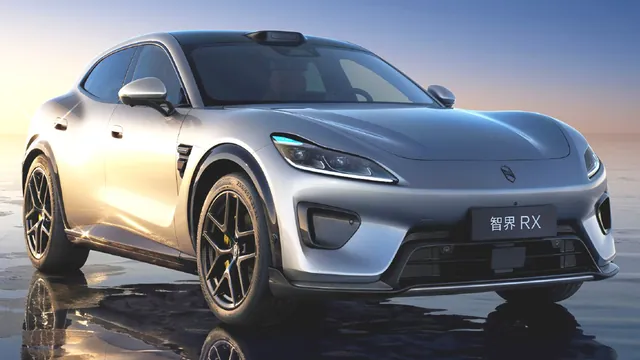
Luxeed's Electric SUV Sparks Ferrari Design Controversy
The Chinese electric vehicle market continues to see a surge in new models, with Luxeed's latest SUV launch being the latest addition. The Luxeed RX is an all-electric Fashion Utility Vehicle (FUV) that aims to compete with popular models like Xiaomi's YU7. With its sleek design and impressive performance capabilities, it's no wonder the RX has caught the attention of car enthusiasts and industry observers alike. The Luxeed RX boasts a striking front end, featuring sleek headlights, a splitter, and a black grille. The rear quarter panels are also notable for their bulging design, giving the SUV a sporty appearance. However, some have raised eyebrows due to the vehicle's resemblance to Ferrari's Purosangue, sparking controversy over the designer's credentials. Luxeed claims that the RX was designed by a former Ferrari chief designer, although it remains unclear whether this is true or not. Regardless of the designer's background, the Luxeed RX is certainly an impressive vehicle with its advanced technology and capabilities. The base model features a CATL NMC battery pack, while the flagship version gets an NMC battery from CALB. The Luxeed RX will be available in two versions: a single-motor model with 372 hp driving the rear wheels, as well as a dual-motor version that produces a combined 586 hp. This latter model also boasts a top speed of 156 mph (251 km/h), making it an attractive option for those seeking high-performance capabilities. The Luxeed RX's design has raised eyebrows due to its resemblance to the Ferrari Purosangue, sparking controversy over the designer's credentials. However, this hasn't detracted from the vehicle's impressive performance capabilities or advanced technology features. With its sleek design and impressive performance capabilities, the Luxeed RX is certainly a contender in the Chinese electric vehicle market. The addition of a dual-motor version with 586 hp further solidifies the model's position as a high-performance option. The Luxeed RX will be available in a range of colors, including yellow, red, and silver brake calipers, as well as several different wheel designs. This attention to detail suggests that Luxeed is committed to providing its customers with a premium ownership experience. The Luxeed RX's battery packs are not yet known, but the base model will feature an NMC pack from CATL, while the flagship version gets an NMC battery from CALB. This indicates that Luxeed has opted for high-quality battery technology to ensure optimal performance and range. With its advanced technology features and impressive performance capabilities, the Luxeed RX is poised to make a significant impact in the Chinese electric vehicle market. As the industry continues to evolve, it will be interesting to see how this model performs in terms of sales and customer satisfaction. The Luxeed RX's design may have sparked controversy over the designer's credentials, but its impressive performance capabilities and advanced technology features are undeniable. As the market continues to shift towards electric vehicles, models like the Luxeed RX are likely to play a significant role in shaping the future of transportation.

Hyundai Worldwide Newsroom·Automotive·Jun 12, 2026
Robot Learns Football Skills in Virtual Environment
The team employed a widely used artificial intelligence technique called reinforcement learning (RL) to teach the robot how to play football. This process doesn't happen with the physical Atlas robot as it would be too slow and risky. Instead, the robot learns in a vast, cloud-based simulated environment where it can repeatedly practice the football movements at scale. Within this environment, the RL system rewards actions that successfully mimic the retargeted human motion while maintaining balance and control. Over time, through countless attempts, the system learns not just the motion itself, but the underlying physics of how to achieve it. It figures out the precise motor controls, the distribution of weight, and the forces needed to swing a leg, plant a foot, and stay upright. The scale of this virtual training is staggering. By running thousands of simulations in parallel on cloud GPUs, the team could condense the learning process exponentially. In just 24 hours, Atlas could experience the equivalent of a full year's worth of physical trial and error. This massive, parallel learning allows the robot to rapidly master complex movements that would have been impossible to program by hand. The technology has significant implications for robotics and artificial intelligence, enabling faster development of complex skills. The use of virtual training also reduces the risk of injury or damage to the robot, making it a safer option for testing and development. Additionally, the cost of training is significantly lower than traditional methods, as the simulations can be run in parallel on cloud GPUs. The development of this technology marks an important milestone in the field of robotics and artificial intelligence. It demonstrates the potential for AI to be used in complex tasks that require human-like skills, such as playing sports. The collaboration between Hyundai Motor and Boston Dynamics has resulted in a significant advancement in the field of robotics. The use of virtual training has enabled the robot to learn at an unprecedented scale, making it possible to master complex movements in a relatively short period of time. As the technology continues to evolve, we can expect to see more robots being developed with this type of capability. This could have significant implications for industries such as healthcare, manufacturing, and transportation, where robots are increasingly being used to perform complex tasks.

Hyundai Worldwide Newsroom·Automotive·Jun 12, 2026
Robot Learns Football Moves in Virtual Environment
Hyundai Motor and Boston Dynamics have successfully taught a robot to play football using artificial intelligence. The team employed a widely used technique called reinforcement learning, which allows the robot to learn through trial and error. This process doesn't happen with the physical Atlas robot as it would be too slow and risky. A more efficient approach was needed, so the team turned to a cloud-based simulated environment where the robot could repeatedly practice football movements at scale. Within this environment, the RL system rewards actions that successfully mimic human motion while maintaining balance and control. By doing so, the robot learns not just the motion itself but also the underlying physics of how to achieve it. The virtual training is staggering in its scale. By running thousands of simulations in parallel on cloud GPUs, the team could condense the learning process exponentially. This massive, parallel learning allows the robot to rapidly master complex movements that would have been impossible to program by hand. Over time, through countless attempts, the system learns not just the motion itself but also the precise motor controls, weight distribution, and forces needed to swing a leg, plant a foot, and stay upright. This level of detail is crucial for achieving balance and control on the football field. The training process is a significant breakthrough in the integration of AI and robotics. By leveraging cloud-based simulations, Hyundai and Boston Dynamics have made it possible to teach complex tasks like playing football to robots in a relatively short period. This technology has far-reaching implications for various industries, including sports, healthcare, and manufacturing. It could enable robots to perform tasks that were previously thought to be impossible or too challenging for human operators. The use of reinforcement learning and cloud-based simulations has opened up new possibilities for the development of intelligent robots. As this technology continues to evolve, we can expect to see more advanced applications in the future. The collaboration between Hyundai Motor and Boston Dynamics is a testament to the power of interdisciplinary research. By combining expertise from AI, robotics, and sports, they have achieved something truly remarkable. This achievement serves as a reminder that even seemingly complex tasks like playing football can be broken down into manageable components using advanced technologies like AI and cloud-based simulations. Looking ahead, it will be exciting to see how this technology is applied in real-world scenarios. Will we see robots competing in professional sports leagues? Can they assist humans in search and rescue missions? The possibilities are endless, and the future of robotics looks brighter than ever.
Loading more news