

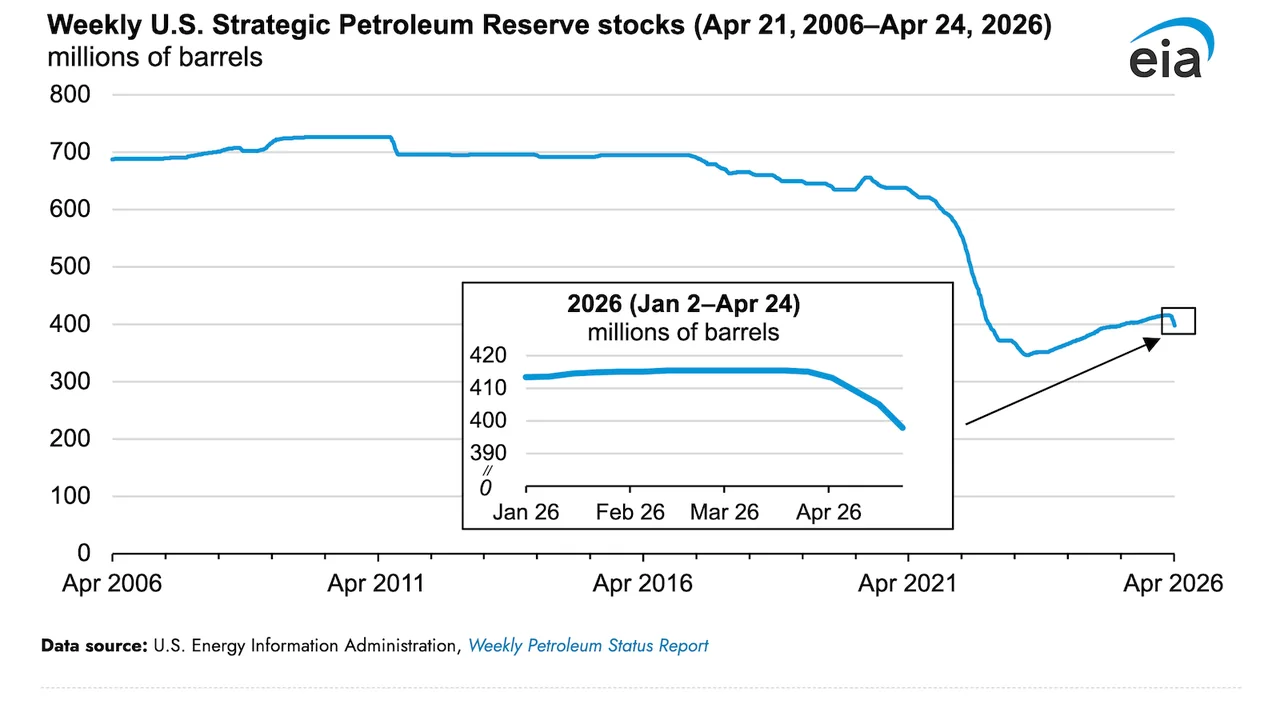
The U.S. Department of Energy has released a total of 17.5 million barrels of crude oil from the Strategic Petroleum Reserve (SPR) since March, according to data in our Weekly Petroleum Status Report. This is part of a larger effort to release 172 million barrels of crude oil from the SPR, which is being coordinated with the International Energy Agency (IEA) to address disruptions in oil supply stemming from the conflict in the Middle East. The SPR has been releasing oil at an unprecedented rate, with 7.1 million barrels released in the week ending April 24, the most since the week ending October 7, 2022.
The U.S. SPR release is structured as an exchange, which requires the original volume of oil, plus additional barrels, to be returned to the SPR within one year. This means that while the initial release may provide temporary relief to oil markets, it also creates a long-term obligation for the government to replenish the reserve. The SPR was established in the 1970s to reduce the effects of unexpected oil supply disruptions and has an authorized storage capacity to hold up to 714 million barrels of crude oil.
The U.S. SPR is being closely monitored by the global energy community, as it could have significant implications for oil prices and market stability. The release of oil from the SPR is also seen as a way to mitigate the impact of supply chain disruptions caused by the conflict in the Middle East.
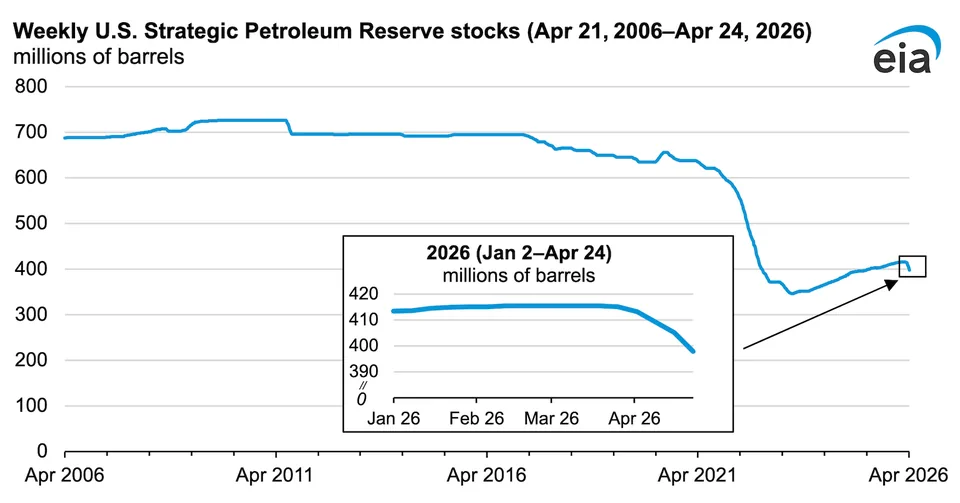
The SPR has been surveying inventory levels each week in our Weekly Petroleum Status Report. This data provides valuable insights into the state of global oil reserves and can help inform energy market decisions.
As the U.S. continues to release oil from the SPR, it is also important to consider the broader implications for the environment and climate change. The increased demand for oil could lead to higher greenhouse gas emissions and exacerbate climate change.
The International Energy Agency (IEA) has been working closely with the U.S. government on this effort, and their coordination is seen as a positive step towards addressing global energy security challenges.
The SPR release is also being watched by investors and analysts, who are trying to gauge the potential impact on oil prices and market sentiment.
As the situation in the Middle East continues to evolve, it will be important to monitor the U.S. SPR release and its effects on global oil markets.
The U.S. government's efforts to address supply chain disruptions through the SPR release demonstrate a commitment to energy security and stability.
However, the long-term sustainability of this approach remains uncertain, as the SPR is subject to various constraints and limitations that could impact its ability to meet future demand.
The global oil market is closely watching the U.S. SPR release, as it could have significant implications for oil prices.