

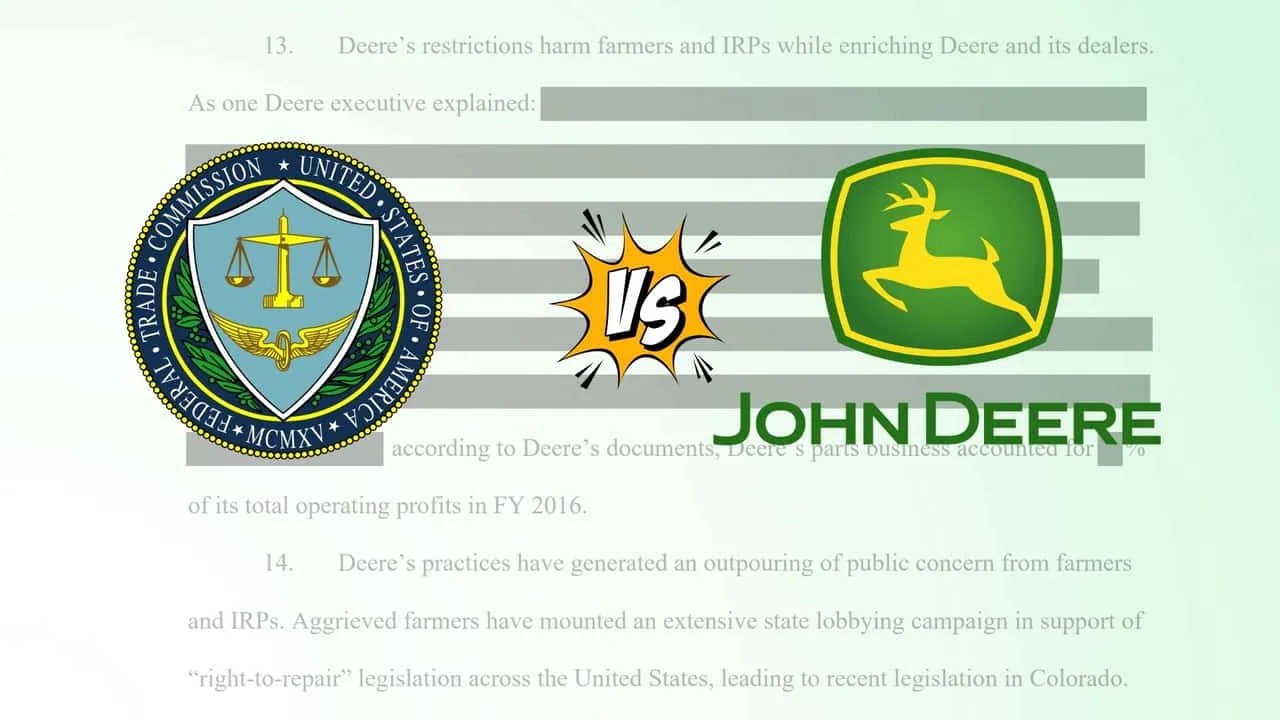
John Deere has reached a $99 million settlement with the plaintiffs in its right-to-repair lawsuit, which was filed over concerns about the company's restrictive repair policies. The settlement also includes amendments to John Deere's repair policy, aimed at providing more flexibility for customers and independent repair shops. These changes are expected to benefit the entire agriculture equipment industry, as they promote competition and innovation.
The right-to-repair movement has gained significant momentum in recent years, with many consumers and businesses demanding greater access to repair information and spare parts. John Deere's settlement is seen as a major victory for this movement, which aims to protect consumers' rights and promote fair competition in the marketplace. However, it remains to be seen how these changes will be implemented and enforced.
The $99 million settlement amount is significant, but some observers have noted that it may not fully compensate the plaintiffs for their losses. The fact that John Deere has refused to admit any wrongdoing in the lawsuit suggests that the company may still face ongoing challenges and scrutiny from regulators and consumers alike.
One possible reason why John Deere has chosen not to admit any wrongdoing is that it is currently facing a secondary lawsuit related to its right-to-repair practices. This could indicate that the company is trying to avoid further controversy and maintain its reputation in the eyes of customers and investors.
The settlement also includes provisions for John Deere to provide more detailed repair information and spare parts to independent repair shops. This is expected to increase competition among repair services and drive innovation in the agriculture equipment industry. As a result, consumers can expect to see better repair options and lower prices in the future.
While the settlement provides some relief for customers and independent repair shops, it also raises questions about the long-term impact on John Deere's business model. The company may need to adapt its repair policies to comply with changing regulatory requirements and consumer expectations.
The right-to-repair movement has been gaining momentum in recent years, with many countries and states passing laws to protect consumers' rights. This trend is expected to continue, with more companies facing lawsuits and regulatory scrutiny over their repair practices.
In the long run, the settlement could have significant implications for the agriculture equipment industry as a whole. By promoting competition and innovation, it may drive down prices and improve product quality, benefiting consumers and businesses alike.
As the right-to-repair movement continues to evolve, it will be interesting to see how John Deere and other companies respond to changing regulatory requirements and consumer expectations.