



Meta, the social media giant, has unveiled a novel plan to harness sunlight from space and beam it down to its own AI data centers on Earth, providing them with 24/7 access to clean energy. This ambitious project is a partnership between Meta and Overview Energy, a satellite startup that has developed the necessary technology. By leveraging this innovative approach, power-hungry data centers can significantly reduce their reliance on the strained electrical grid, thereby minimizing greenhouse gas emissions and preventing power line meltdowns. However, the success of this plan remains to be seen as it still requires testing and validation.
Space-based solar power has been an idea for decades, but Overview Energy's approach is unique in several ways. Instead of using lasers or microwaves to beam energy from space, their satellites employ a wide-beam, near-infrared system that offers two primary advantages. Firstly, this technology is deemed safe for humans, animals, aircraft, and spacecraft, alleviating concerns about potential harm from laser emissions.
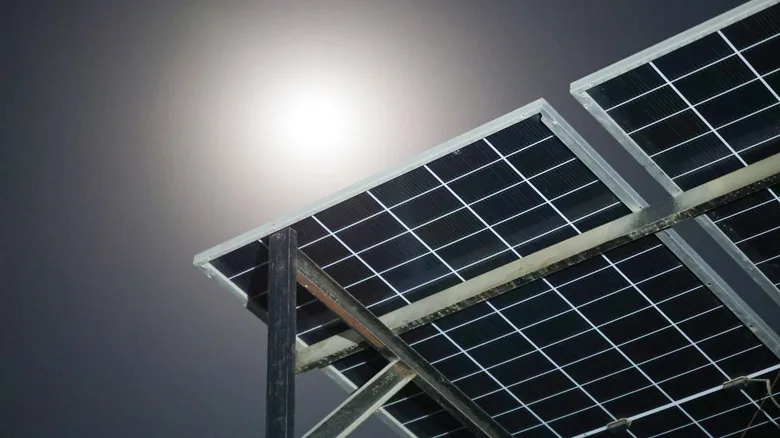
The second advantage lies in the fact that Overview's infrared light is compatible with existing solar farms, allowing them to be powered up at night without requiring specialized receiver facilities. This would save significant time, land use, and costs associated with constructing new infrastructure. The implications of this technology are substantial, particularly for Meta as it competes in the AI race.
The partnership between Meta and Overview Energy has sparked excitement about the potential benefits of space-based solar power. By harnessing sunlight from space, these data centers can reduce their reliance on fossil fuels and lower their carbon footprint. This move could also help alleviate strain on the electrical grid, preventing power line meltdowns and reducing household electrical rates.
Overview Energy's technology has already demonstrated functional results, with a successful test of the infrared transmitter from an airplane in November 2025. The company plans to conduct its first orbital demonstration in 2028, with the goal of powering AI data centers with up to 1 GW from space by 2030.
The success of this project hinges on overcoming technical challenges, such as ensuring the beams generated enough power to justify the cost from geosynchronous orbit. However, if successful, this technology could revolutionize the way we generate energy for our data centers.
As AI continues to dominate the technological landscape, its reliance on clean energy sources is becoming increasingly important. By embracing space-based solar power, Meta and Overview Energy are taking a significant step towards reducing the carbon footprint of AI data centers.
Other companies are also exploring similar technologies, but Overview Energy's approach offers a unique solution that can be seamlessly integrated with existing infrastructure. This could pave the way for widespread adoption of space-based solar power in the coming years.
The future of energy generation is looking increasingly promising, with innovative solutions like space-based solar power poised to transform the way we generate and consume energy.
This technology has the potential to significantly reduce carbon footprint of AI data centers.