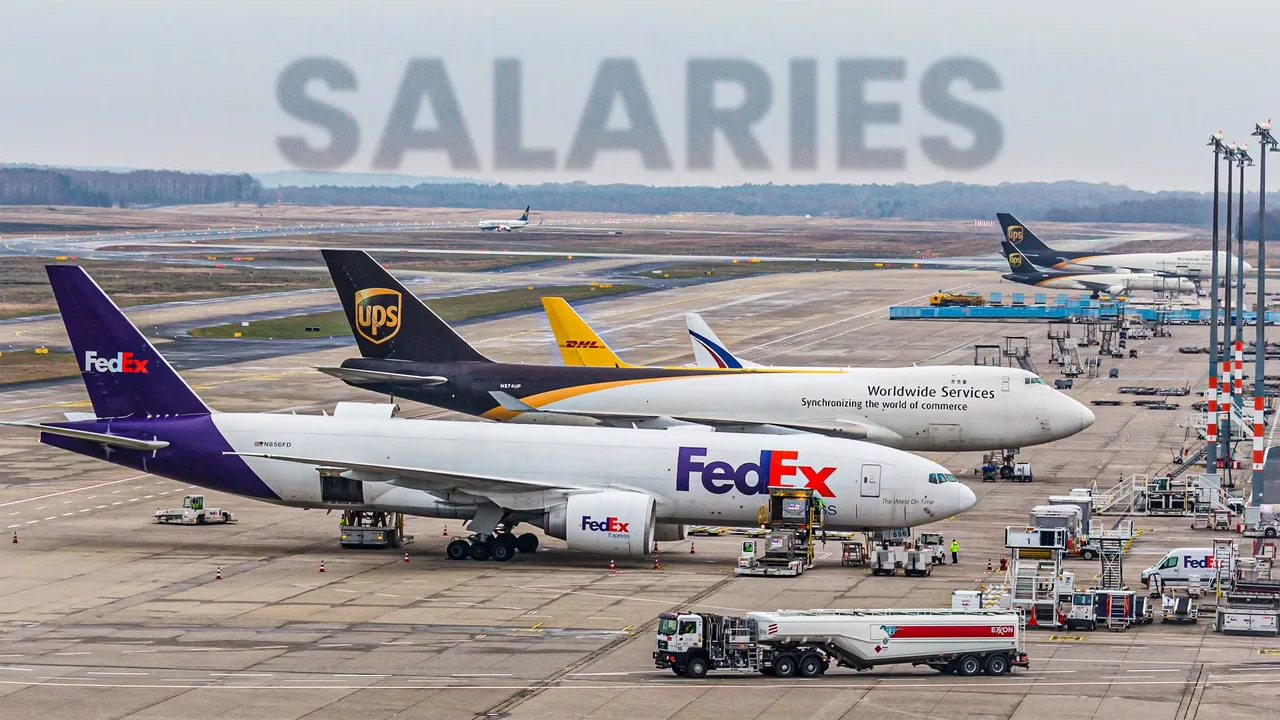
The global cargo aviation sector has evolved into one of the most financially rewarding corners of commercial flying, with widebody cargo pilots sitting at the top of that hierarchy by 2026.
This trend reflects both the operational demands of long-haul cargo flying and the strategic importance of global logistics networks that run continuously, often overnight, and across multiple time zones.
Widebody cargo aircraft such as the Boeing 747-8F and Boeing 777F require highly experienced crews capable of managing complex international operations.

These aircraft carry massive payloads, operate under tight schedules, and often fly routes that demand extended duty periods.
Airlines compensate accordingly, offering high base pay, significant overtime opportunities, and robust retirement packages.
The result is a compensation structure that places senior cargo pilots among the highest-paid professionals in aviation and, in some cases, across the broader workforce.

Understanding how these salaries are structured requires a closer look at the major cargo carriers, the progression from first officer to captain, and the unique factors that differentiate cargo pilot compensation from passenger airline pay.
The starting point for any widebody cargo pilot is the first officer position, which serves as both a training ground and a stepping stone to the captain’s seat.
In 2026, first officers at major cargo airlines earn between $90,000 and $140,000 annually, depending on the carrier, aircraft type, and years of service.

The compensation structure for widebody cargo pilots reflects the operational demands of long-haul cargo flying and the strategic importance of global logistics networks.