

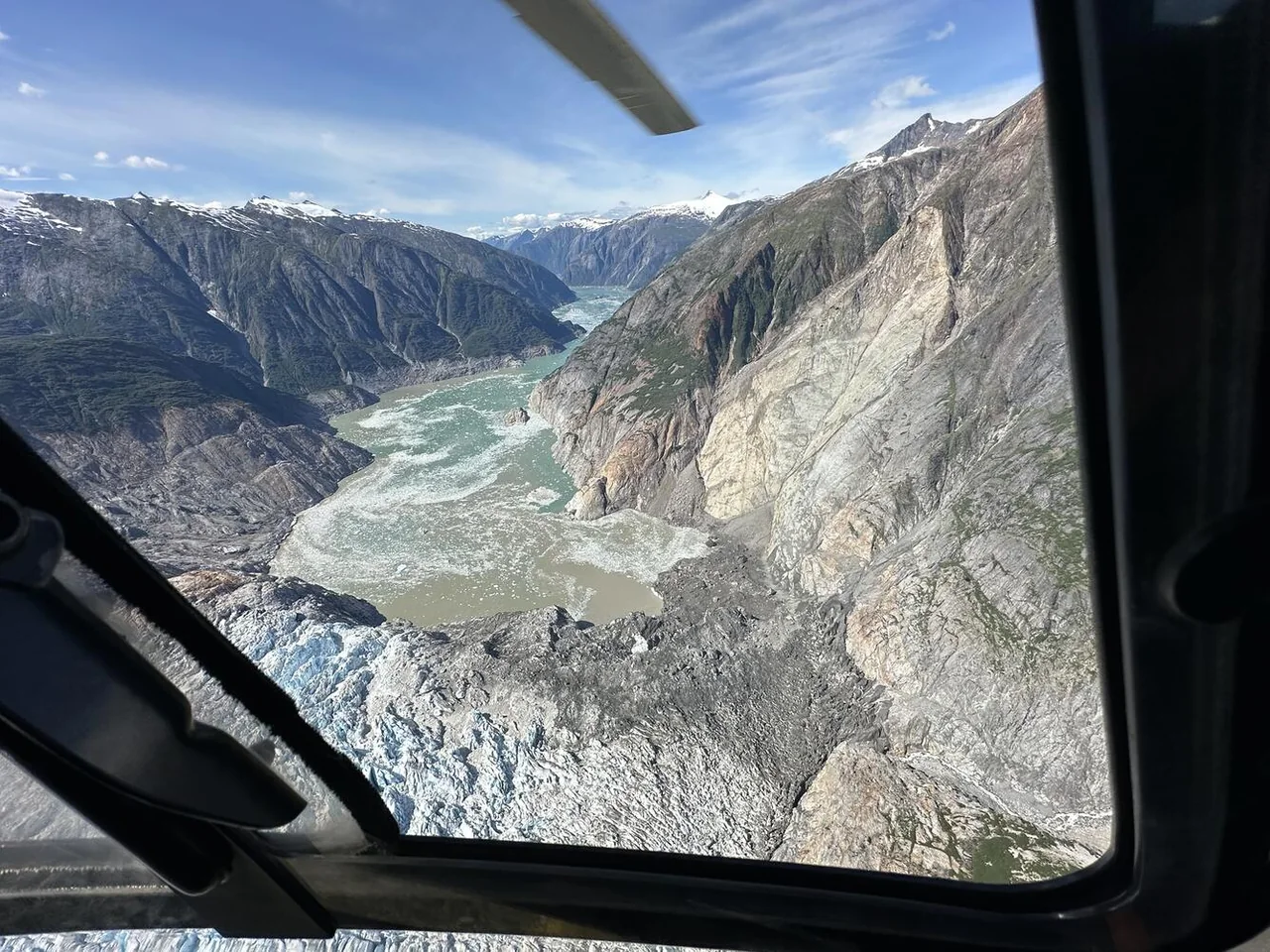
A massive landslide in Alaska's Tracy Arm fjord triggered one of the tallest tsunamis ever recorded, sending water 481 meters up the opposite wall of the fjord. The event was documented in a new study published this week, which highlights the growing concern for cruise tourism in the region. The landslide occurred on August 10, 2025, and was detected by seismic instruments. The resulting tsunami wave traveled at an impressive speed of over 70 meters per second.
The landslide generated an initial breaking wave followed by a megatsunami that stripped vegetation from the steep fjord walls. Fortunately, no one was killed or injured in the disaster, largely due to the fact that it occurred during early morning hours when cruise ships and large numbers of visitors were not present in the immediate area. However, scientists warn that this may not be the case in the future.
The study's lead author, Dan Shugar, a University of Calgary geomorphologist, notes that the landslide was 'unbelievably lucky' for the absence of casualties. He cautions that future events could have devastating consequences if they occur during peak tourist season or when vessels are present.
Tracy Arm fjord is a popular destination for cruise ships, tour boats, and kayakers due to its unique features such as tidewater glaciers, steep cliffs, and floating ice. However, the same geological characteristics that make it attractive also amplify landslide-generated tsunamis, creating extreme local hazards with little warning.
The U.S. Geological Survey detected the landslide at 5:26 a.m. local time and reported seismic waves equivalent to a magnitude 5.4 earthquake. A NOAA tide gauge in Juneau recorded tsunami waves up to 36 centimeters above tide level that continued for hours.
Researchers found that the landslide was preceded by several days of increasing microseismic activity, suggesting that future collapses in glacier fjords could be detected before failure. This discovery highlights the importance of monitoring seismic activity in these regions.
The study links the failure to glacial retreat driven by climate change. As glaciers pull back, they can remove support from steep mountain slopes, leaving unstable rock faces exposed above narrow fjords and coastal waters.
Alaska has a history of extreme landslide tsunamis, including the 1958 Lituya Bay event, which produced a record runup of about 530 meters. However, the Tracy Arm event is notable because it occurred in a heavily visited cruise region, turning a remote geologic hazard into a direct maritime safety concern.
The warning from scientists is clear: glacier fjords are becoming increasingly unstable just as more vessels and passengers are entering them. The study serves as a stark reminder of the need for improved safety protocols and monitoring systems to mitigate the risks associated with this type of disaster.
The study highlights the need for more stringent safety protocols and monitoring systems for cruise ships operating in glacier fjords.