

Indonesia's economic stability has long been tied to subsidized fuel, with cheap gasoline and diesel deeply ingrained in transport habits and household budgets. As global oil prices rise due to geopolitical instability, the cost of maintaining these subsidies becomes dramatically more expensive, placing pressure on public finances. This unsustainable fiscal burden is a result of the country's heavy state intervention in the energy market.
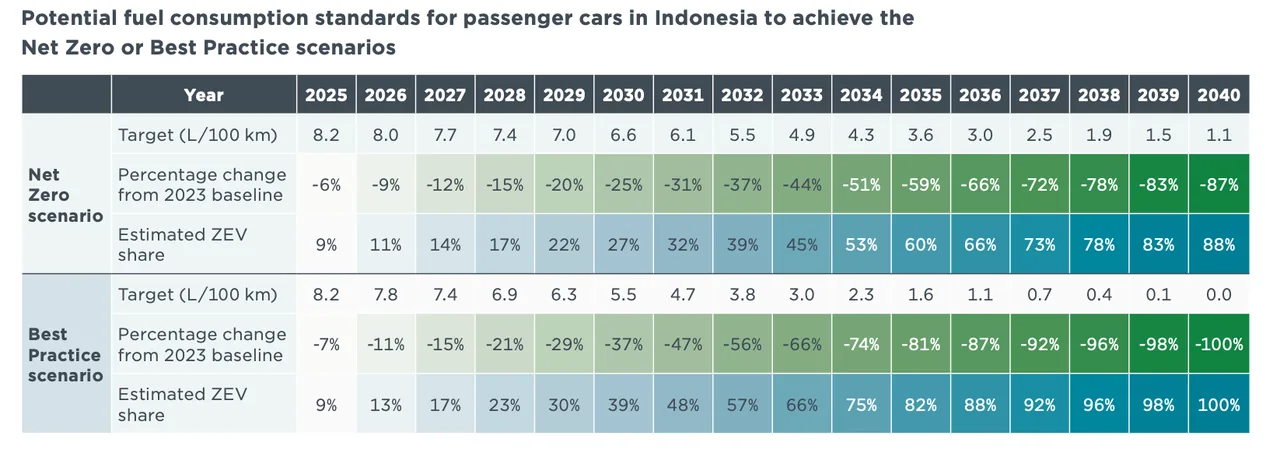
The International Council on Clean Transportation's working paper outlines a roadmap for Indonesia to accelerate its electric vehicle transition, recognizing that the transport system is locked into fossil fuel dependence at a time when geopolitical costs are rising. The report notes that the road transport sector accounts for 22% of the country's energy-related emissions and that fossil fuel subsidies account for approximately 10% of state spending in 2023.
The scale of Indonesia's challenge is daunting, with over 170 million registered vehicles and annual sales of around 6 million motorcycles and 1 million cars, trucks, and buses. The vast majority still rely on low-quality fossil fuels, contributing to thousands of premature deaths annually due to vehicle pollution. This highlights the urgent need for a transition away from oil dependence.
The report frames electrification as a pathway out of this structural trap, not only by reducing emissions but also by reshaping the country's energy exposure. It emphasizes that the transition offers an opportunity for Indonesia to achieve both economic and environmental objectives, linking reduced oil dependence with long-term fiscal stability and improved public health outcomes.
Indonesia's reliance on imported fuel exposes it directly to external shocks, and the report underscores this vulnerability by stating that the majority of road transport fuels are imported and domestic production is in decline. This compounding both fiscal and energy security risks, making the transition to electric vehicles a pressing priority.
The International Council on Clean Transportation's working paper provides a clear roadmap for Indonesia to accelerate its electric vehicle transition, outlining policies to achieve this goal. The report notes that electrification can help Indonesia reduce its reliance on oil imports and mitigate the impact of global oil price volatility.
This is reinforced by the scale of potential benefits outlined in the report, which suggest that a successful transition could lead to significant economic and environmental gains for the country. By transitioning to electric vehicles, Indonesia can not only improve public health outcomes but also achieve long-term fiscal stability.
Ultimately, the transition to electric vehicles offers Indonesia a chance to break free from its oil dependence and create a more sustainable energy future. This is an opportunity that cannot be ignored, particularly in light of the growing global demand for clean energy solutions.
As the world continues to grapple with the challenges of climate change and energy security, countries like Indonesia are at the forefront of this transition. By embracing electric vehicles, Indonesia can take a significant step towards reducing its reliance on oil imports and mitigating the impact of global oil price volatility.
The transition to electric vehicles is not just an environmental initiative but a response to a system under strain.