

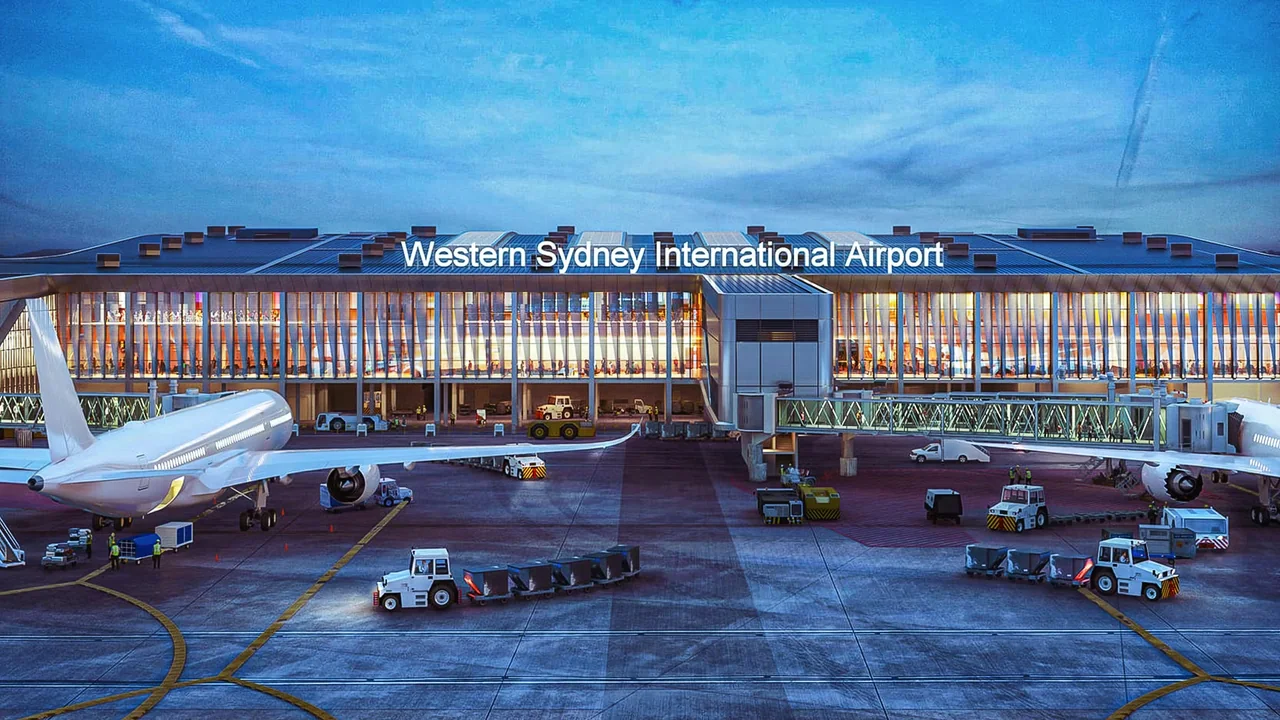
Western Sydney International Airport is a project that represents a new era for Australian aviation, adding a new gateway to the Sydney area. The airport's decision to implement a Digital Aerodrome Service (DAS) marks a significant shift towards a decentralized future where technology bridges the gap between the tarmac and the team managing it.
The DAS system responds to the logistical complexities of modern airspace management, offering a more efficient and effective way to manage air traffic. Traditional towers are constrained by physical limitations, whereas Western Sydney's digital system provides a seamless 360-degree representation of the airfield.
The implementation of the DAS also marks Australia's first purpose-built digital air traffic control system for a major international airport. This technology enables controllers to monitor the airfield through a single, actionable interface, merging air traffic data and live video feeds into a comprehensive picture.

Remote tower technology provides controllers with a level of situational awareness not available in traditional tower setups. The Eastern Creek facility serves as a nerve center where 70 new jobs have been created to manage the intricate balance of air traffic, maintenance, and firefighting services.
Transitioning to a digital tower also offers significant long-term infrastructure flexibility. As the airport grows, the digital system can be scaled with software updates and additional camera modules rather than costly physical expansions.
The DAS is powered by a sophisticated network of 25 high-resolution cameras that act as the primary eyes on the airfield. These cameras provide visual data for the system, enabling controllers to make informed decisions in real-time.

This innovative approach has significant implications for the future of aviation, enabling more efficient management of airspace and reducing costs. As the airport prepares to open for cargo flights in July 2026, followed by passenger operations in October 2026, the DAS will play a critical role in ensuring smooth operations.
The decision to implement a digital-first approach at Western Sydney International Airport sets a precedent for the future of air traffic control. As airports around the world continue to evolve and grow, it is likely that we will see more adoption of this technology in the coming years.
The shift towards digital air traffic control has significant implications for the future of aviation, enabling more efficient management of airspace and reducing costs.