

The offshore wind industry is facing a critical challenge: corrosion on mooring lines. A new sensor technology developed by Vicinay Marine and Tecnalia aims to tackle this issue head-on. By remotely monitoring corrosion, the companies hope to improve safety, reliability, and service life of offshore systems. This could lead to significant cost savings and reduced downtime for operators.
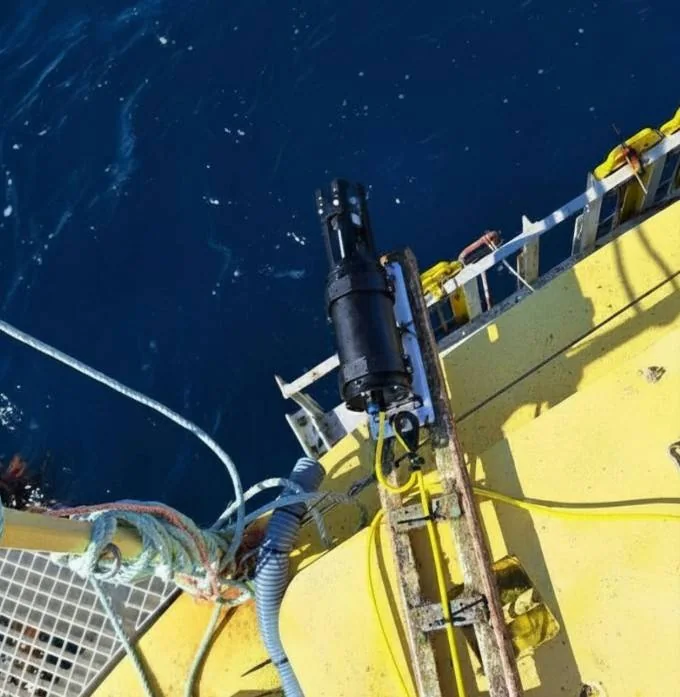
The sensor uses electrical resistance measurements to quantify section loss in mooring components in real time, model degradation trends, and predict remaining service life. This technology is targeted at offshore wind farms and other floating offshore systems, where corrosion remains a key challenge affecting the integrity and durability of chains and connectors exposed to harsh marine conditions.
Corrosion on mooring lines can have severe consequences, including equipment failure and environmental damage. The new sensor technology could help mitigate these risks by enabling continuous and accurate monitoring of degradation processes. This would allow for more efficient maintenance strategies and reduced costs associated with physical inspections.
The validation of the sensor at Tecnalia's HarshLab floating test platform off the coast of northern Spain demonstrates its effectiveness in real marine operating conditions. The platform is used to assess technologies under harsh conditions, providing valuable insights into the performance of the sensor in challenging environments.
Aintzane Expósito, Head of Materials Department at Vicinay Marine Innovación, highlighted the significance of this technology: 'This sensor enables us to take a decisive step towards continuous and accurate monitoring of the degradation process, which will improve knowledge of actual in-service behaviour, optimise component design and thickness, and support more efficient maintenance and cost management throughout the system's service life'.
The new sensor technology could also be applied across other sectors requiring monitoring of submerged metallic infrastructure, including shipping and port facilities. This would expand its potential impact on industries facing similar corrosion challenges.
By reducing the need for costly physical inspections, improving predictive maintenance strategies, and supporting earlier detection of degradation before critical failure levels are reached, this technology has the potential to transform the way offshore systems are managed and maintained.
The development of this sensor technology is a testament to the power of collaboration between industry leaders and research institutions. The partnership between Vicinay Marine and Tecnalia demonstrates a commitment to innovation and addressing complex challenges facing the offshore wind industry.
The implementation of this technology could lead to significant cost savings and reduced downtime for operators, making it an attractive solution for companies looking to improve their efficiency and reliability.
Overall, the new sensor technology offers a promising solution to the corrosion challenge facing the offshore wind industry. Its potential impact on industries requiring monitoring of submerged metallic infrastructure is vast and warrants further exploration.
The future of offshore systems will likely involve increased use of remote monitoring technologies like this sensor. As the industry continues to evolve, it's essential that we prioritize innovation and collaboration to address complex challenges like corrosion.
The development of this sensor technology marks a significant step forward in the management of corrosion on offshore systems.