

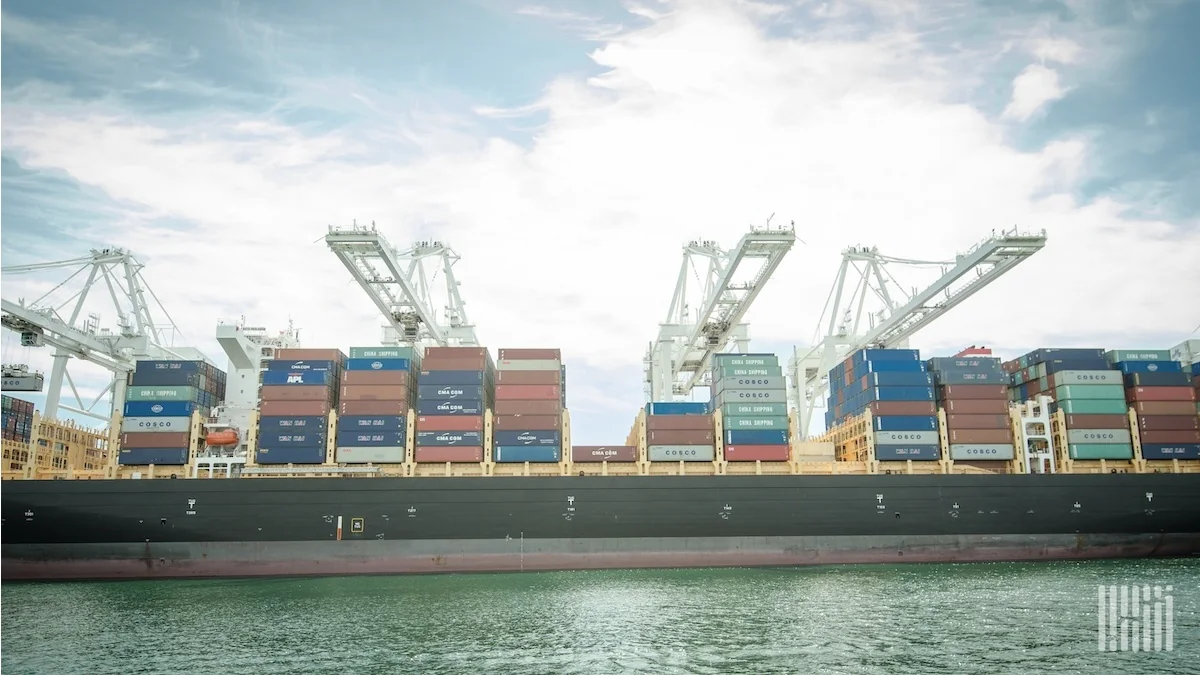
The Port of Los Angeles has processed a record-breaking number of twenty-foot equivalent units (TEUs) in April, with 890,861 TEUs handled during the month. This represents a 5.7% increase compared to the same period last year and marks the second-best April on record for the port. The strong performance is attributed to consumer demand boosting imports despite ongoing uncertainty around tariffs and trade policy.
The Port of Los Angeles has seen a significant surge in cargo volume, with 3,279,704 TEUs handled through the first four months of this year. This represents a 2% increase above its five-year average for that stretch and 2% below the 2025 record pace when front-loading was spurred by President Donald Trump's chaotic tariff policies.
According to Port of Los Angeles Executive Director Gene Seroka, April was the strongest month this year and the highest cargo volume seen since last August. This indicates that American consumers remain resilient despite ongoing uncertainty in trade policy.

The resilience of American consumers is likely to be tested by soaring gas prices. Trucking companies may begin to pass on the added cost of diesel fuel, which has increased 50% from the beginning of the year. This could lead to higher transportation costs and potentially impact the supply chain.
Cargo continues to move with no back-ups or delays, according to Seroka, who recently visited Asia. Factories are running at full capacity, indicating that the supply chain is functioning smoothly despite some uncertainty.
Loaded imports totaled 459,825 TEUs in April, ahead by 5% year-over-year and up 21% from March. Loaded exports dipped 0.5% to 127,726 TEUs.
Empties surged 10% to 303,310 TEUs, said Seroka, as liners reposition assets to handle peak season eastbound goods on the trans-Pacific.
The Port of Los Angeles is well-positioned to navigate the challenges posed by tariffs and trade policy. The port's strong performance in April suggests that American consumers remain committed to buying imports despite uncertainty.
As the supply chain continues to evolve, it will be important for industries to stay ahead of the curve when it comes to adapting to changing market conditions and technological advancements.