
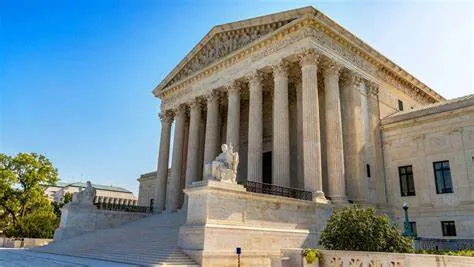

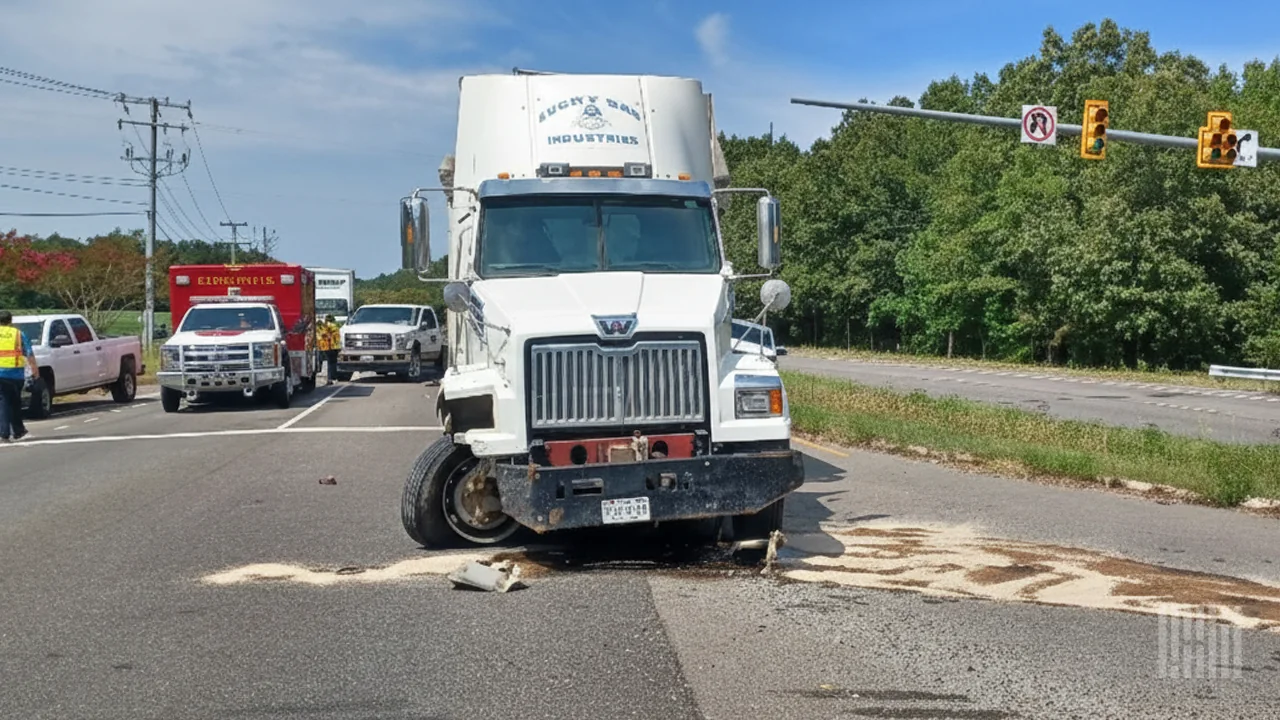
The Supreme Court's unanimous decision in Montgomery v. Caribe Transport II, LLC marks a significant shift in the liability landscape for freight brokers.
A key takeaway from the case is that states retain authority to regulate motor vehicle safety, and require freight brokers to exercise ordinary care when selecting carriers.
This ruling has far-reaching implications for the transportation industry, as it establishes a new standard for evaluating claims against freight brokers.

The decision also highlights the importance of clear definitions in regulatory frameworks, as the court relied on dictionary definitions and prior case law to interpret the Federal Aviation Authorization Act.
In essence, the FAAAA's safety exception preserves 'the safety regulatory authority of a State with respect to motor vehicles,' allowing states to regulate safety concerns related to motor vehicles.
The court's ruling is notable for its brevity, as Justice Amy Coney Barrett's opinion fits on a napkin, making it an accessible and understandable decision.
The Seventh Circuit's reversal of Montgomery v. Caribe Transport II, LLC sends the case back for proceedings consistent with the opinion, allowing Shawn Montgomery to pursue his negligent-hiring claim against C.H. Robinson.
This ruling has significant implications for the transportation industry, as it establishes a new standard for evaluating claims against freight brokers and highlights the importance of accountability in carrier selection.
The decision also underscores the need for clarity in regulatory frameworks, as the court's interpretation of the FAAAA's safety exception ensures that states can regulate motor vehicle safety without conflicting with federal preemption defenses.
The court's ruling has significant implications for the transportation industry, as it establishes a new standard for evaluating claims against freight brokers.