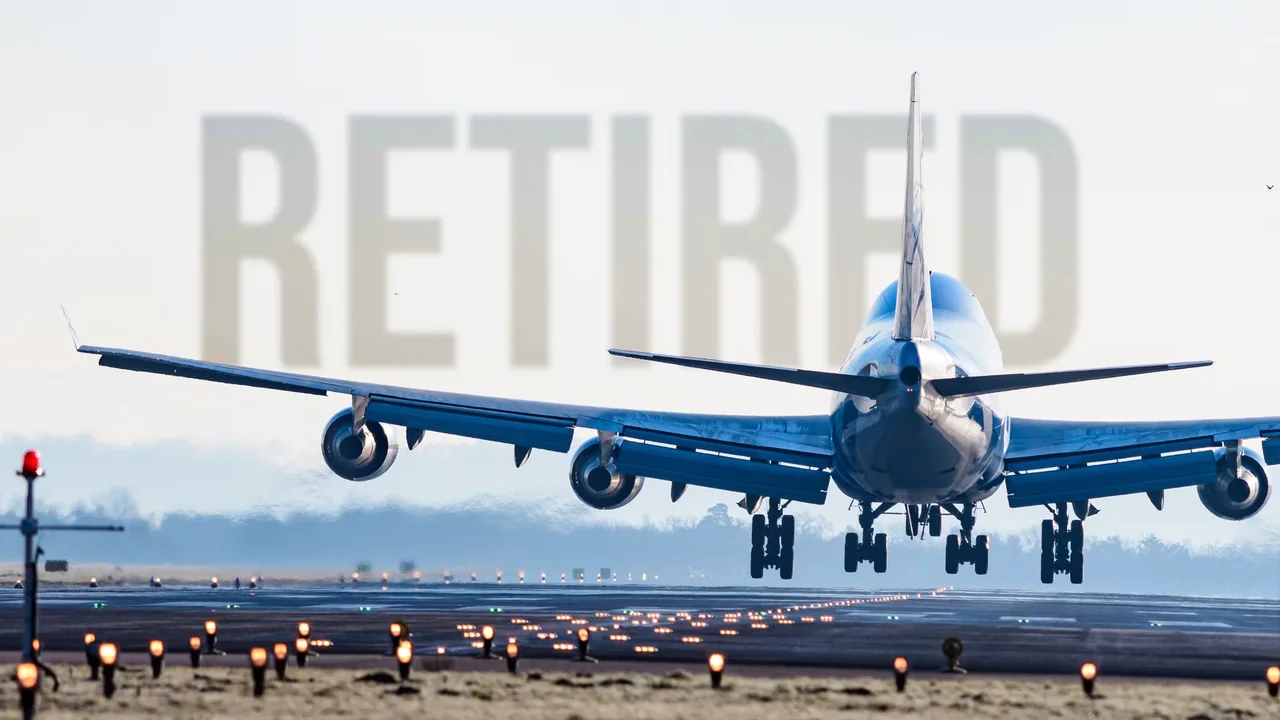
The Boeing 747 entered commercial service in 1970 and revolutionized long-haul aviation with its sheer size and capacity. At its peak, the aircraft carried more passengers and miles than any other plane in history, becoming a defining image of the jet age for generations of travelers.
By the mid-2010s, however, the economics of twin-engine widebodies began to favor smaller, more fuel-efficient aircraft, leading major airlines to retire their 747 fleets. Yet, retirement from passenger service is not the end of the line for these iconic planes.
A Boeing 747 leaving a commercial airline's fleet can follow several paths depending on its age, condition, and market demand. Some are converted into freighters, while others go to desert storage facilities or are dismantled for parts.

The most common second life for retired Boeing 747s is as cargo haulers, with the conversion process adding years of active service to an airframe that has already completed a full passenger career.
What makes the 747 particularly well-suited to freight operations is its design feature: the nose door. This allows outsize items to be loaded straight onto the main deck without dimensional constraints, making converted 747s difficult to replace for certain cargo categories.
As of early 2026, approximately 80-90 Boeing 747-400 freighters remain in active service globally, operated by carriers including Atlas Air, Cargolux, UPS, and National Airlines. This represents a working fleet that has long outlasted predictions about the 747's commercial lifespan.

The Boeing 747's cargo capability has been sustained by market demand for its unique ability to handle oversized cargo items such as turbine engines, aerospace components, military vehicles, and industrial equipment.
Despite their age, these freighters continue to play a vital role in the global cargo industry, demonstrating the ingenuity and adaptability of aircraft design and conversion processes.
The Boeing 747's unique design features make it an attractive option for cargo carriers seeking to maximize their fleet's lifespan.