

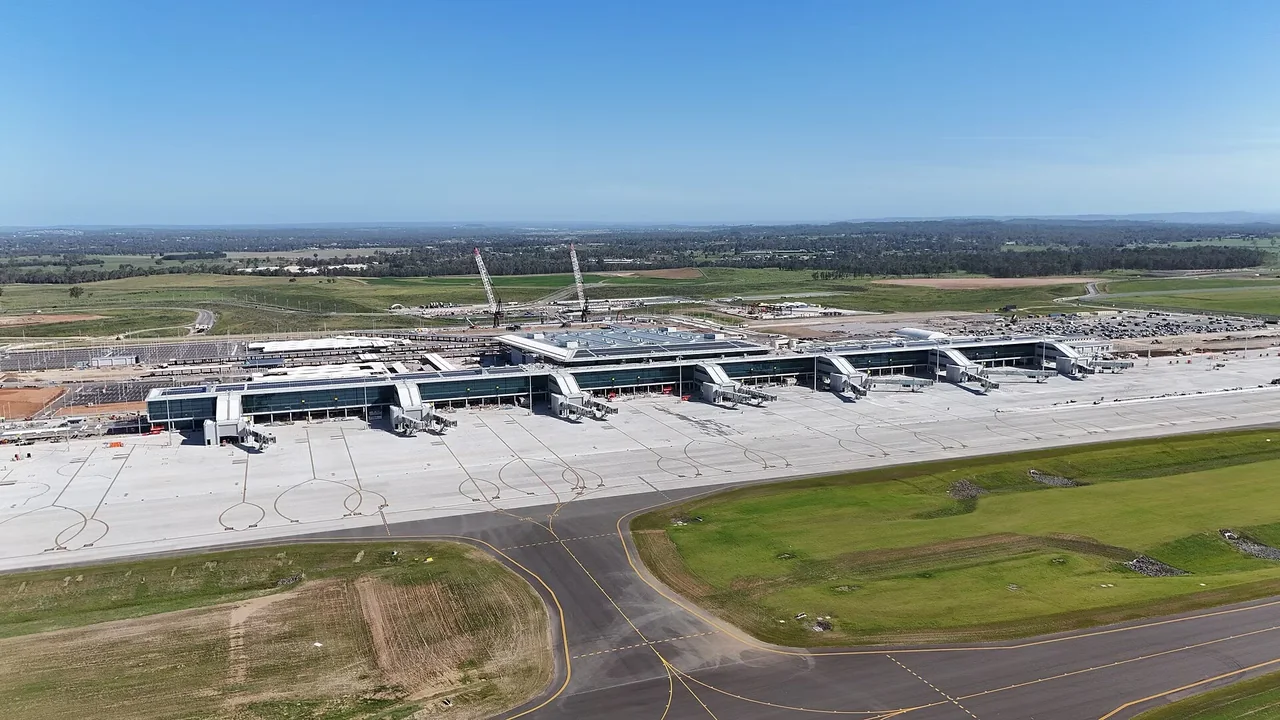
A former Qantas executive is planning to launch a new airline that could potentially challenge the dominance of Virgin Australia and Qantas in the Australian aviation industry. The airline, named Zinc, would operate from Western Sydney International Airport (WSI) and model its business on the successful European ultra-low-cost carrier Ryanair.
The idea of Zinc Airlines has been met with excitement among some, who see it as a long-overdue break for Australia's aviation monopoly. However, others have expressed concerns about the potential impact on traditional carriers and the environment.
Zinc would focus on offering base fares lower than those of Qantas low-cost subsidiary Jetstar, but would charge extra for services such as checked luggage and priority boarding. The airline would also operate a fleet of Airbus A321neos, which could accommodate up to 244 passengers in a single class layout.

The A321neo is a popular choice among budget carriers due to its fuel efficiency and range. However, it's worth noting that the aircraft's high-density configuration may not be suitable for all routes or passenger preferences.
The airline's ambitions are ambitious, with plans to launch services to Brisbane, Melbourne, and Sydney before venturing to other destinations. However, there is currently no set date for when Zinc could commence operations.
Zinc would not be the only new entrant in the Australian aviation market, with Koala Airlines also planning to launch a low-cost airline using Boeing 737s. The introduction of these new carriers could potentially disrupt the status quo and create new opportunities for passengers.

The Western Sydney International Airport (WSI) is seen as an attractive location for Zinc's operations due to its proximity to major cities and lack of airport slots restrictions. This could provide a unique advantage for the airline in terms of scheduling flexibility.
While some have welcomed the idea of a new ultra-low-cost carrier, others have raised concerns about the potential environmental impact of increased air travel. As the aviation industry continues to grow, it's essential that we prioritize sustainability and consider the long-term effects of our actions.
Ultimately, the success of Zinc Airlines will depend on its ability to attract customers and offer competitive pricing without compromising on safety and service standards. If successful, it could potentially break Australia's aviation monopoly and create a more diverse market for passengers.

The introduction of a new ultra-low-cost carrier could shake up the Australian market, but it remains to be seen whether it can sustain itself in the long term.