


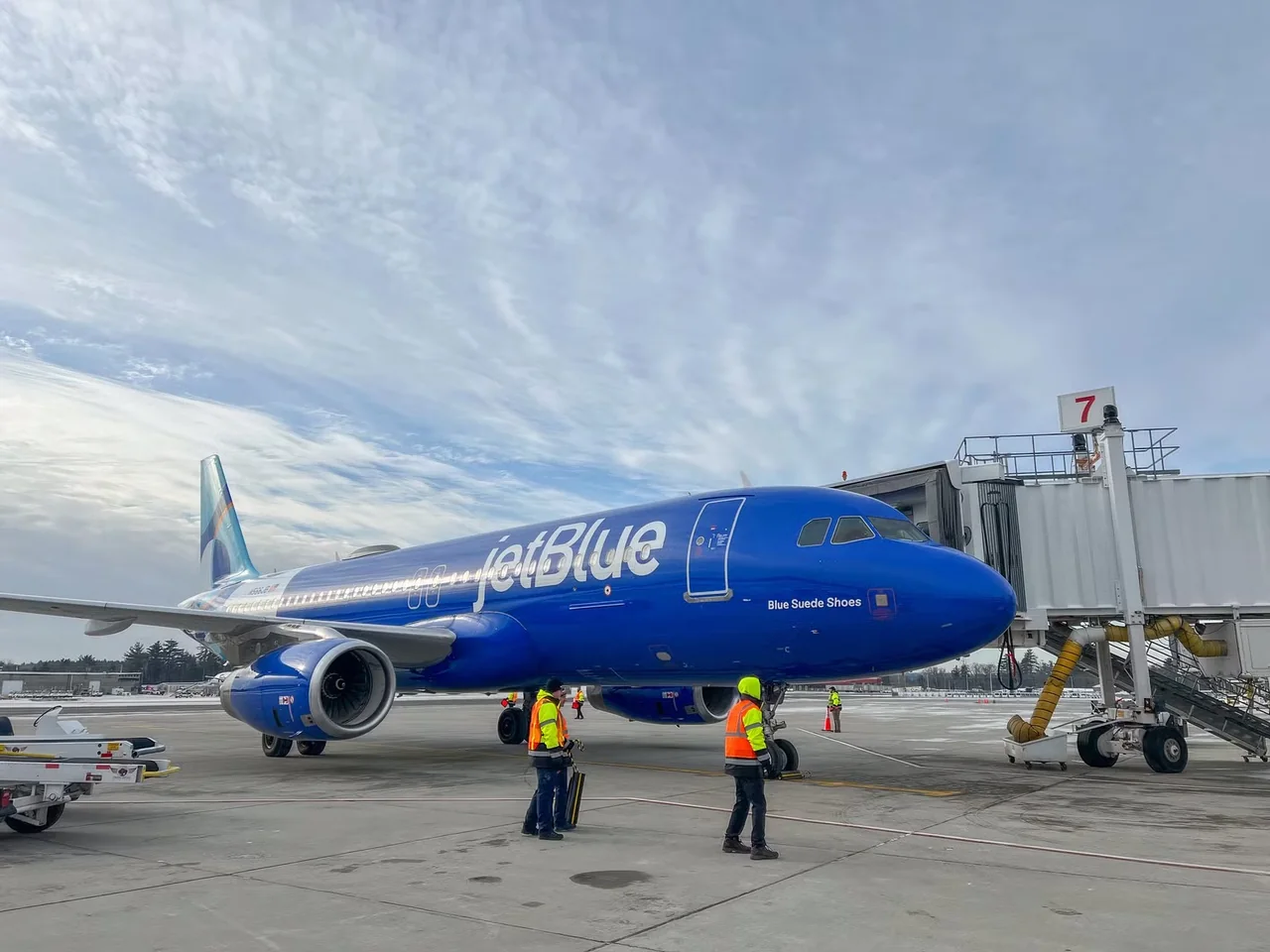
JetBlue Airways will end all service at Manchester-Boston Regional Airport (MHT) on July 8, marking another setback for regional air service in northern New England. The decision comes less than two years after the airline launched operations at the New Hampshire airport, and follows mounting financial and operational pressures across the aviation sector. The airline has historically had strong ties to the New England area, and continues to hold a large presence at Boston Logan International Airport (BOS).
Airport officials said JetBlue informed them it needed to “support national connectivity in a time of capacity crisis,” a phrase that has since drawn attention across the airline industry. The company cited underperforming routes and a need to shift aircraft toward stronger demand centers, particularly in South Florida after the collapse of Spirit Airlines left gaps in capacity at Fort Lauderdale-Hollywood International Airport (FLL).
The airline’s departure is significant for Manchester because JetBlue represented one of the airport’s few low-cost competitors on Florida leisure routes. According to airport traffic data, JetBlue accounted for more than 10% of passenger traffic at Manchester over the past year, operating primarily to Orlando and Fort Myers.

Manchester-Boston Regional Airport has struggled to fully recover passenger volume lost during the pandemic and to years of increasing competition with nearby BOS, about an hour's drive away. The airport, which serves as New Hampshire’s busiest commercial aviation hub, has been trying to attract new carriers and routes to boost its offerings.
JetBlue Pulls Back From Smaller Markets As Airlines Face Capacity Constraints
The decision comes as the airline industry faces a capacity crisis, with many airlines struggling to maintain profitability in a highly competitive market. This trend is likely to have a ripple effect on smaller airports, which may find it increasingly difficult to retain service from larger carriers.

As the aviation sector continues to navigate these challenges, it will be interesting to see how Manchester-Boston Regional Airport adapts and responds to the loss of JetBlue service. The airport may need to consider new strategies to attract carriers and boost passenger volume.
The impact of this decision on regional air service in northern New England is likely to be significant, with many passengers facing reduced options for travel within the region.
In the short term, customers with affected bookings will either be rebooked on alternative flights or offered full refunds. However, the long-term implications of this decision may be more far-reaching, and it remains to be seen how Manchester-Boston Regional Airport will recover from this loss.

As airlines continue to face capacity constraints, smaller airports are facing increased pressure to retain service from larger carriers.