
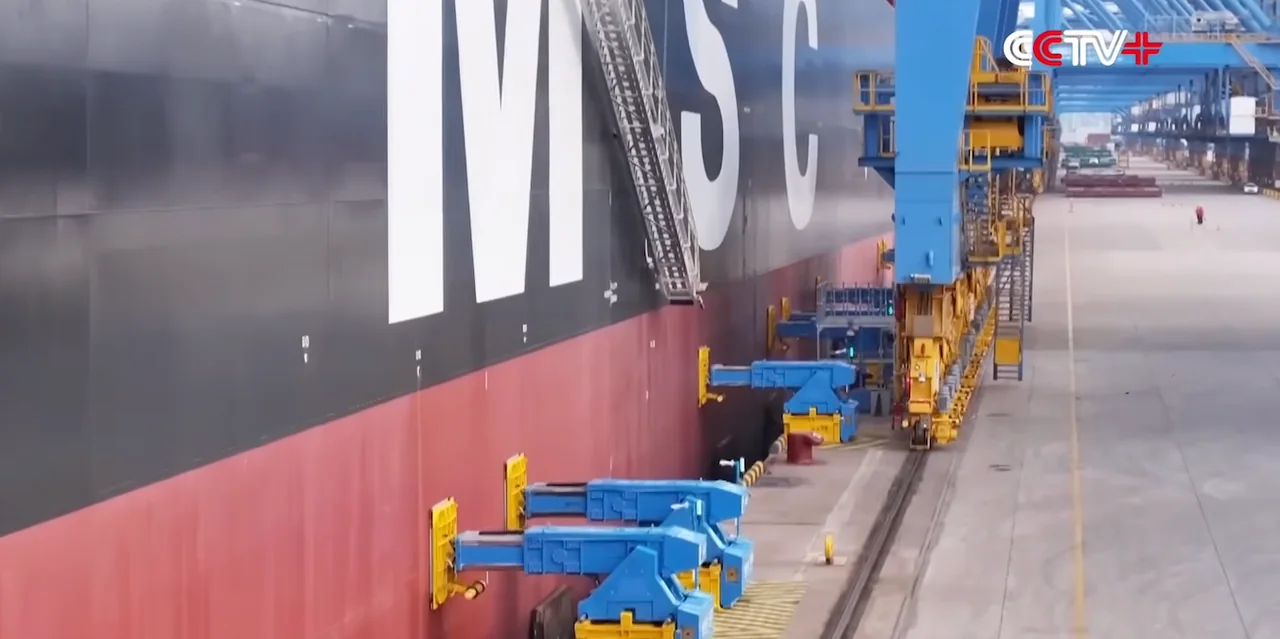
A vacuum-based ship mooring system has been successfully deployed at northern China's Port of Qingdao, marking a significant milestone in the country's efforts to increase efficiency and safety in its maritime operations. The autonomous technology was first introduced in January and has since demonstrated impressive results, reducing the time it takes to berth a container ship from half an hour to just 30 seconds.
One of the key benefits of this system is that it eliminates the need for workers to secure mooring lines, making the process significantly safer. This is particularly important at ports like Qingdao, which handles over 32 million twenty-foot equivalent units annually, representing a 6% increase from the previous year.
The deployment of these autonomous mooring units has been part of a larger effort to modernize and streamline operations at the port. With 13 vacuum mooring units in operation, the time it takes to berth a ship has been significantly reduced, allowing for more efficient use of resources and increased productivity.

This technology is not only beneficial for the port's operational efficiency but also serves as a model for other ports around the world looking to adopt similar systems. By reducing the time spent on manual mooring operations, these autonomous systems can help mitigate some of the risks associated with traditional methods.
The impact of this technology extends beyond just increased efficiency and safety. It also highlights the growing importance of autonomous systems in the maritime industry, which is expected to play a significant role in shaping the future of global trade and commerce.
As the world's fifth-busiest port, Qingdao's adoption of this technology demonstrates its commitment to innovation and forward-thinking. This move is likely to have far-reaching implications for the industry as a whole, particularly in terms of reducing costs and improving operational efficiency.
Furthermore, the success of this autonomous ship mooring system underscores the need for ports and shipping companies to prioritize investments in modern technologies like AI and automation. By doing so, they can stay ahead of the curve and capitalize on emerging trends and opportunities.
The benefits of this technology are multifaceted, with significant implications for both operational efficiency and safety. As the maritime industry continues to evolve, it is likely that we will see even more innovative solutions emerge in the coming years.
Ultimately, the successful deployment of autonomous ship mooring systems like this one marks an important step forward for the industry as a whole. By embracing new technologies and adopting more efficient methods, ports and shipping companies can work towards creating a safer, more sustainable future for global trade and commerce.
The adoption of autonomous systems like this ship mooring technology can help mitigate risks associated with traditional manual methods.