
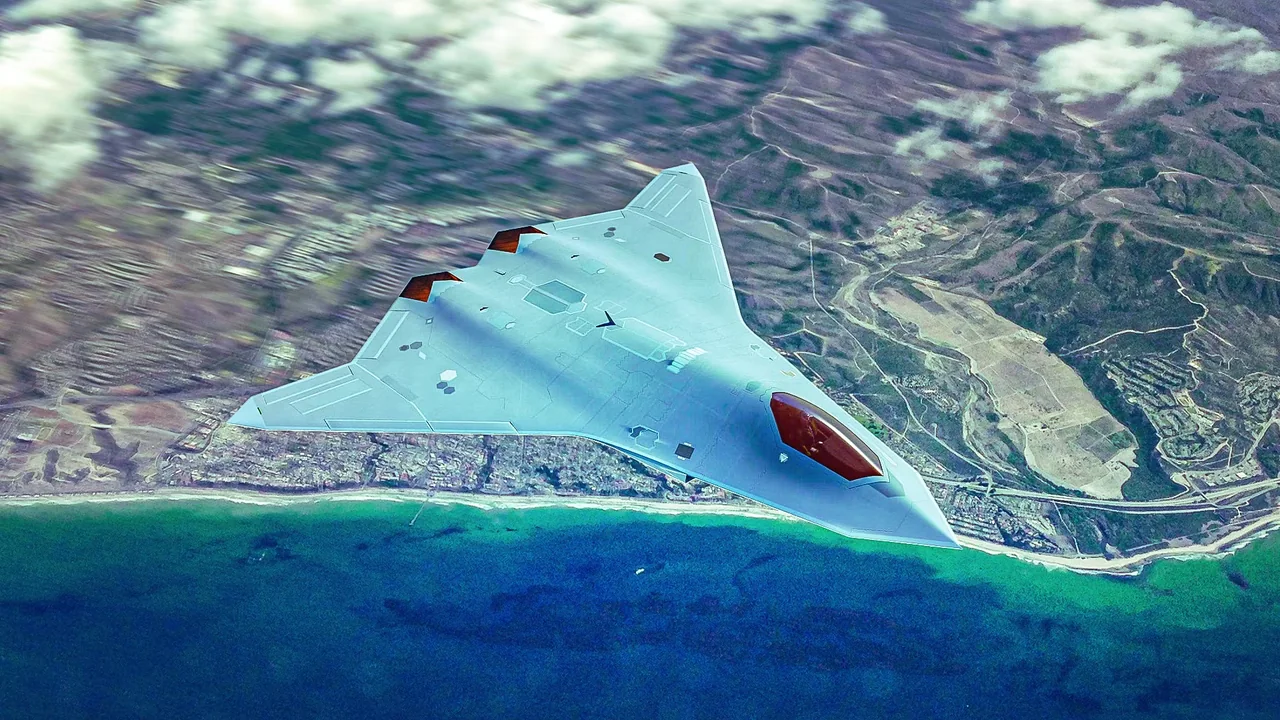
China shocked the world with its first fully functional technology demonstrator for a 6th-gen fighter, but this has spurred Western nations to accelerate their own programs.
The US Air Force and Navy are racing against time to bring the Boeing F-47 and F/A-XX to production by 2029-2030, while China's J-36/J-50 serial production is expected to start in 2031.
One of the biggest technological hurdles for a true 6th-gen fighter is variable cycle engines that can shift between efficient and extremely high-speed flight regimes.

Chinese aircraft have far less powerful and more inefficient engines than Western counterparts, even when considering advanced airframes like the Chengdu J-20 Mighty Dragon or Shenyang J-35A Gyrfalcon.
The US Air Force and Navy are pushing rapidly to bring their programs to production in the next few years, with a $20 billion contract award for Boeing's F-47 program in March 2025.
Boeing has even said it began building the first production-representative F-47 at its St. Louis facility.

Europe's Global Combat Air Program and Future Combat Air System are advancing in light of China's progress, with multiple countries investing heavily in their respective programs.
The GCAP is expected to enter service by 2035, while the US Navy's F/A-XX program is still in competition for Northrop Grumman.
Despite China's early lead, the global 6th-gen fighter market is expected to see significant advancements in the next few years, driven by investments from major powers.

The global 6th-gen fighter market is expected to see significant advancements in the next few years, driven by investments from major powers.