

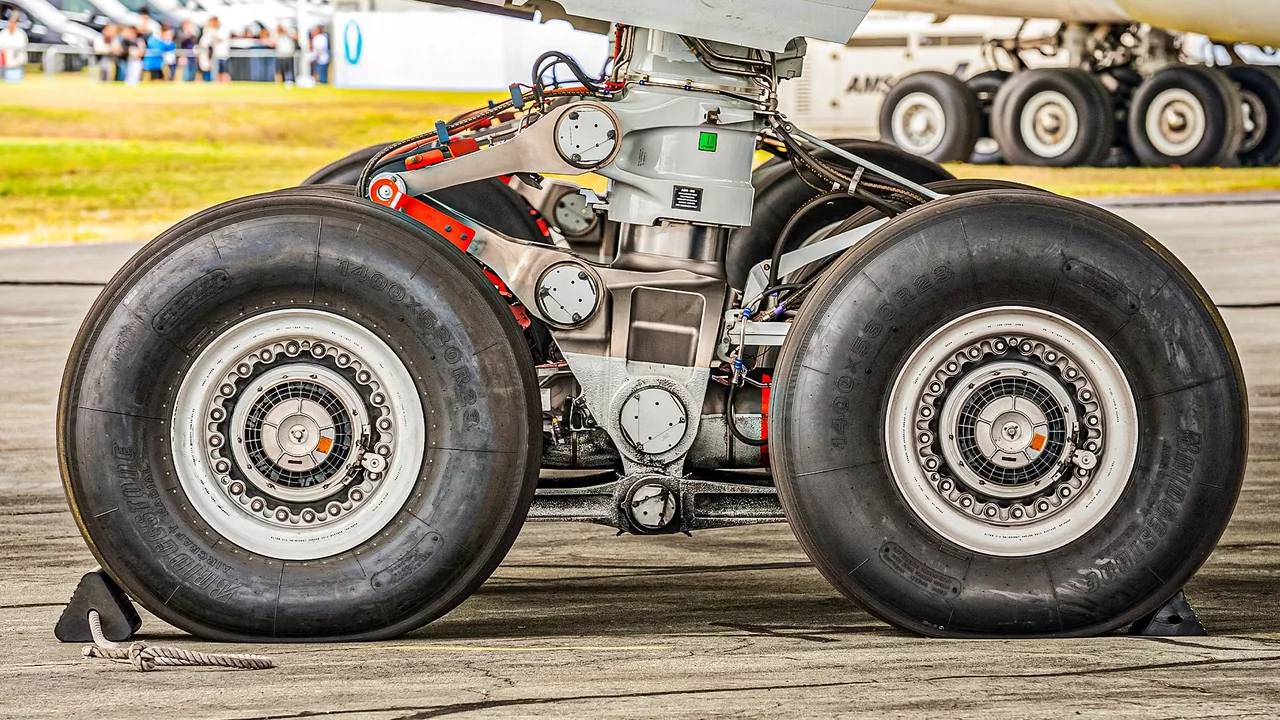
The Boeing 787-10 and Airbus A350-900 share a conventional tricycle gear arrangement, but their internal logic reveals distinct design philosophies.
This comparison highlights the importance of structural architecture, system actuation, and material science in modern widebody aircraft design.
Boeing's decision to source its nose landing gear from Safran Landing Systems resulted in a streamlined interface with the flight deck.

Airbus' split-sourcing strategy allows for regional expertise optimization, but may introduce complexity.
The retraction sequence is where the mechanical differences between the two aircraft become apparent.
Aerodynamic drag reduction during initial climb phase is a key consideration in these subtle engineering choices.

Braking systems pose a challenge: traditional hydraulics vs electric-over-hydraulic steering actuation.
Boeing's pioneering approach to landing gear may pave the way for future innovations.
Long-term maintenance costs and efficiency are critical factors in aircraft design.

The choice of landing gear system can significantly impact maintenance costs and efficiency.