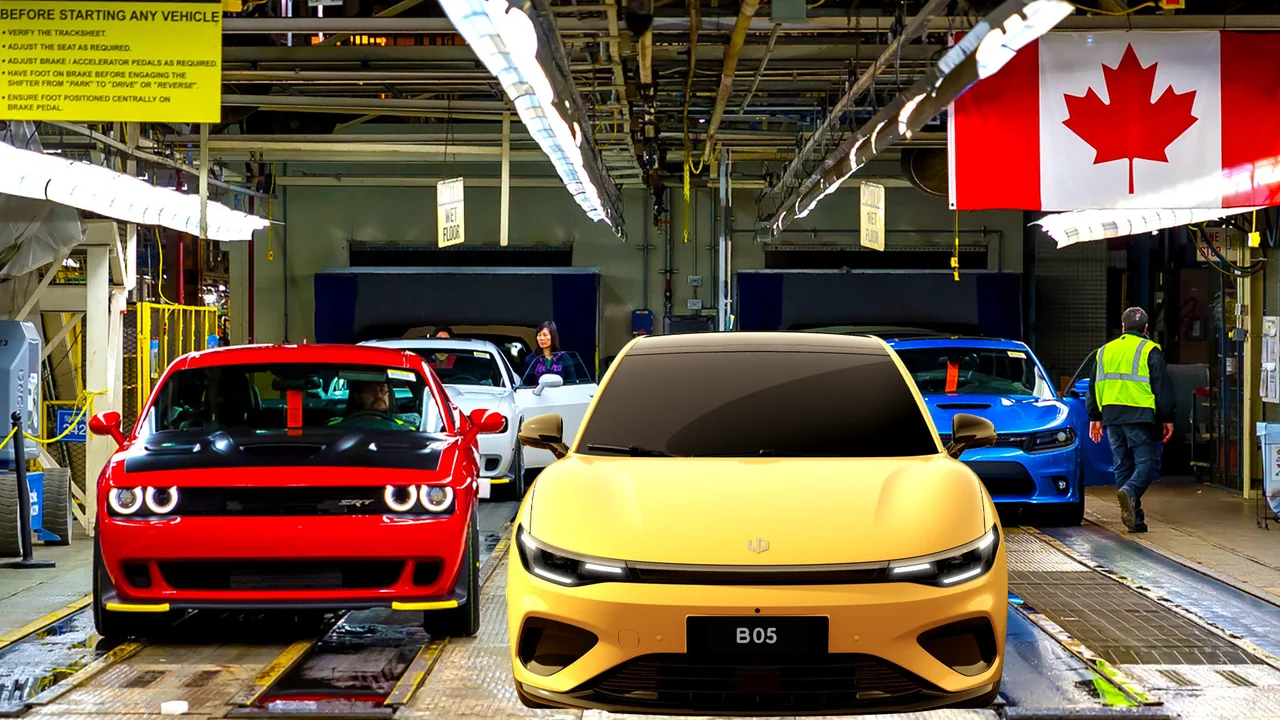
The plant in Detroit, Michigan, that produced the last Hellcat muscle cars has been given a new purpose. The facility, which is one of the most advanced in the world, will now be used to manufacture electric vehicles for Chinese customers. This shift in production marks a significant change in the automotive industry's approach to manufacturing and electrification.
The plant's capabilities make it an ideal location for producing high-performance electric vehicles. Its advanced technology and skilled workforce will enable the production of complex vehicles with ease. This move also highlights the growing demand for electric vehicles in China, which is driving companies to invest heavily in new manufacturing facilities.
Dodge has been one of the most iconic American muscle car brands, but its recent shift towards electrification has led to a change in its manufacturing priorities. The Hellcat engine, which was once the heart of Dodge's high-performance lineup, will no longer be produced at this facility. Instead, it will be replaced by electric powertrains.
The production of electric vehicles is becoming increasingly important for companies looking to reduce their environmental impact and comply with new regulations. As consumers become more environmentally conscious, manufacturers are being forced to adapt and invest in new technologies. This shift is already having a significant impact on the automotive industry, with many companies announcing plans to electrify their entire lineups.
The plant's new focus on electric vehicles will also have implications for the global supply chain. As companies like Tesla and BYD become increasingly dominant in the EV market, they are driving demand for raw materials such as lithium and cobalt. This has led to concerns about the sustainability of these supplies and the potential impact on the environment.
The shift towards electrification is also having a significant impact on the automotive industry's workforce. As companies invest heavily in new technologies, they are often forced to downsize or retrain existing workers. This can be a challenging process for employees who have spent years developing their skills in traditional manufacturing methods.
Despite these challenges, many experts believe that the shift towards electrification is inevitable. As consumers become more environmentally conscious and governments implement stricter regulations, companies will be forced to adapt to stay competitive. The future of the automotive industry looks bright, but it also looks very different from what we know today.
The production of electric vehicles is becoming increasingly important for companies looking to reduce their environmental impact and comply with new regulations. As consumers become more environmentally conscious, manufacturers are being forced to invest in new technologies. This shift is already having a significant impact on the automotive industry, with many companies announcing plans to electrify their entire lineups.
The plant's new focus on electric vehicles will also have implications for the global supply chain. As companies like Tesla and BYD become increasingly dominant in the EV market, they are driving demand for raw materials such as lithium and cobalt. This has led to concerns about the sustainability of these supplies and the potential impact on the environment.
As the automotive industry continues to evolve, it's clear that electric vehicles will play a major role in shaping its future. With companies like Dodge investing heavily in new technologies, the stage is set for a exciting period of innovation and growth.
The shift towards electrification is also having a significant impact on the automotive industry's workforce. As companies invest heavily in new technologies, they are often forced to downsize or retrain existing workers. This can be a challenging process for employees who have spent years developing their skills in traditional manufacturing methods.