


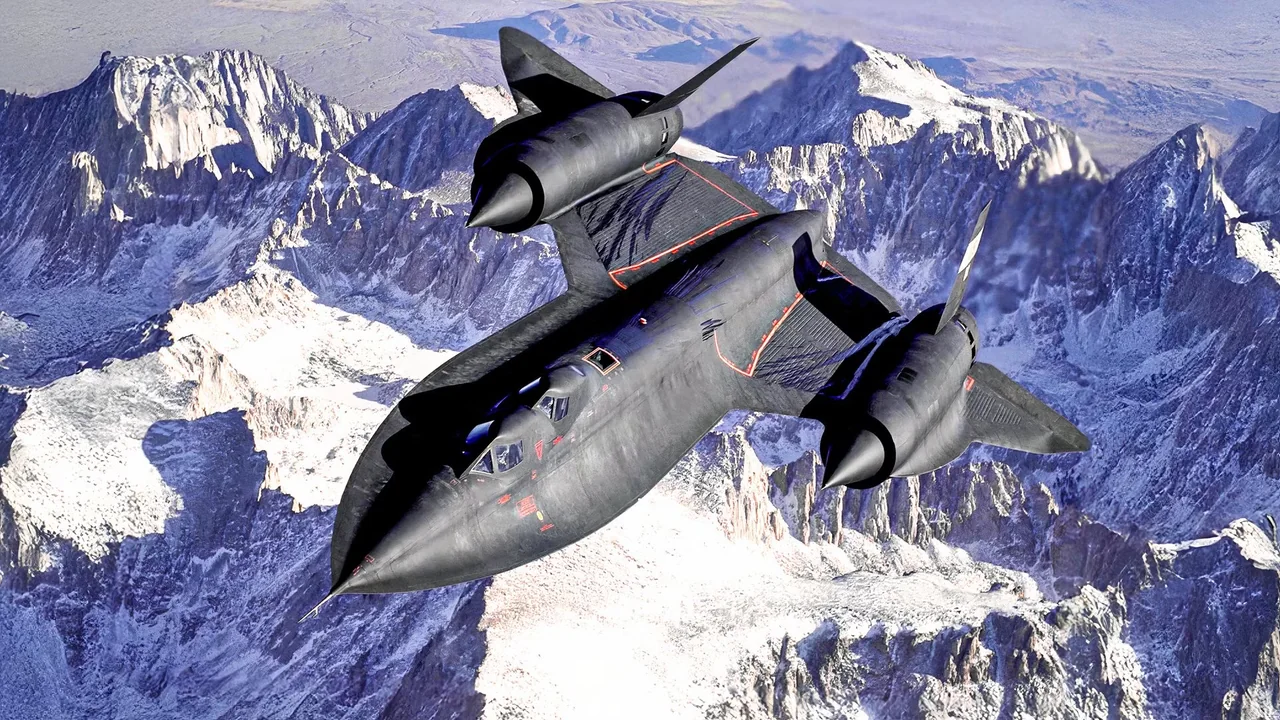
The Lockheed Martin SR-71 Blackbird was a futuristic aircraft that captivated the imagination of the public upon its official reveal in 1964.
Its sleek design, ink-black paint, and long fuselage blended into a highly swept triangular wing area, making it look otherworldly.
This new reconnaissance aircraft provided a view of space like no other due to its operational altitude, allowing it to photograph sensitive sites across the world.

The SR-71's capabilities were evident in its ability to evade interceptors and surface-to-air missiles, with the aircraft being fired upon over 4,000 times with no hits.
One such pilot, USAF Lt. Colonel David Peters, experienced the breathtaking view of space during a flight over the Korean DMZ on a moonless night.
He stated that flying at 80,000 feet allowed him to see 3.5 trillion more stars than he could on the ground.

The SR-71's unique capabilities made it an invaluable asset for military reconnaissance missions, providing critical information about sensitive sites and enemy territories.
The aircraft's operational altitude also provided a distinct advantage in terms of evading detection by radar and other surveillance systems.
Overall, the SR-71 Blackbird was a remarkable aircraft that pushed the boundaries of flight and exploration.

Flying at such altitudes provided the SR-71 with unique capabilities to evade interceptors and surface-to-air missiles.