

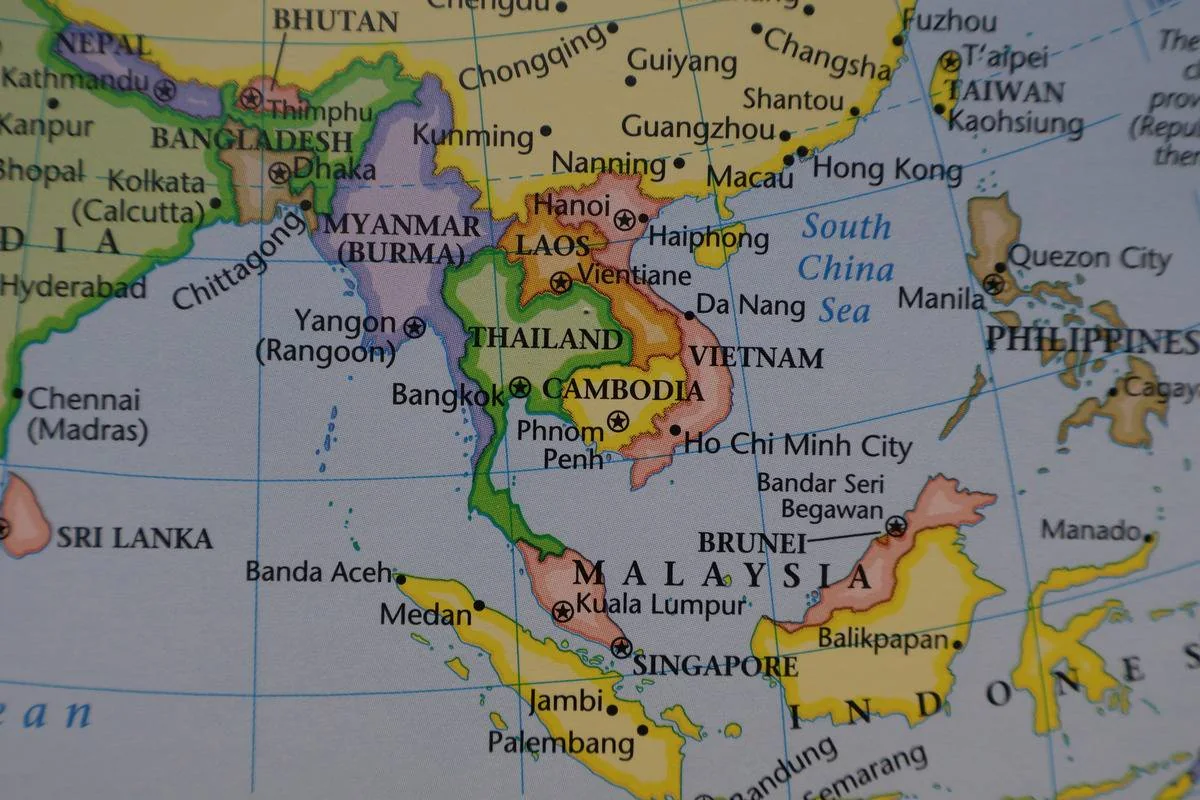
Cambodia has launched a compulsory conciliation process under international law aimed at resolving its long-running maritime boundary dispute with Thailand. The move follows a Thai government decision to unilaterally terminate a 2001 agreement that provided a framework for negotiations over the disputed area in the Gulf of Thailand. This step is taken by Cambodia to protect its sovereignty and maritime rights in accordance with international law.
The conciliation process, which will be overseen by the UN Secretary-General, aims to resolve a dispute over approximately 26,000 sq km of sea in the Gulf of Thailand worth an estimated $300 billion. The disputed area overlaps between the two countries' maritime claims, making it a critical issue for both nations.
Cambodia's move underlines the potential divergence between neighbours in resolving long-standing border disputes despite a fragile ceasefire that ended last year's deadly land border conflict. This development highlights the need for diplomatic efforts to navigate complex territorial claims and protect national interests.
The UN Convention on the Law of the Sea provides a framework for the conciliation process, which allows a panel of independent experts to examine a dispute and make recommendations. However, the findings are not legally binding on either party, leaving room for further negotiations and compromise.
Thailand has previously stated its intention to use UNCLOS as a reference framework while pursuing direct negotiations with Cambodia on maritime boundary demarcation. The Thai government's decision to terminate the 2001 agreement has created renewed urgency to resolve the dispute and unlock the undersea energy resources.
The oil shock from the Iran conflict has created renewed interest in resolving the maritime dispute, which is estimated to hold nearly 12 trillion cubic feet of natural gas and large quantities of oil. The potential economic benefits make this issue a critical one for both Cambodia and Thailand.
Cambodia has appointed Foreign Minister Prak Sokhonn as its agent for the proceedings, alongside Danish diplomat Peter Taksøe-Jensen and French academic Jean-Marc Thouvenin as conciliators. The Thai foreign ministry did not immediately respond to requests for comment.
The conciliation process is expected to be completed within a specified timeframe, with Thailand having 21 days to appoint two of its own conciliators. The conciliators will then select a chair to finalise a conciliation commission, which will oversee the proceedings.
The UN's role in resolving border disputes highlights the importance of international cooperation in navigating complex territorial claims.