


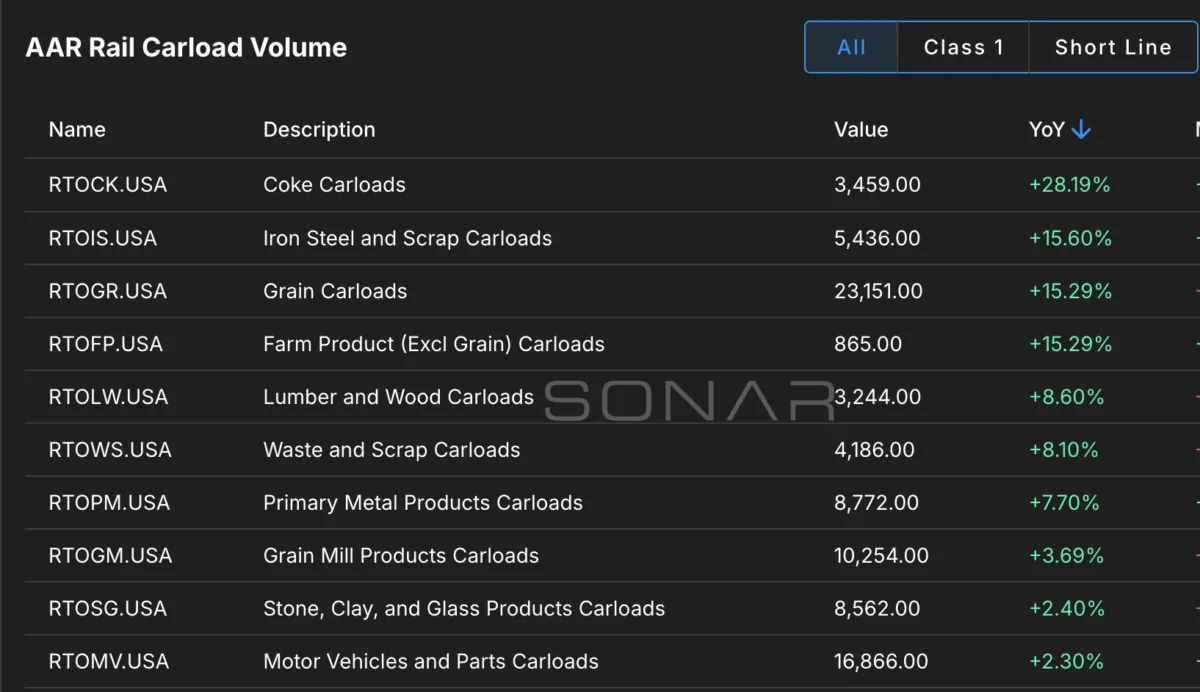
The freight downturn that defined 2023 and 2024 has decisively reversed, and the May data clarifies the mechanism behind it: industrial production, rather than consumer spending or inventory restocking, is now driving the cycle. FreightWaves identified the inflection months ago. The latest readings from the Institute for Supply Management and the Logistics Managers' Index, corroborated by real-time tender data, confirm it.
The ISM Manufacturing PMI registered 54.0 in May, up 1.3 points from April and the highest reading since May 2022. The index has now held above the expansion threshold for five consecutive months, following a 10-month contraction. On ISM's own regression, a 54.0 composite is consistent with roughly 2.2% annualized growth in real GDP.
The internals are stronger than the headline. The New Orders index rose to 56.8, comfortably above the 51.9 level ISM identifies as the breakeven for rising Census manufacturing orders in constant dollars. Production reached 54.3, above the 52.0 threshold associated with rising Federal Reserve industrial output.
Breadth reinforces the signal. All six of the largest manufacturing industries expanded in May — led by computer and electronic products, machinery, and transportation equipment — and 16 of 18 industries reported growth, with only wood products in contraction.
The labor data points to a productivity-led expansion. The Employment index came in at 48.6 — still below the 50.3 breakeven for rising BLS manufacturing payrolls, but up 2.2 points and trending toward it.
Manufacturers have expanded output for seven straight months while holding headcount roughly flat, indicating they are absorbing incremental demand through existing capacity.

Price pressure remains elevated but is moderating at the margin. The Prices index held at 82.1, down 2.5 points from April but far above the 52.8 level consistent with rising producer prices for intermediate materials.
The composition of demand is structural, suggesting a more sustainable growth trajectory for the industry.
This shift in demand dynamics implies that the freight market will likely continue to experience upward pressure as manufacturers capitalize on their newfound capacity.
This shift in demand dynamics suggests a more sustainable growth trajectory for the industry.