


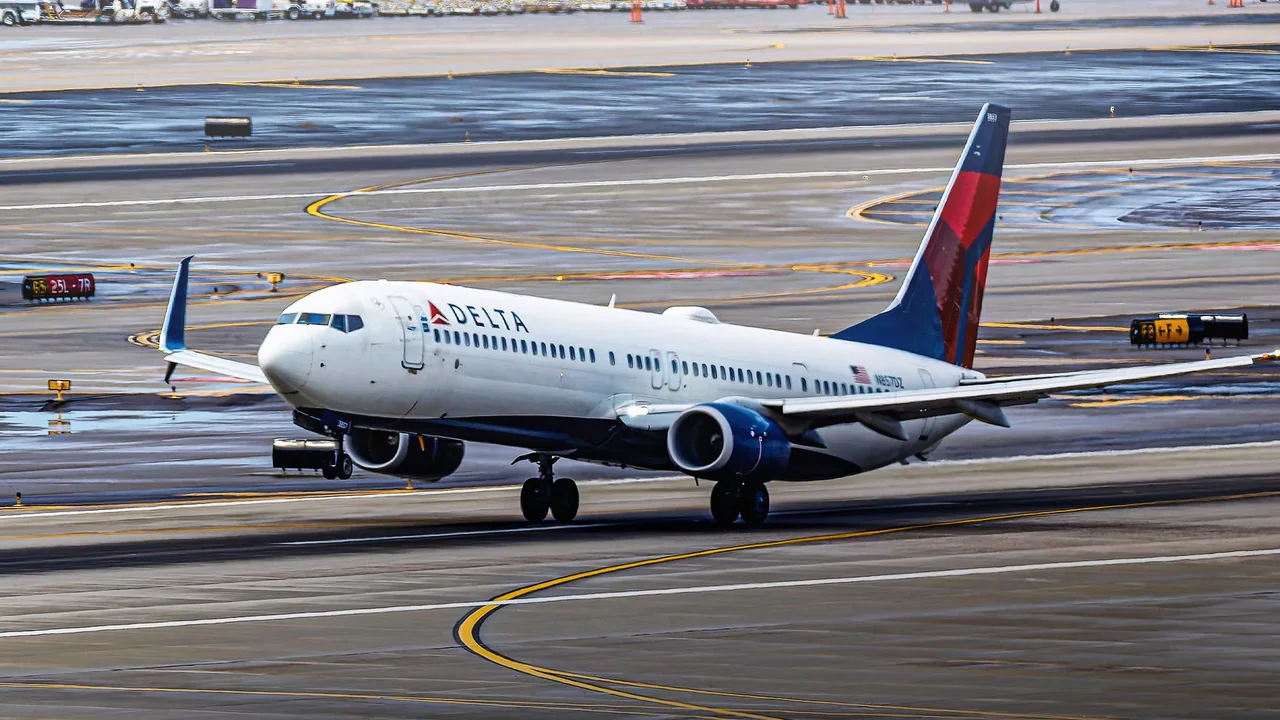
The Boeing 737-900ER was designed to solve a specific problem for airlines by carrying nearly as many passengers as a Boeing 757 while maintaining fleet commonality. The result was an aircraft capable of moving over 200 passengers, yet still fitting into the same airport gates and maintenance systems as its smaller siblings.
However, stretching an aircraft originally conceived in the 1960s creates compromises that become difficult to hide. While the Boeing 737-900ER proved commercially successful with airlines such as Alaska Airlines, Delta Air Lines, and United Airlines, it also inherited significant aerodynamic and performance limitations.
The most visible of these limitations is evident during departure, when the aircraft often requires unusually long takeoff rolls compared to other narrowbody aircraft in the same category. This is due to the high wing loading and relatively small wing area, which compromise the aircraft's ability to generate enough lift.

The Boeing 737-900ER represented the final evolution of the Next Generation Boeing 737 family, with a fuselage enlarged several times from its original design. However, this increase in size came at the cost of aerodynamic efficiency, as the aircraft retained a relatively small wing for the amount of weight it needed to lift into the air.
The imbalance created by enlarging the fuselage significantly increased the wing loading, making each section of wing support more weight during take-off and landing operations. This directly affects stall speed, requiring pilots to accelerate the aircraft to higher speeds before safely lifting the nose from the runway.
Wing loading also becomes more noticeable in difficult environmental conditions, such as on hot days or at high-altitude airports, where thinner air reduces wing efficiency and engine performance. Safety margins require pilots to rotate at even higher speeds, extending the runway distance needed to safely continue or reject a take-off.

At maximum take-off weight, the aircraft can weigh approximately 85,130 kilograms, or 188,000 pounds, yet its pair of CFM56 engines each produce only 28,400 pounds of thrust. This creates a relatively modest thrust-to-weight ratio of roughly 0.30, limiting acceleration and contributing to the long takeoff rolls.
The issue highlights the challenges of stretching an aircraft while maintaining performance and safety standards. It also underscores the importance of considering aerodynamic efficiency in aircraft design, particularly for narrowbody aircraft that are often subject to strict operational constraints.
The high wing loading and relatively small wing area compromise the aircraft's ability to generate enough lift, leading to longer takeoff rolls.