


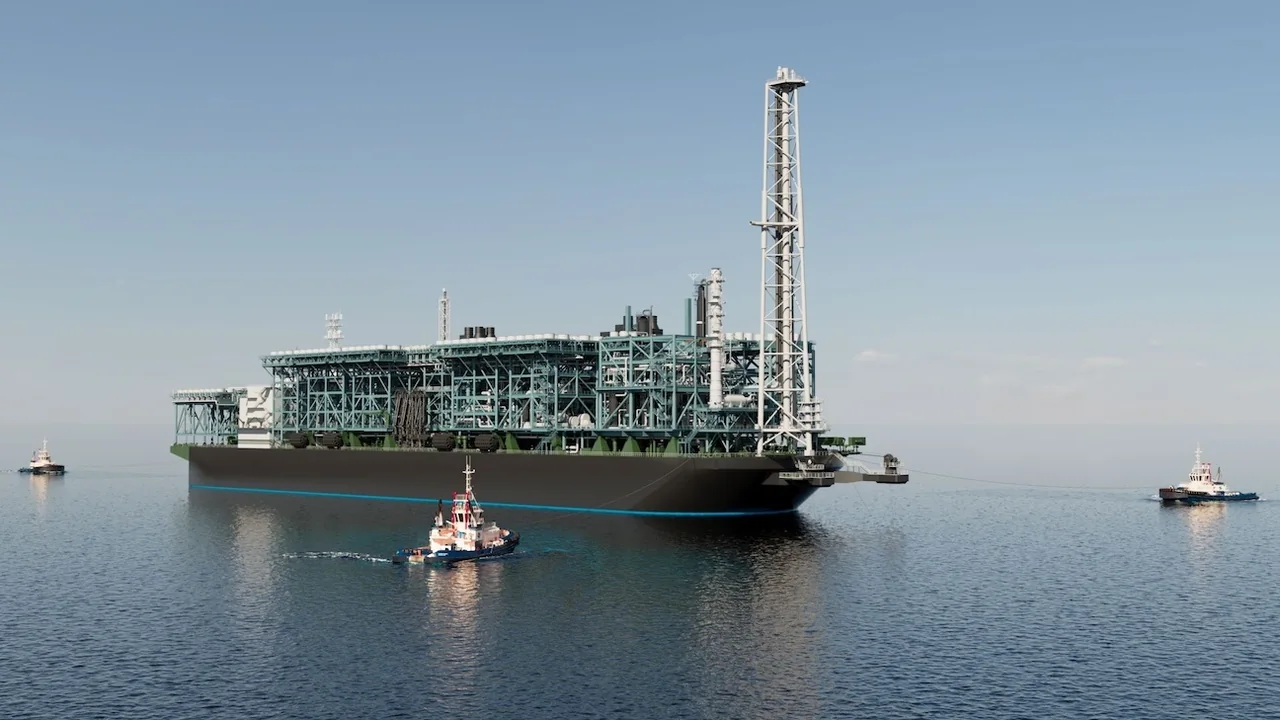
The U.S. Department of Transportation has approved the construction of a $5-billion floating platform in U.S. waters to produce liquefied natural gas for export. The project, led by Delfin Midstream of Houston, includes several foreign investors and has been granted a license by the Maritime Administration.
The approval comes after the Trump administration lifted a Biden ban on LNG exports to non-Free Trade Agreement countries in 2025, paving the way for the project's development. Critics have questioned how an export program would benefit domestic consumers, with concerns over environmental review and public hearing processes.
Delfin expects to begin production in 2030, at a capacity of 4.4 million metric tons per year, with plans to increase capacity to 13.2 million mt/year by 2031. The project has been hailed as the largest offshore LNG export terminal in the world.

The construction of the floating platform is expected to be carried out by Samsung Heavy Industries of South Korea, which will be located 40 miles off the coast of Cameron Parish, Louisiana. The U.S. Department of Energy has also granted export approval for a total of three planned vessels.
The project's approval marks a significant shift in U.S. energy policy, with implications for both domestic and global markets. As the world transitions to cleaner energy sources, the role of LNG in the global energy mix is becoming increasingly important.
The Trump administration's executive order, Unleashing American Energy, played a key role in the project's development. However, opponents claim that the approval process was inadequate, with no public hearings held.
The U.S. Department of Transportation has stated that the license will 'secure America's energy dominance and deliver affordable energy to families.' However, critics argue that the benefits of the export program may not be felt by domestic consumers.
Delfin Midstream has already secured purchase agreements with several foreign buyers, including ocean carrier MOL of Japan. The project is expected to have a significant impact on global energy markets, particularly in Asia.
The approval of the floating port project highlights the complexities and challenges of U.S. energy policy, as well as the need for greater transparency and public engagement in the development process.
The approval of the floating port project marks a significant shift in U.S. energy policy, with implications for both domestic and global markets.