
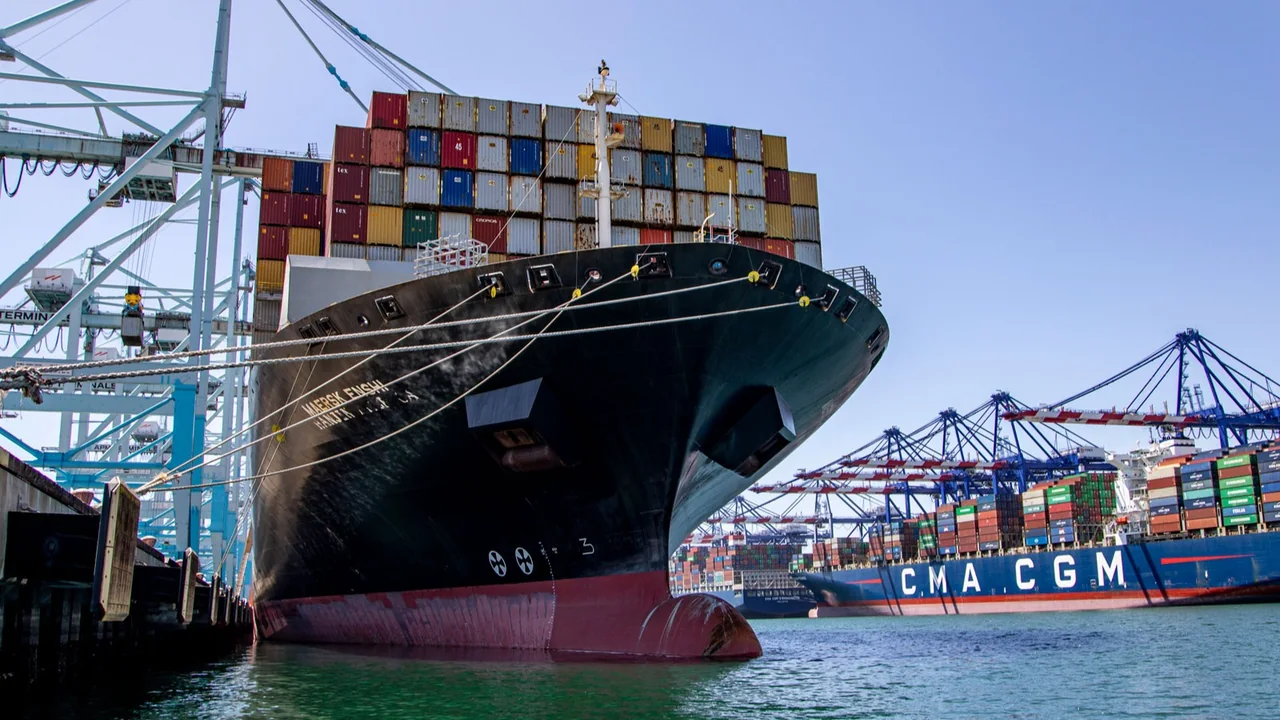
The Los Angeles Board of Harbor Commissioners has approved a $3.4 billion annual budget for fiscal 2026-2027, which reflects the port's commitment to enhancing its infrastructure and advancing sustainability initiatives. The increased funding will support operational and community public-access infrastructure, as well as technology programs. This move is seen as a forward-looking vision for the port, ensuring it remains competitive in the global economy.
The port, which comprises the busiest U.S. container gateway along with neighboring Long Beach, is forecasting a 7% decline in box volumes to 9.3 million twenty foot equivalent units (TEUs) in fiscal 2026-2027. This decline can be attributed to the ongoing impact of the Trump administration's trade war with China, which has led importers to seek alternative maritime routes into North America through Mexico and Canada.
China's share of all containerized imports through Los Angeles has fallen to about 40% in 2026, down from 53.4% in 2025 and 61% in 2020. This shift reflects China's efforts to diversify its trade routes and maintain its position as the world's largest export economy.

The hub is owned and operated by the City of Los Angeles through its Harbor Department, with increased investments in operational and community public-access infrastructure covered in the budget. The port management has cited continued volatility in global trade and uncertainty about trade policy as contributing factors to a more cautious cargo volume outlook.
Despite the decline in container volumes, the port is expected to see an increase in projected operating revenues of $826 million, representing a 26% year-over-year growth. Shipping services will account for 65% of this revenue, with operating expenses projected to rise by 6% to $452 million.
The budget increase totals $665 million over FY2025-2026, mostly on a 31% expansion for capital improvements. This investment will focus on container terminal modernization and transportation improvements in and out of the port, setting a 10-year mark for capital improvement spending.
Construction has started on the $74 million rail expansion at Berths 302-305 and $130 million SR 47/Vincent Thomas Bridge interchange reconfiguration. The port is also moving forward with a request for proposals for Pier 500 at Terminal Island, which will feature two new berths and 3,000 linear feet of new wharf designed for larger next-generation container ships.
The Los Angeles Mayor Karen Bass has championed environmental investments that help the port meet water and air quality requirements, and advocated for the port's economic role. The budget reflects her commitment to sustainability initiatives and ensuring the port remains competitive in the global economy.
As the port continues to adapt to changing trade patterns and technological advancements, it is essential to prioritize investments in infrastructure and sustainability. This forward-thinking approach will enable the Los Angeles Port to remain a vital component of the U.S. economy.
The increasing volatility in global trade and uncertainty about trade policy are contributing factors to the cautious cargo volume outlook.