


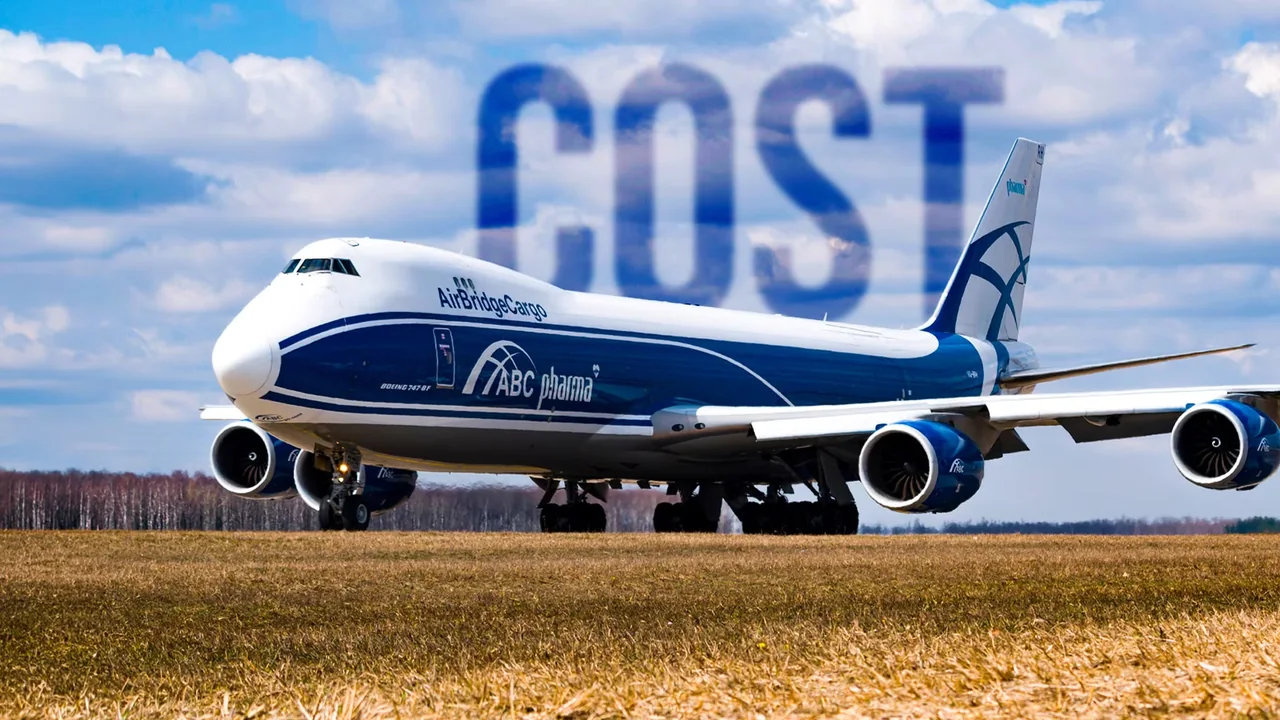
The Boeing 747 freighter remains a vital component of global air cargo operations, despite its production ending in 2023. Its continued use is a testament to its capabilities and reliability. However, determining the cost of acquiring one has become increasingly complex due to the shift from manufacturer-set prices to market-driven values.
In 2026, the price of a Boeing 747 freighter can vary significantly depending on factors such as supply, demand, age, and operating economics. This makes it challenging for buyers to determine a fair purchase price without conducting thorough research. As a result, the cost of acquiring one can fluctuate widely, making it essential to consider both the aircraft itself and the broader cargo market.
The Boeing 747 freighter family has been a cornerstone of global air cargo for decades, with various variants offering distinct capabilities and advantages. From the early Boeing 747-200F to the advanced Boeing 747-8F, each iteration has evolved to meet the demands of international freight operators. The latest variant, the Boeing 747-8F, boasts an impressive payload capacity of approximately 137 tonnes and a range of over 4,970 miles (8,000 km).

One of the most distinctive features of the Boeing 747 freighter is its nose-loading door, which enables the transport of oversized cargo that cannot fit through standard side-loading doors. This unique capability has significant implications for industries such as aerospace, oil and gas, and heavy manufacturing, which rely on this feature to transport large, irregularly shaped items.
The largest operators of the Boeing 747 freighter, including Atlas Air, UPS Airlines, Cargolux, Kalitta Air, and Cathay Pacific Cargo, have distinct fleets comprising various variants. Understanding these dynamics is crucial for buyers seeking to acquire a Boeing 747 freighter in 2026.
Despite its strengths, the end of production has fundamentally altered the aircraft's market dynamics, shifting pricing away from fixed manufacturer rates and toward values determined by market conditions and aircraft-specific factors. This change has resulted in a more complex and dynamic market landscape for buyers and sellers alike.

In reality, airlines rarely pay the full list price for a new Boeing 747 freighter. Discounts of 40% to 60% are common in the aviation industry, meaning the effective purchase price often ranges significantly lower than the manufacturer-set baseline cost.
The shift from fixed prices to market-driven values highlights the complexities of second-hand aircraft sales. As buyers navigate this new landscape, it is essential to consider not only the aircraft's specifications and capabilities but also its resale value, maintenance costs, and operating economics.
Ultimately, understanding the intricacies of the Boeing 747 freighter market in 2026 requires a nuanced approach that balances technical analysis with market research and industry insights. By doing so, buyers can make informed decisions about acquiring this critical component of global air cargo operations.

The shift from manufacturer-set prices to market-driven values highlights the complexities of second-hand aircraft sales.