


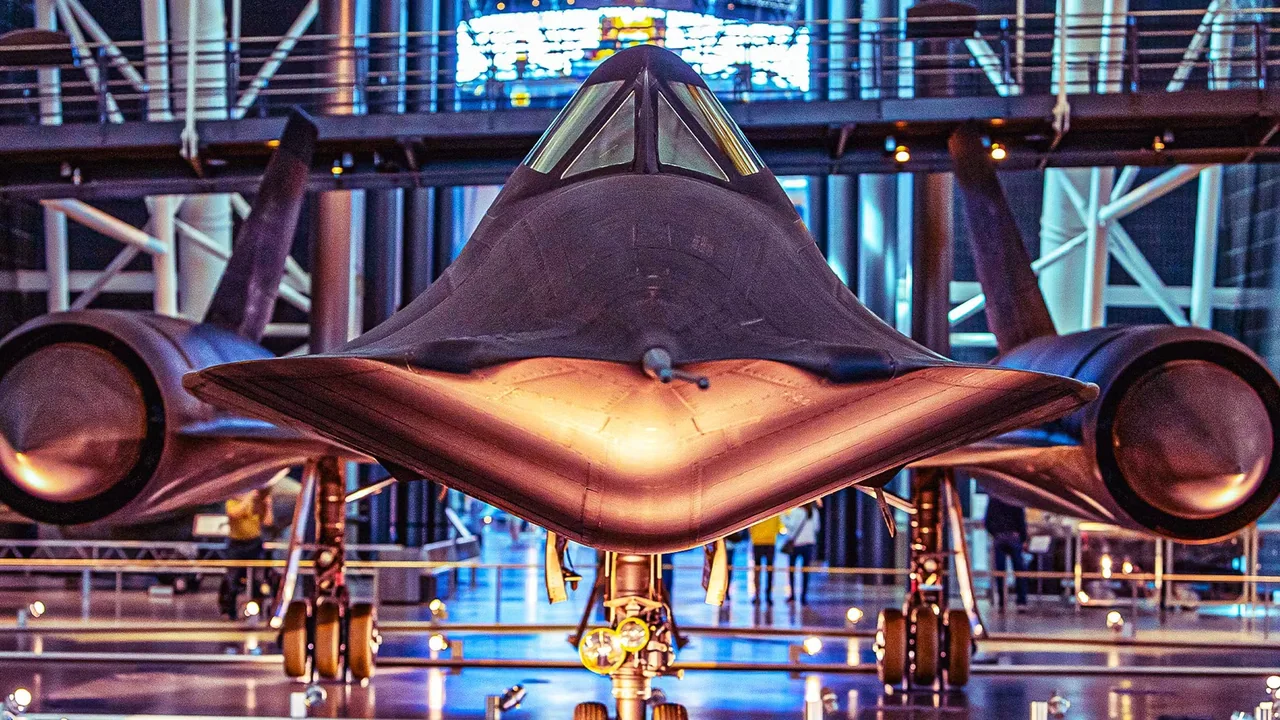
The incredible heat generated by the Lockheed SR-71 Blackbird caused the temperature of the plane to rise to more than 600 ℉ (300 ℃), which is far from comfortable for any human pilot. To cool down the inside of the jet enough to make it habitable for flight, the special Skunk Works division of Lockheed developed a sophisticated thermal management system with the plane's titanium skin as the foundation.
The airframe was constructed from approximately 93% titanium alloy because conventional metals like aluminum would soften and melt at the temperatures generated by aerodynamic friction at Mach 3+. The use of titanium allowed the SR-71 to withstand extreme heat without compromising its structural integrity.
Its iconic black paint scheme was less to enhance its stealthiness but truly to serve as a heat conductor. The SR-71 also used its unique JP-7 fuel as a coolant, which was famous for having such a low flash point that you could throw a lit match in a bucket and it would not ignite.

Pilots wore full-pressure suits similar to astronaut gear. But the incredible titanium shell that encased the Blackbird was the first, and most crucial, line of defense against the supersonic blaze that engulfed it on every sortie.
The SR-71 Blackbird's titanium skin was a masterpiece of thermal engineering, designed to survive conditions that would melt a standard aircraft. Its high-strength beta alloy was known as Ti-13V-11Cr-3Al because it contained 13% vanadium, 11% chromium, and 3% aluminum.
This specific blend allowed the metal to retain its structural integrity in areas where temperatures could reach up to 1000 ℉ (540 ℃). The use of different alloys for specialized parts further enhanced the thermal management system.

The 'turkey feathers' that acted as exhaust nozzles for the Pratt & Whitney J58 engines were made of Ti-5Al-2.5Sn, a titanium alloy selected for superior weldability and stability at high heat.
Notably, the landing gear contained some of the largest pieces of titanium ever forged, highlighting the complexity and expertise required to manufacture this iconic aircraft.
The SR-71 Blackbird's thermal management system was a testament to innovative engineering.