

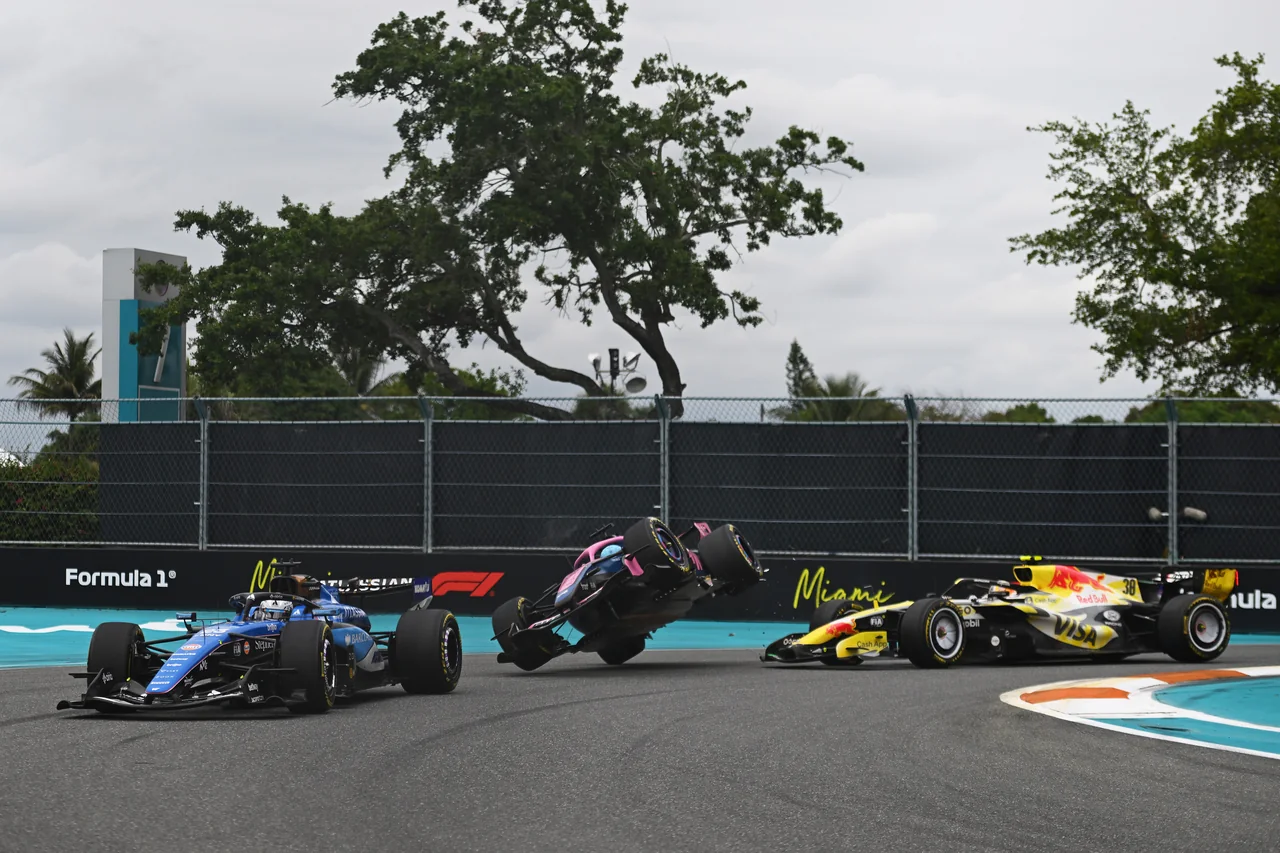
Pierre Gasly's dramatic flip in the Miami Grand Prix has left fans and onlookers stunned. The French driver's Alpine car completed a full rotation after colliding with Liam Lawson, bringing an end to his race. Despite the severity of the incident, Gasly safely exited the vehicle and walked away.
The collision between Gasly and Lawson occurred as they battled for 10th position in the early stages of the race. The two drivers had made contact, with Lawson seemingly unable to slow down into the turn 17 hairpin, causing the accident. This type of incident highlights the risks involved in high-speed racing.
In addition to Gasly's flip, Isack Hadjar crashed into the wall in turn 14, ending his race. Meanwhile, Arvid Linbald claimed 15th after starting on the pit lane. These incidents marred what was shaping up to be a competitive race. The Miami Grand Prix has always been known for its unpredictable nature.

The safety car was deployed moments before Gasly's flip, but it did not appear to make a significant difference in the outcome of the incident. Lando Norris made a move on Kimi Antonelli to take second position just before the safety car was deployed. This move showcased the drivers' skills and competitiveness.
Verstappen took advantage of the safety car to pit for repairs, demonstrating his strategic thinking. However, this did not prevent him from losing ground in the overall standings.
The Miami Grand Prix has been marked by several high-profile incidents, including Gasly's flip and Hadjar's crash. These events will likely be analyzed closely by racing teams and experts to identify areas for improvement. The incident also raises questions about driver safety and the need for improved protective measures.

As the racing season continues, drivers like Gasly will face challenges that test their skills and endurance. The high-speed nature of Formula 1 makes accidents like this one inevitable, but it is how they are handled that matters.
The impact of such incidents on the racing community cannot be overstated. Drivers, teams, and fans alike must adapt to the unpredictable nature of the sport. This incident serves as a reminder of the risks involved in high-speed racing and the need for caution and respect among competitors.
As the Formula 1 season progresses, it will be interesting to see how these incidents are addressed and whether they lead to any changes in safety protocols or driver behavior.

The high-speed nature of Formula 1 racing makes accidents like Gasly's inevitable.