


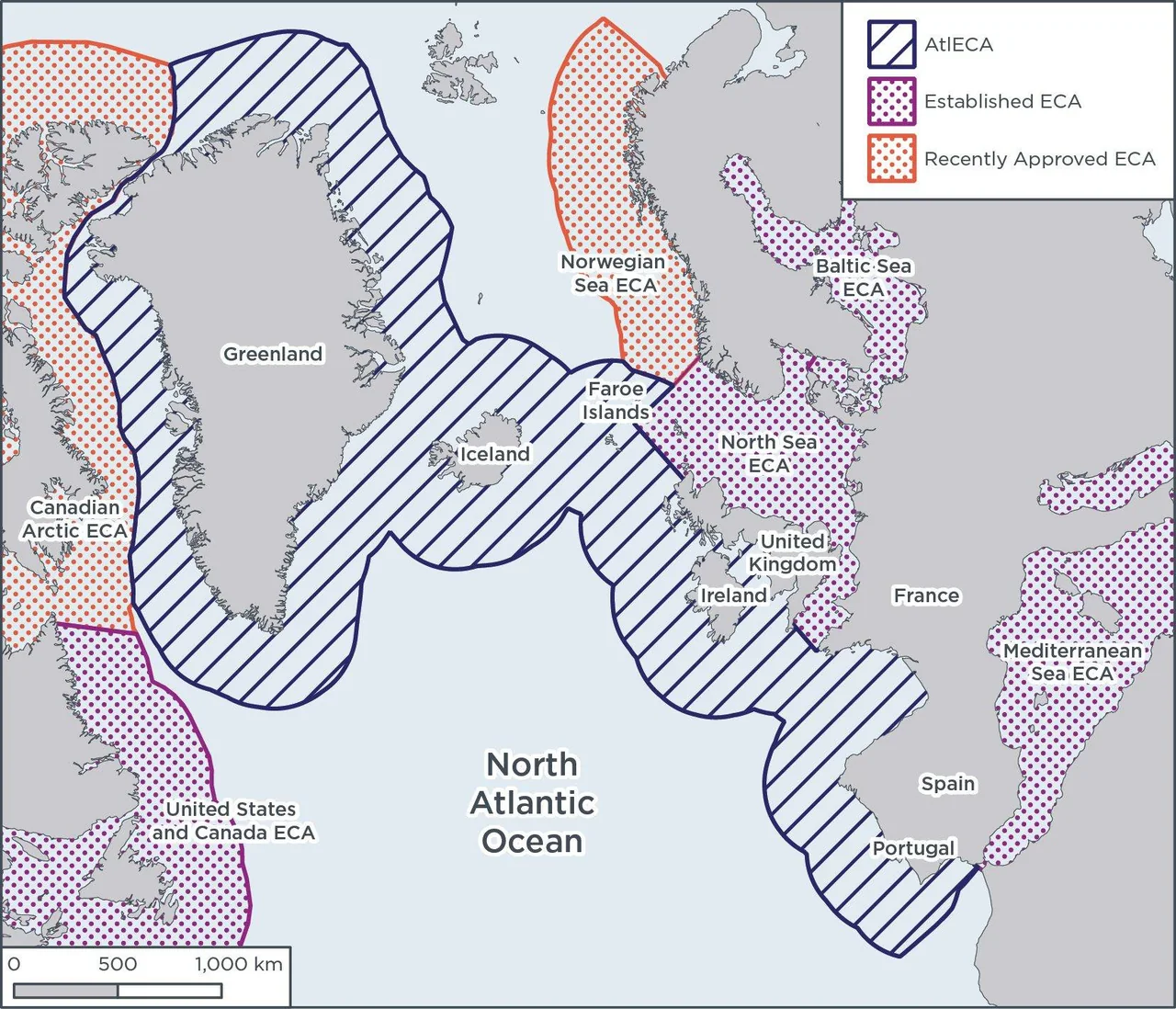
The International Maritime Organization (IMO) has taken a significant step towards reducing air pollution in the world's busiest maritime corridor. The adoption of the world's largest emission control area (ECA) in the North-East Atlantic Ocean marks a major milestone in the global effort to mitigate the impact of ship emissions on human health and the environment.
The new ECA, which will be fully implemented in September 2028, covers an area spanning across France, Ireland, Portugal, Spain, the United Kingdom, Iceland, Greenland, and the Faroe Islands. This region is home to over 190 million people and is a critical shipping lane for global trade.
Ships operating within this ECA will face binding limits on sulfur content, with maximum fuel sulfur levels set at 0.5%. This reduction in sulfur oxides (SOx) emissions will have a significant impact on air quality, particularly in urban areas near the coast.
The adoption of the new ECA also marks a major step forward for the IMO's efforts to reduce nitrogen oxide emissions from ships. From January 1, 2027, or later-built ships will face stricter engine limits on NOx, further reducing the environmental impact of shipping.
By reducing SOx and NOx emissions, the new ECA is expected to prevent thousands of premature deaths between 2030 and 2050. The estimated health costs savings from this reduction are projected to be up to €29 billion by 2050.
The benefits of the new ECA extend beyond human health, with significant reductions in black carbon emissions also anticipated. This will help mitigate climate change impacts, particularly in the Arctic region where black carbon plays a critical role in amplifying warming effects.
ICCT's research projects that under a likely compliance scenario, the ECA will reduce SOx emissions by up to 82% and PM2.5 by 64%. Nitrogen oxide emissions are projected to decline steadily over time as new ships enter the fleet, with maximum reductions of 71% possible as the fleet gradually turns over.
The adoption of this historic ECA is a testament to the IMO's commitment to reducing maritime pollution and promoting sustainable shipping practices. As the global shipping industry continues to evolve, it is essential that we prioritize environmental protection and public health.
By setting these ambitious emission standards, the IMO is sending a clear message about the need for responsible and sustainable shipping practices. The impact of this decision will be felt far beyond the ECA itself, with significant benefits for human health and the environment across the globe.