

Pamt Corp., a truckload carrier, reported a small net loss for the first quarter, but the core business showed a much larger loss when excluding non-operating income and a one-time real estate gain. The company's revenue was impacted by the changing trade landscape due to tariffs. This has had a significant effect on the automobile industry, which is struggling to adapt to new regulations.
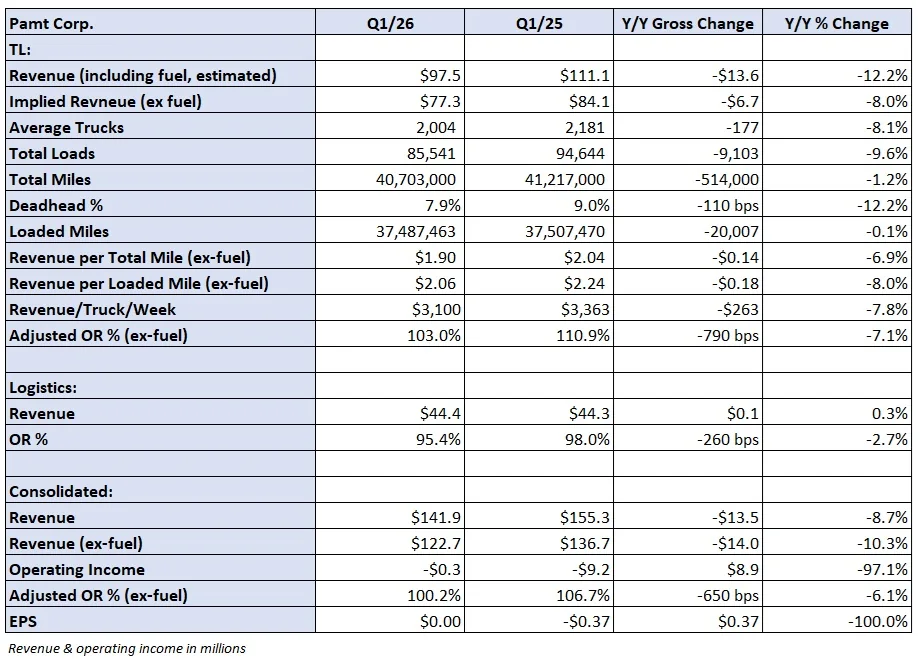
The TL unit reported an 8% year-over-year decline in average trucks in service and an 8% decline in revenue per truck per week. Loaded miles were flat with revenue per loaded mile down 8% to $2.06 (excluding fuel surcharges). This indicates a decrease in efficiency and productivity for the company.
The segment reported a 103% adjusted operating ratio, which is closer to the industry average of 119%. However, this is still higher than the pre-pandemic era, indicating that the company is facing significant challenges. The OR was closer to 119%, excluding the impact of the real estate gain.
Salaries, wages and benefits expenses increased by 130 basis points year-over-year, despite a decrease in trucks seated by company drivers. This suggests that the company is struggling to manage its labor costs effectively.
This quarter marked 10 straight operating losses for the TL unit, which is a significant concern for investors and analysts. The company's inability to turn a profit has raised questions about its long-term viability.
Logistics revenue was up slightly year-over-year to $44 million, but this does not offset the decline in other segments. The OR improved 260 basis points year-over-year to 95.4%, indicating some improvement in operational efficiency.

Pamt used $2.7 million in operating cash flow in the first quarter and had liquidity of $141 million, which is lower than at year-end 2025. This suggests that the company has limited financial flexibility and may need to seek additional funding or make significant cost-cutting measures.
The company announced plans to more actively implement share repurchases during the second quarter of 2026, which could be a positive sign for investors. However, this will not necessarily address the underlying issues with the company's business model.