
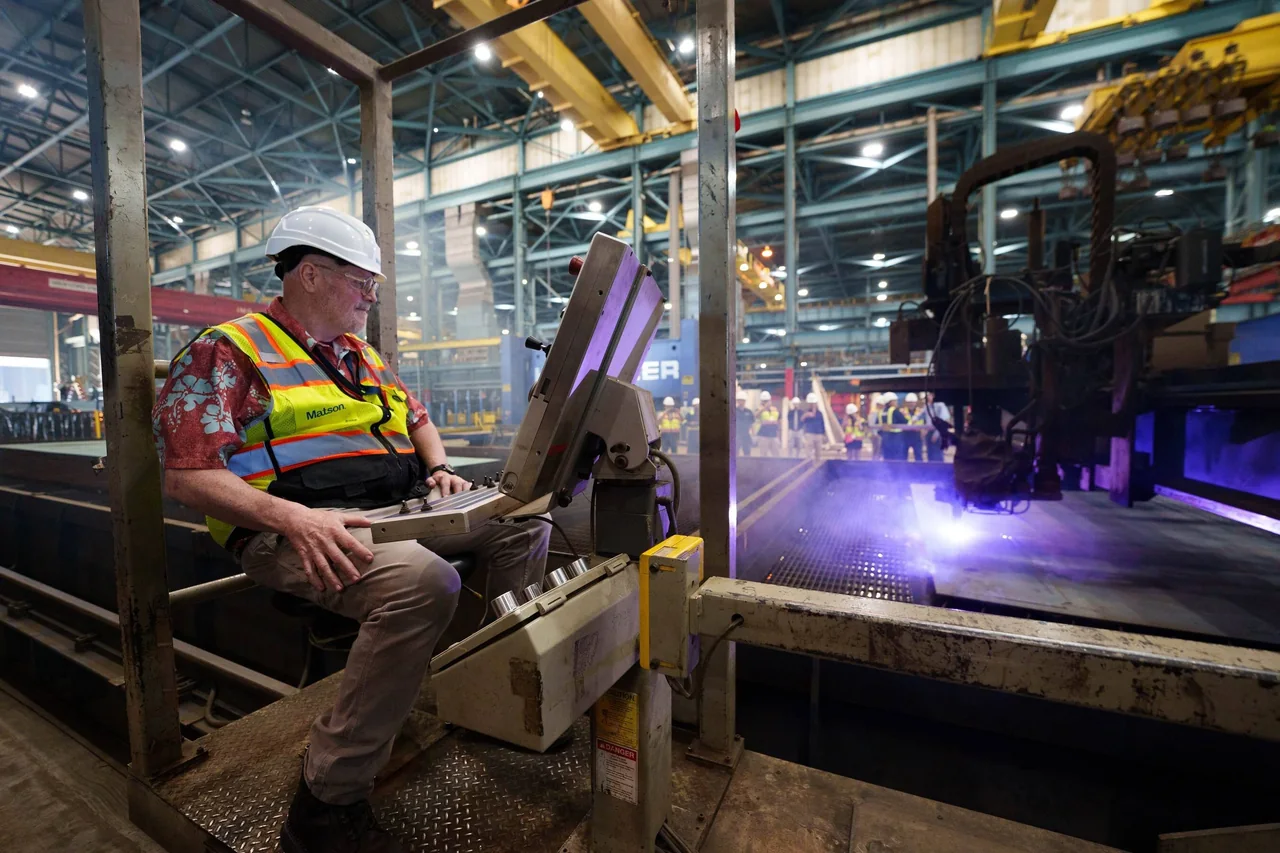
Matson has taken a major step forward in its fleet renewal program with the commencement of hull assembly on its second LNG-powered 'Aloha Class' container ship. This milestone marks an important phase in the construction of the three new vessels, which are being built at Hanwha Philly Shipyard, Inc. (HSPI) in Pennsylvania. The investment of approximately $1 billion will see the introduction of three Jones Act-compliant vessels that match the size and speed of Matson's existing Aloha Class ships, Daniel K. Inouye, and Kaimana Hila, which entered service in 2018 and 2019 respectively.
The new vessels are designed to operate at speeds in excess of 23 knots, with a carrying capacity of 3,600 TEU. This will enable Matson to increase its efficiency and reduce its environmental impact, as the ships are powered by liquefied natural gas (LNG). The introduction of these new vessels is expected to have a significant impact on the sustainability of Matson's operations.
Matson expects to receive the first new vessel in the first quarter of 2027, with subsequent deliveries in the third quarter of 2027 and second quarter of 2028. This will see the replacement of three older vessels currently deployed in Matson's Hawaii and China-Long Beach Express services. The introduction of these new ships will enable Matson to improve its service efficiency and reduce its carbon footprint.
The construction of the new vessels is being carried out by HPSI, a U.S. commercial shipyard that has previously delivered several container ships for Matson. The company has a proven track record in constructing vessels for operation in the domestic Jones Act trade lanes.
Prior to this current Aloha L Class project, HPSI had delivered four Jones Act container ships for Matson between 2003 and 2006, as well as two additional container ships in 2018 and 2019. These vessels were the first Aloha Class ships and marked an important milestone in Matson's fleet renewal program.
The introduction of these new vessels will have a significant impact on the efficiency and environmental sustainability of Matson's operations. As the shipping industry continues to evolve, companies like Matson are playing a critical role in reducing their carbon footprint and improving their service efficiency.
Matson's decision to invest in LNG-powered container ships is part of its ongoing efforts to reduce its environmental impact. The company has set ambitious targets for reducing its greenhouse gas emissions and is working closely with its suppliers and partners to achieve these goals.
The construction of the new vessels will also have a positive impact on the local economy, as HPSI is based in Pennsylvania and will create jobs and stimulate economic growth in the region.
Overall, the introduction of Matson's new LNG-powered container fleet marks an important milestone in the company's fleet renewal program. The new vessels are designed to improve efficiency, reduce emissions, and enhance service quality.
The introduction of these new vessels will have a significant impact on the efficiency and environmental sustainability of Matson's operations.