

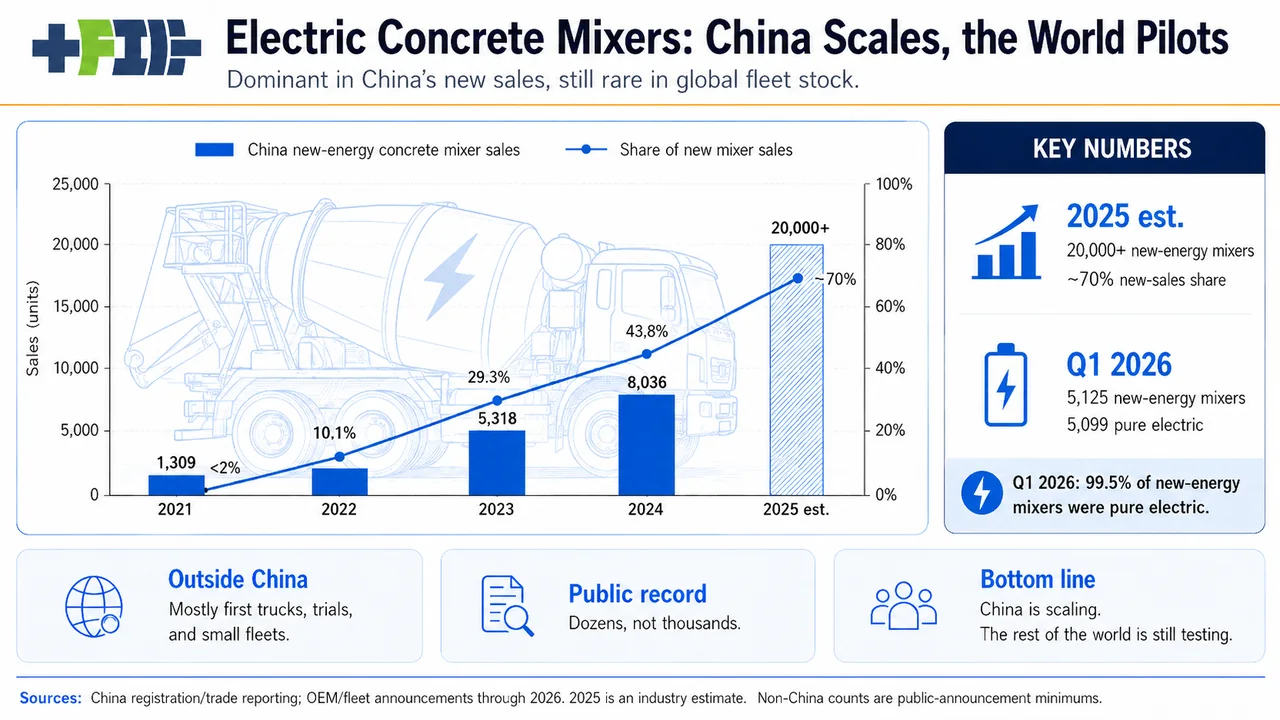
China's electric concrete mixer boom is a significant development in the heavy transport industry, as it showcases the potential for widespread adoption of battery-electrification in previously challenging segments.
This trend has implications for policymakers and transportation strategists worldwide, who should take note of China's experience to inform their own electrification strategies.
The ease with which concrete mixers can be electrified highlights the importance of understanding the specific characteristics of a vehicle or application when designing an electrification pathway.
In contrast to the global trucking industry, where electrification has been slower to adopt, China's success demonstrates that battery-electric technology can be successfully applied in niche markets.
The Chinese government's support for electric concrete mixers is likely a key factor in their widespread adoption, as it provides a clear policy framework and incentives for operators to transition to cleaner vehicles.
As the market continues to grow, we can expect to see further innovations in battery-electric technology and its application in heavy transport.
The global implications of China's electric concrete mixer boom are significant, as they underscore the need for more sustainable transportation solutions that can meet the demands of a growing urban population.
The success of battery-electric mixers in China serves as a model for other industries to follow, demonstrating that electrification can be achieved even in applications where it may seem challenging at first glance.
As the world continues to transition towards a low-carbon economy, the adoption of battery-electric technology in heavy transport will play an increasingly important role in reducing greenhouse gas emissions and improving air quality.
The Chinese market's success with electric concrete mixers demonstrates that electrification can be achieved in niche applications.