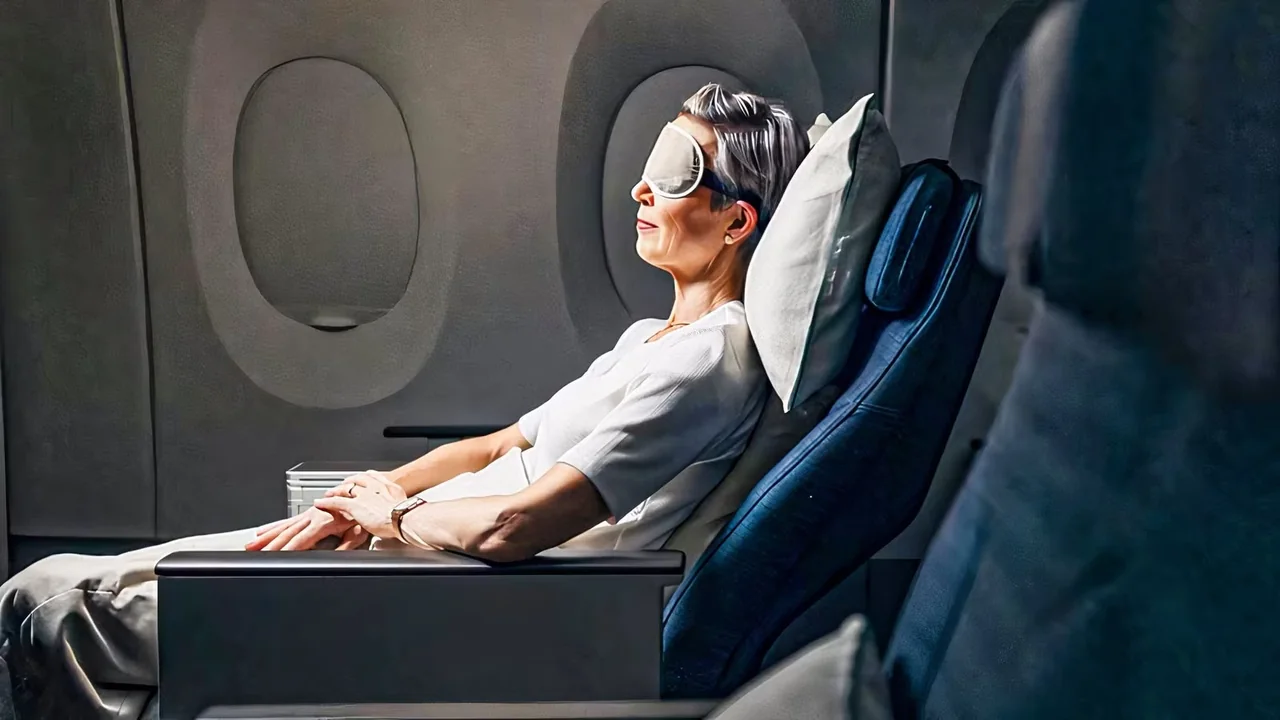
Premium economy is rapidly becoming one of the most important cabins on commercial flights, sitting between economy affordability and business-class comfort. At a time when airlines are investing heavily in upgraded onboard experiences, premium economy is emerging as a key revenue driver. As a result, carriers such as Emirates, Singapore Airlines, Japan Airlines (JAL), and Virgin Atlantic are expanding premium economy across aircraft like the Airbus A350, Boeing 787 Dreamliner, and A321XLR.
These airlines are introducing wider seats, larger screens, and improved dining on many long-haul routes. The current benchmark for premium economy seats is JAL's Sky Premium, which offers a fixed-shell design with 42 inches of pitch and 19 inches of width. This represents the floor, not the ceiling, for what premium economy will look like in 2036.
According to Forbes Travel Guide's recent analysis of premium travel trends, demand for higher-quality flying experiences continues to grow as passengers become more willing to pay for comfort on longer journeys. The financials are too compelling to downplay, with Delta Air Lines now reaching a point where premium economy revenues outpace those of standard economy on the same routes and aircraft.

Business class demands enormous floor space for lie-flat beds, privacy dividers, and aisle access. Premium economy achieves a comparable revenue yield per unit of cabin space at a fraction of the footprint, making it easier to sell. The cannibalization concern that long kept airlines away from premium economy has largely dissolved, as data confirms that it draws passengers up from economy rather than pulling high-yield travelers down.
The industry is entering a period of profound transformation in aircraft interiors, driven by passenger expectations and the search for configurations that maximize revenue density. Forbes Travel Guide adds a demand-side picture: premium travelers are not just flying more—they are actively investing in the journey itself.
This behavioral shift is the wind in premium economy's sails, and it is not going away. As airlines continue to invest in upgraded onboard experiences, premium economy will become an increasingly important part of their revenue strategy.

The future of premium economy will be shaped by ongoing innovations in seat design, onboard technology, route expansion, and the broader shift reshaping long-haul travel. Airlines must adapt to changing passenger expectations and stay ahead of the curve to remain competitive.
Ultimately, premium economy's evolution will be driven by its ability to deliver a unique value proposition that sets it apart from standard economy and business class. As the industry continues to evolve, one thing is clear: premium economy is here to stay.
The trend towards premium economy is driven by passenger expectations and the search for configurations that maximize revenue density.