
Norway's government has revised its revenue forecast for oil and gas production, increasing it by 30% to $78.71 billion this year, driven by rising energy prices due to the ongoing Iran war. The new estimate is based on a higher average price of crude oil at $91 per barrel and natural gas at $14.0 per million British thermal units (MMBtu). This surge in energy prices has pushed up inflation rates in Norway, prompting the central bank to raise interest rates earlier than expected.
The country's sovereign wealth fund, which is already the largest in the world at $2.2 trillion, will receive a significant portion of this revenue. The government plans to add the windfall to the fund, which will help to stabilize the economy and mitigate the impact of inflation on domestic demand. However, Norway must still balance its fiscal surpluses with the need to limit spending and avoid fueling inflation by stimulating economic growth too much.
The Norwegian central bank's decision to raise interest rates by 25 basis points to 4.25% was seen as a proactive measure to quell inflation driven by strong wage growth and high energy costs. This move is expected to have a cooling effect on the economy, but it may also lead to higher borrowing costs for consumers and businesses.
The government's revised forecast for non-oil GDP growth has been cut to 1.7% in 2026 from 2.1% initially predicted. This weaker outlook is attributed to the impact of the Iran war on global energy markets, which has led to a decline in economic activity outside the oil industry.
The government faces significant challenges in securing a majority for its budget in parliament, with opposition parties seeking to overrule Labour's priorities. The negotiations will be closely watched by investors and analysts, who are eager to see how Norway manages its sovereign wealth fund and balances its fiscal surpluses with economic growth.
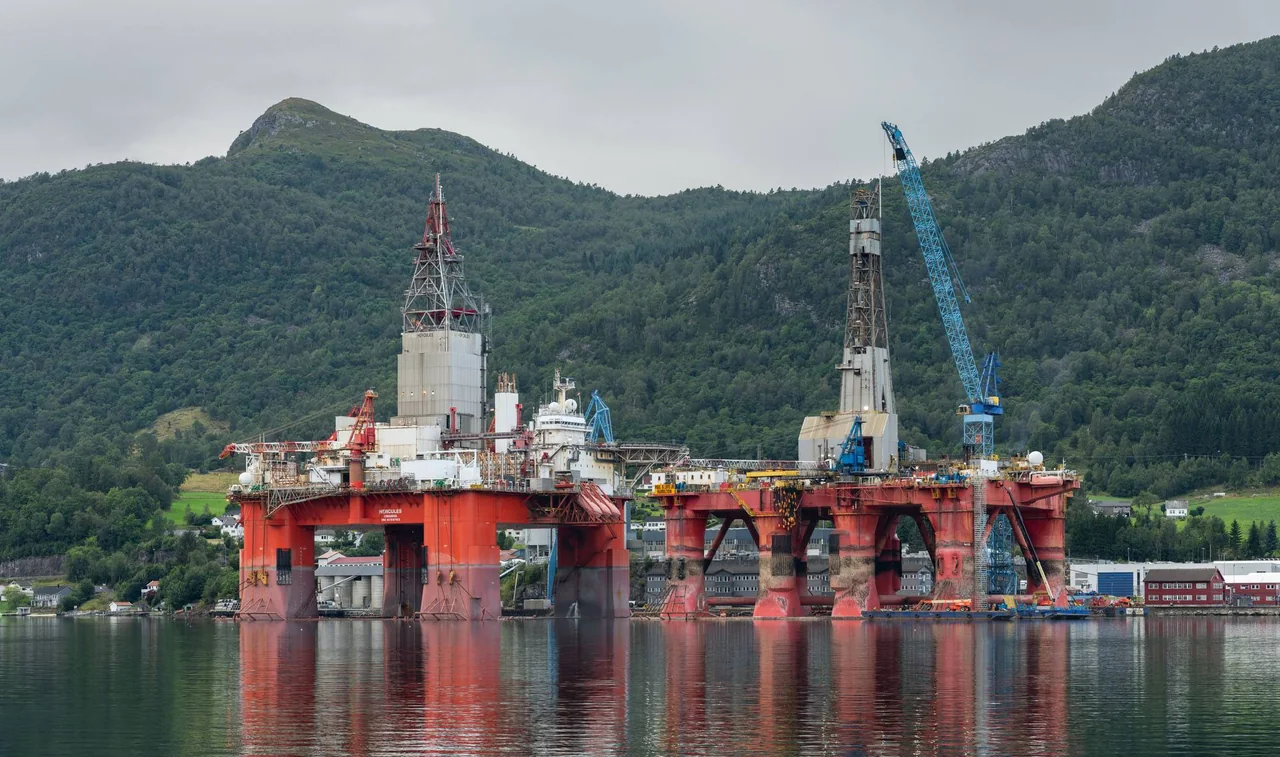
Norway's oil production remains one of the largest in the world, with the country producing around 4 million barrels of oil equivalent per day. The government's decision to invest the windfall revenue in the sovereign wealth fund will help to ensure a stable source of income for future generations.
The impact of rising energy prices on Norway's economy will be closely monitored by policymakers and investors alike. The government's ability to manage its fiscal surpluses and balance economic growth with inflation control will be crucial in determining the country's long-term economic prospects.
Norway's sovereign wealth fund is widely regarded as a model for other countries looking to invest their oil revenues wisely. The government's decision to add the windfall revenue to the fund will help to cement Norway's reputation as a responsible and forward-thinking investor.
The coming months will be critical in determining how Norway manages its sovereign wealth fund and balances its fiscal surpluses with economic growth. Investors and policymakers alike will be watching closely as the country navigates these challenges and works to ensure a stable and prosperous future for its citizens.
The Norwegian government's decision to invest the windfall revenue in its sovereign wealth fund will have significant implications for the country's economic stability and inflation control.