


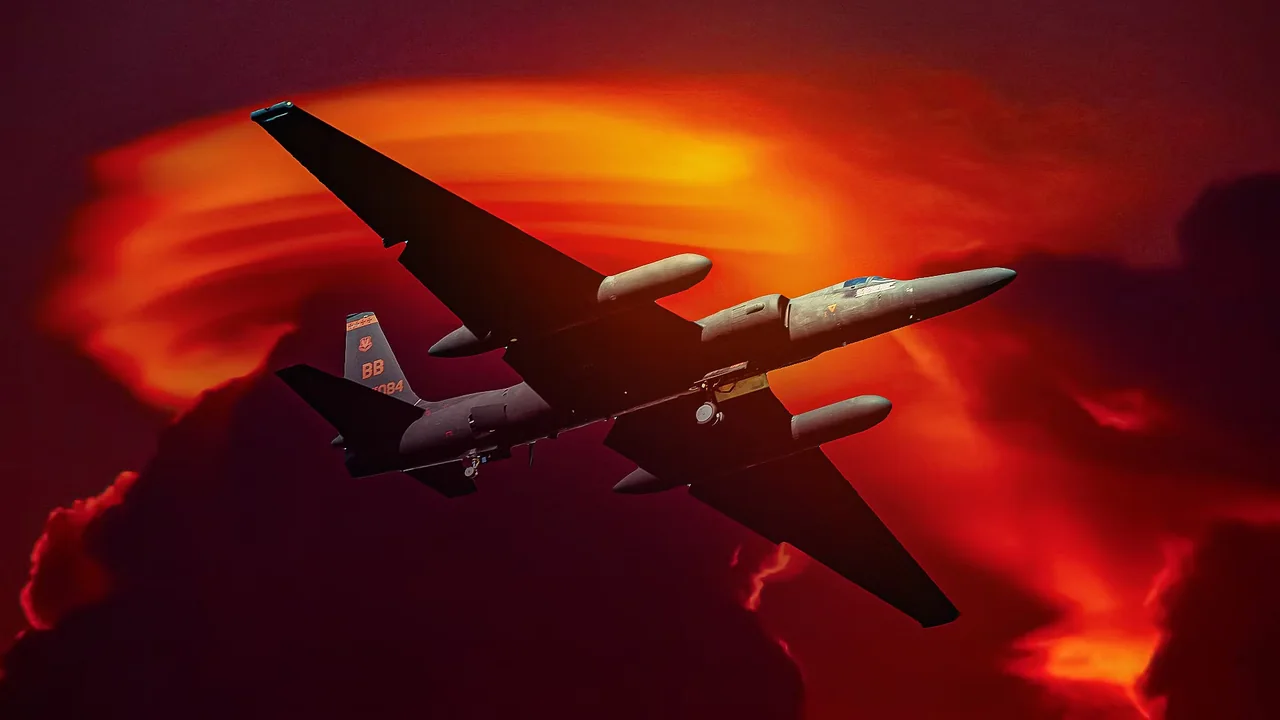
The Lockheed U-2 'Dragon Lady' has been a cornerstone of US intelligence gathering for over six decades, with its success remaining unquestioned despite the passage of time. The aircraft's origins date back to the early Cold War era, when deep US and USSR rivalry was settling in and shaping the world order.
In the absence of satellites and foreign journalists, the U-2 was developed as a solution to monitor Soviet movements and developments. Its development was shrouded in secrecy, with Lockheed's Skunk Works playing a pivotal role in its creation.
The U-2 first flew in 1955, marking a significant milestone in the aircraft's history. Since then, it has been employed in numerous reconnaissance missions around the world, providing critical intelligence to the US military and government.

Despite its impressive capabilities, the U-2's maximum altitude remains a closely guarded secret. The commonly cited 70,000-foot ceiling is merely the unclassified altitude, with the actual figure remaining classified.
The U-2's ability to fly at high altitudes has been instrumental in its success as a reconnaissance aircraft. By flying above most enemy defenses, it can gather critical intelligence without being detected.
Flying at 70,000 feet also allows the U-2 to improve the effectiveness of its cameras and sensors. This is due to the reduced air resistance and atmospheric distortion that occur at such heights.

The design of the U-2 was influenced by the need to reduce its radar cross-section, making it less vulnerable to enemy detection. However, this came at a cost in terms of speed and maneuverability.
In conclusion, the Lockheed U-2 'Dragon Lady' remains an iconic symbol of US intelligence gathering capabilities. Its ability to fly at high altitudes has been instrumental in shaping modern espionage strategies, and its legacy will continue to be felt for generations to come.
The U-2's design and capabilities have been instrumental in shaping modern espionage strategies.


