


The Canadian government has unveiled a National Electricity Strategy, marking a significant shift in the country's approach to electricity. This new framework prioritizes electrons over fossil fuels, recognizing that the future economy relies heavily on clean energy sources. By putting electricity at the center of the national economy, the strategy aims to drive growth, improve affordability, and enhance trade relationships.
The existing electricity system is already 80% clean, thanks in large part to hydroelectric power, nuclear energy, and growing wind and solar capacity. However, demand is expected to double by 2050, necessitating a significant expansion of grid capacity. The government's goal is to achieve this while maintaining the reliability and affordability of electricity for households.
The strategy encompasses various aspects, including generation, transmission, distribution, storage, grid modernization, east-west-north interties, workforce development, and domestic manufacturing. By addressing these interconnected components, Canada can create a more efficient and resilient energy system.
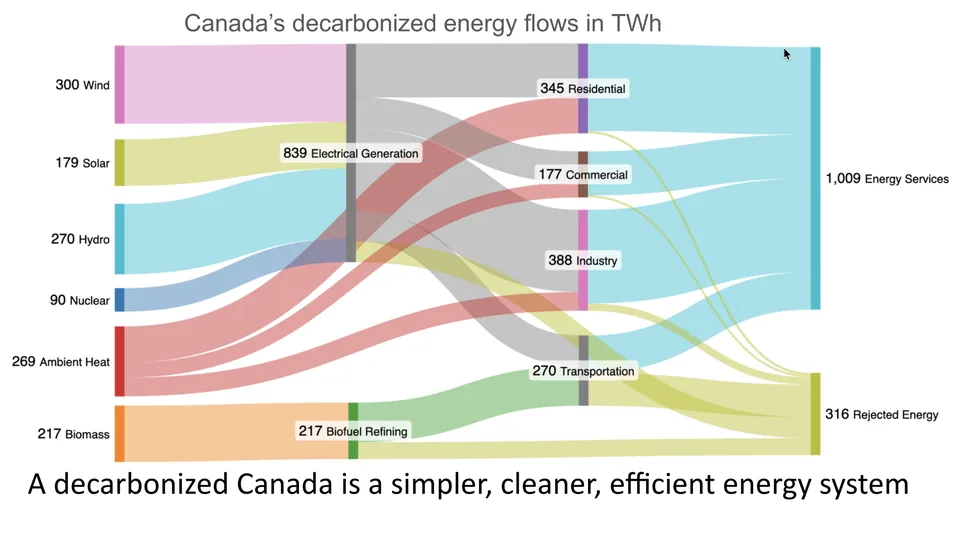
Electricity stands out from other energy carriers due to its unique properties: it is both efficient and flexible. Unlike burning fuels, which wastes a substantial amount of useful energy, electricity can power various applications with high coefficients of performance. This characteristic allows for the simultaneous increase in electricity demand and reduction in total energy consumption.
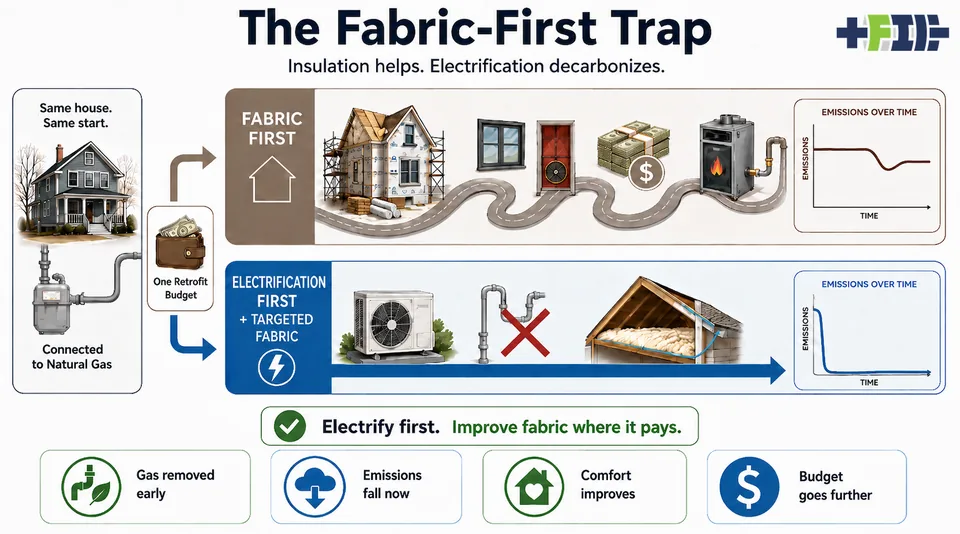
The National Electricity Strategy aligns with the electrification-first approach, which emphasizes the use of electricity as the primary means of decarbonization. By leveraging existing technologies, such as heat pumps, electric vehicles, wind and solar power, batteries, and high-voltage direct current transmission, Canada can reduce its reliance on fossil fuels.
The main obstacle to implementing this strategy is not technological, but rather implementation, permitting, provincial coordination, cost of capital, institutional conservatism, and the habit of treating legacy fuel pathways as deserving a seat at the strategy table.
Canada's grid upgrade plan has the potential to deliver substantial benefits, including up to $15 billion in energy savings by 2050. This reduction in household energy costs is projected to affect 7 out of 10 households. By driving growth and improving affordability, the strategy can also enhance trade relationships and promote a more sustainable economy.
The success of this plan depends on overcoming the challenges posed by implementation and permitting hurdles. A comprehensive approach that addresses these issues will be crucial in achieving the desired outcomes and creating a more efficient energy system.
As Canada embarks on this significant transformation, it is essential to recognize the importance of prioritizing electrons over fossil fuels. By doing so, the country can drive growth, improve affordability, and enhance trade relationships while reducing its carbon footprint and promoting sustainability.
A comprehensive approach is needed to overcome implementation and permitting hurdles.