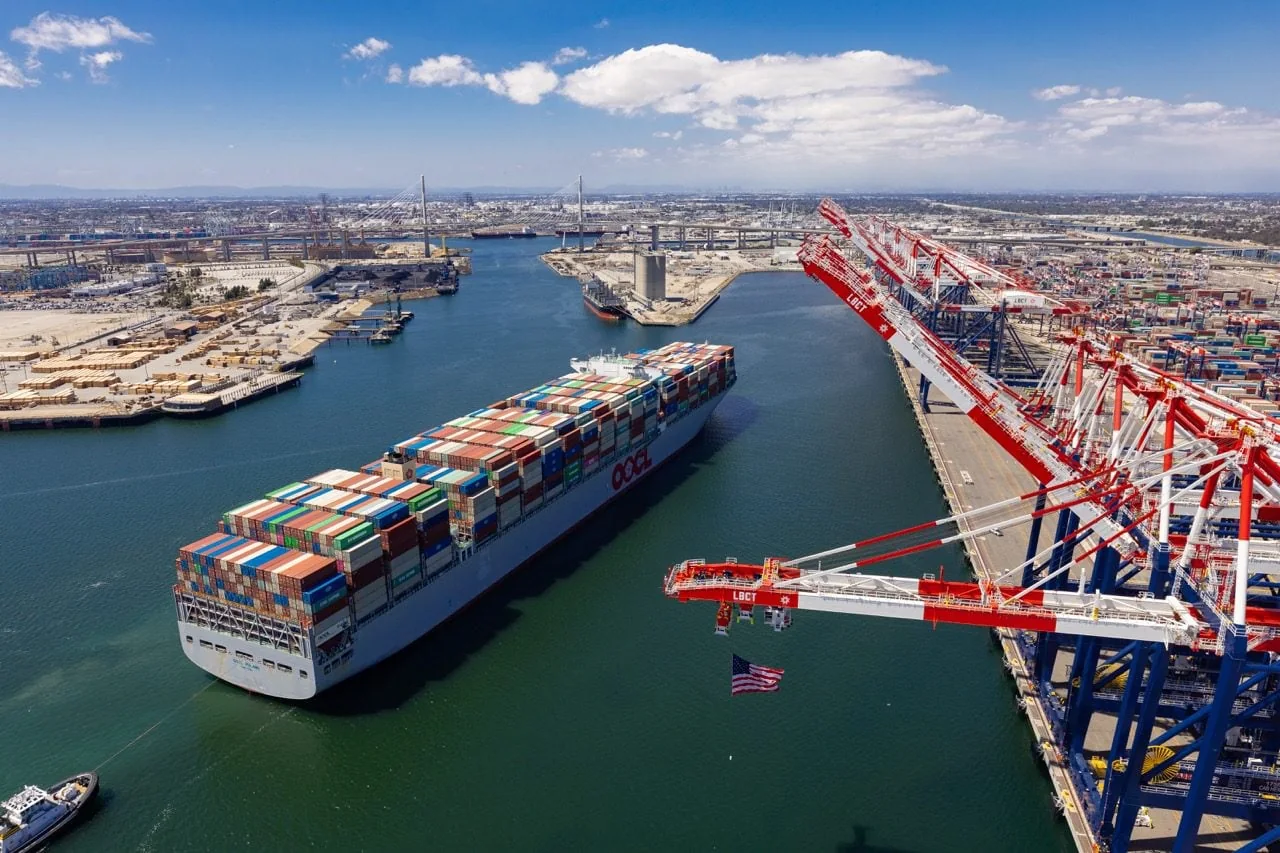
Long Beach cargo volumes declined 5.7% in April compared to the previous year, with 817,992 twenty-foot equivalent units (TEUs) handled during the month.
The decline is attributed to global market volatility, rising fuel costs, and supply chain uncertainty, which continue to pressure international trade flows.
Despite the decline, volumes remained historically strong as one of the nation's leading trade gateways continues to navigate a volatile trade environment.
The Port of Long Beach CEO has emphasized the importance of remaining a safe harbor in the face of geopolitical tensions and shifting trade patterns.
The comments reflect growing concern across the shipping industry that global disruptions are beginning to reshape cargo flows beyond short-term shocks.
The April figures follow a softer March, when the port handled 774,935 TEUs, also below last year's record pace.
Through the first quarter of 2026, Long Beach still ranked as the busiest container port in the United States, though volumes were running below 2025's historic levels.
Port officials have increasingly pointed to rising fuel prices, tariff uncertainty, and geopolitical instability as key headwinds facing supply chains.
The global market volatility and supply chain uncertainty are having a significant impact on the shipping industry, making it challenging for shippers and carriers to find mutually beneficial prices.