

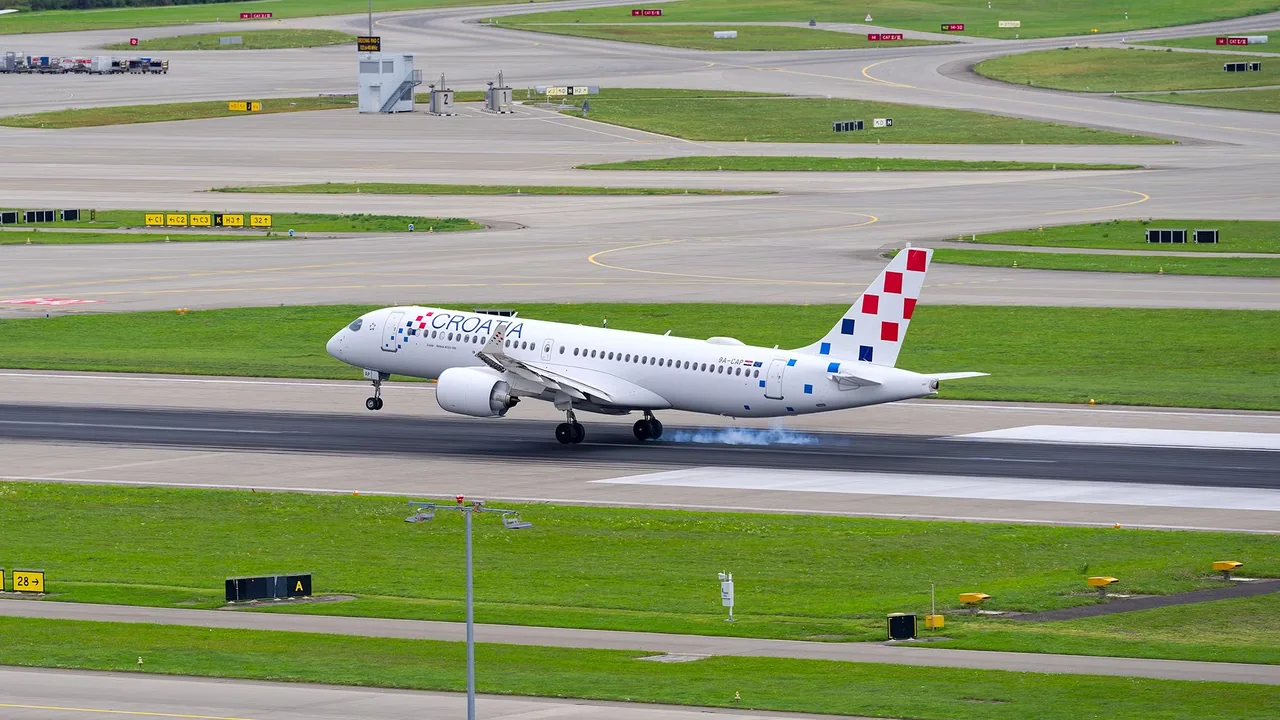
A Croatia Airlines Airbus A220 suffered a dramatic runway excursion on Saturday at Split Airport after executing a high-speed rejected takeoff. The aircraft, operating Flight OU412 to Frankfurt Airport, accelerated down Runway 23 before veering sharply to the left, exiting the runway and crashing into signs and lights.
The narrowbody eventually came to a halt with no reported injuries among the 135 passengers or crew, although it sustained significant damage, including its left engine cowling. Authorities have launched an investigation into the cause of the aborted takeoff, which is expected to shed light on what led to this critical moment in flight.
The incident occurred as the aircraft approached its decision speed, also known as V1, at around 131 knots. This speed varies based on weight, weather, and runway conditions. The A220's maximum recorded ground speed was close to or may have exceeded its typical V1 speed, contributing to the dramatic turn.

Croatia Airlines has confirmed that the flight interrupted its takeoff and is cooperating fully with the investigation. The airline prioritizes passenger safety above all else and will release more information once the initial checks and procedures are complete.
The cause of the rejected takeoff remains unknown at this stage, with speculation pointing to potential engine issues or loss of thrust. Pilots performed a high-speed rejected takeoff as a precautionary measure, which is only done in emergency situations such as engine failures or directional control losses.
Weather conditions may have played a role, with significant crosswind gusts reported at the airport. However, it's unclear whether these gusts contributed to the initial loss of directional control or exacerbated the aircraft's sharp turn towards the left.

Operations at Split Airport were temporarily halted while emergency services attended to the incident. The airport has since reopened, and normal flight operations have resumed.
The incident serves as a reminder of the importance of thorough maintenance checks and pilot training in preventing such accidents. As the investigation unfolds, it will be crucial to identify the root cause of this event and implement measures to prevent similar incidents in the future.
The incident highlights the importance of pilot training and aircraft maintenance in preventing such accidents.