
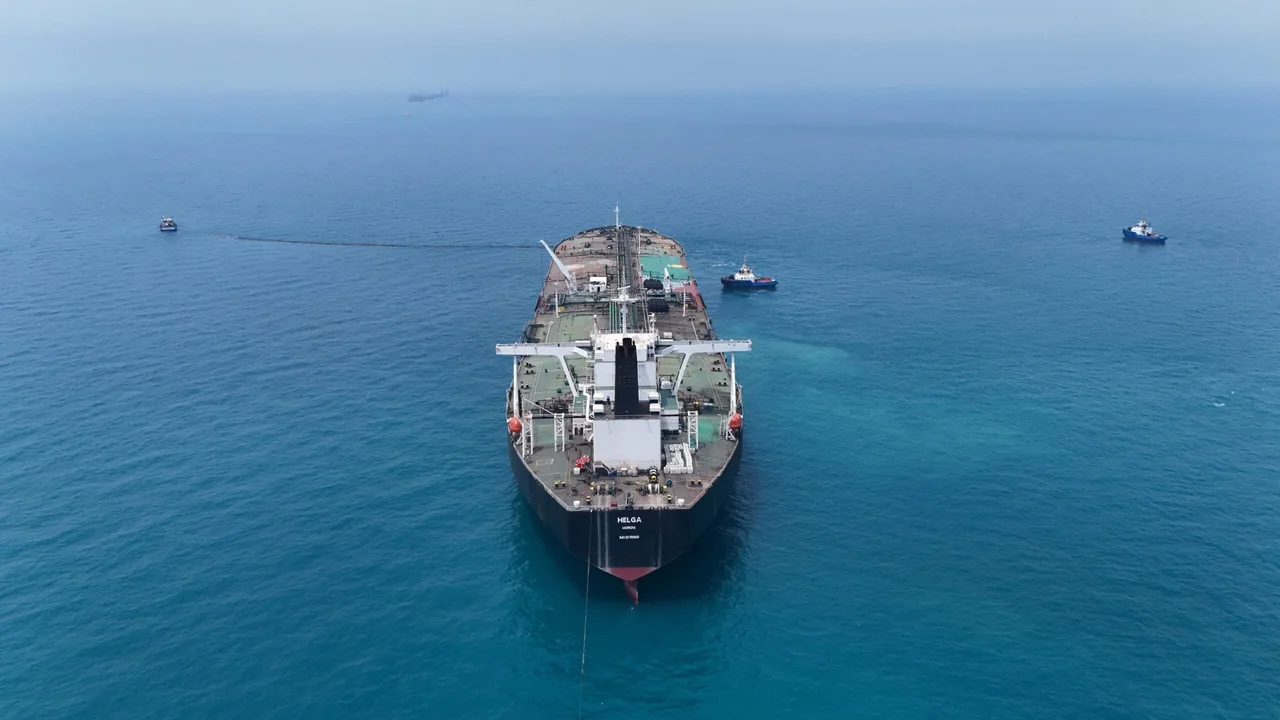
The Iraqi government has announced a modest increase in oil exports through the Strait of Hormuz, with 10 million barrels shipped in April, down from around 93 million before the Iran war. This decrease is attributed to the closure of the strategic waterway due to tensions between Iran and its neighbors. The reduced exports have led to sharp increases in oil prices globally, affecting economies and markets worldwide.
The closure of the Strait of Hormuz has curtailed oil exports from key producers such as Saudi Arabia, the UAE, Kuwait, and Iraq, sending shockwaves through the energy sector. This disruption has resulted in higher oil prices, posing challenges for consumers and businesses alike. As a result, countries are exploring alternative routes and strategies to mitigate the impact of this closure.
Iraq's new oil minister, Basim Mohammed, attributed the low exports to the lack of insurance coverage for tankers entering the Strait of Hormuz. He emphasized that the country is working to increase its oil production and export capacity through various initiatives. Iraq currently produces 1.4 million barrels per day, with plans to boost this figure in the near future.
The Iraqi government has resumed crude exports through the Kirkuk-Ceyhan oil pipeline, which was halted earlier due to disagreements between Baghdad and the Kurdistan Regional Government. The resumption of these exports marks an important step towards increasing Iraq's oil production and export capacity.
Baghdad is also in talks with Ankara on a new cooperation agreement covering upstream and downstream projects. This deal aims to expand on previous agreements, focusing on crude exports. The Iraqi government hopes that this partnership will help boost the country's oil production and export capacity.
The Iraqi government has expressed interest in collaborating with US companies such as Chevron, ExxonMobil, and Halliburton on developing oil and gas projects. These partnerships are seen as crucial in securing significant revenues for Iraq.
Iraq plans to engage with OPEC to boost its production and export capacity. The country aims to reach a production capacity of 5 million barrels per day through this dialogue. This move is aimed at increasing the country's financial revenues and improving its economic stability.
The Iraqi government has reaffirmed its commitment to OPEC and OPEC+, rejecting any intention to leave these organizations. Baghdad sees the value in these groups, which help ensure stable and acceptable oil prices.
As the global energy landscape continues to evolve, countries are adapting to new challenges and opportunities. The Strait of Hormuz closure serves as a reminder of the importance of diversifying energy sources and exploring alternative routes for oil exports.
The Strait of Hormuz closure has significant implications for global oil markets and economies.