

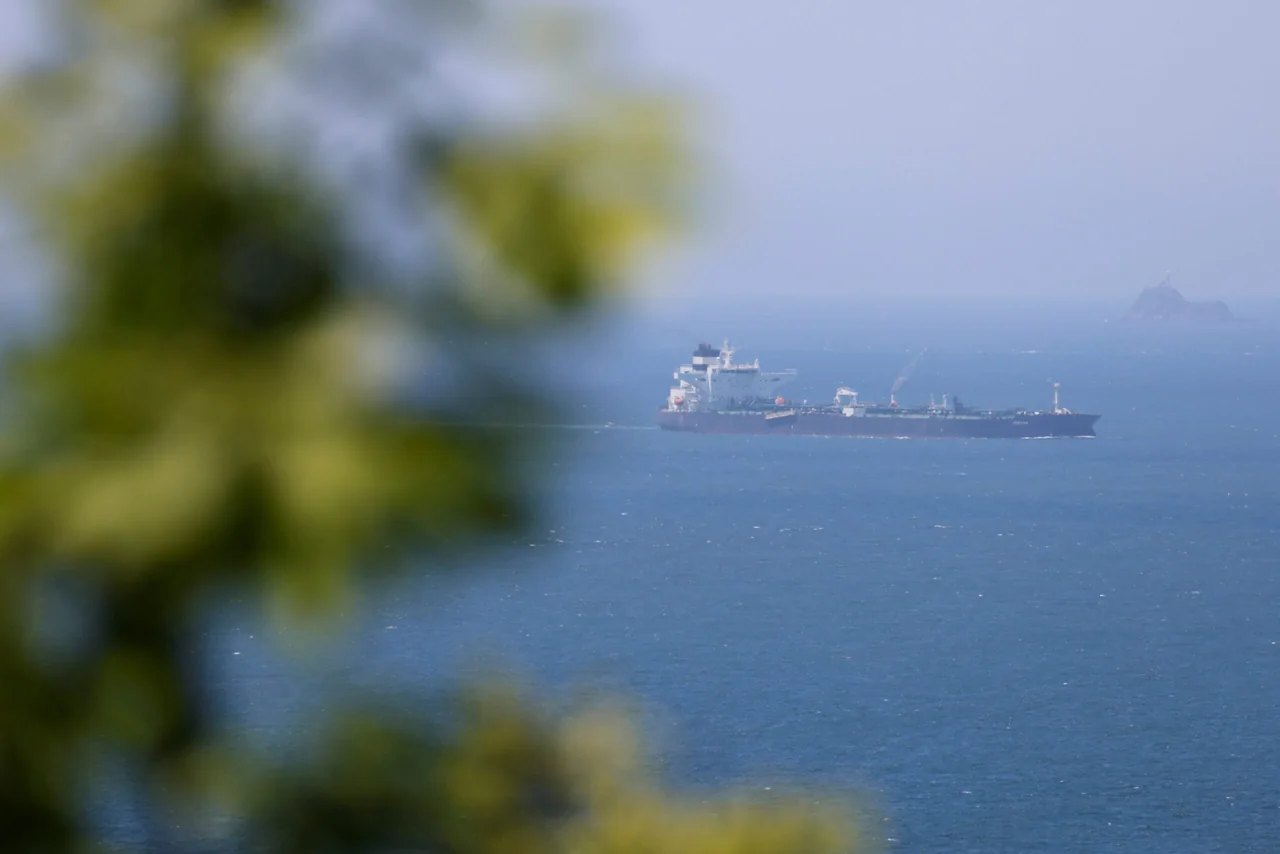
Iran has published a new definition of its maritime zone in the Strait of Hormuz, which appears to be the clearest geographic definition yet. The Persian Gulf Strait Authority (PGSA) claims authority over the area extending from the line connecting Kuh Mobarak in Iran and the south of Fujairah in the UAE in the east of the strait to the line connecting the end of Qeshm Island in Iran and Umm al-Qaiwain in the UAE in the west of the strait.
The statement effectively describes a corridor spanning much of the Strait itself and adjacent approaches between Iran and the United Arab Emirates. This move escalates Tehran's effort to formalize a permission-based transit regime through one of the world's most critical shipping chokepoints.
An accompanying map published by the PGSA appeared to depict broad areas of the Persian Gulf and Gulf of Oman under what it described as Iranian 'armed forces oversight,' extending well beyond the narrow traffic separation scheme traditionally used by international shipping.
The group added that vessels operating on frequencies within the area 'require coordination with the Persian Gulf Waterway Management and a permit from this entity' in order to pass through the Strait. This requirement highlights the need for greater cooperation and communication between Iran and the international shipping community.
The latest declaration marks another step in Iran's increasingly public effort to impose direct administrative control over commercial navigation through Hormuz amid the ongoing U.S.-Israel-Iran conflict and the collapse of normal shipping traffic in the region.
New industry guidance issued this month by major shipping organizations warned that operating conditions in and around Hormuz remain highly unstable and potentially dangerous even if traffic resumes. The guidance highlighted several threats including GNSS jamming and spoofing, AIS manipulation, unmanned surface vessel attacks, limpet mines, missile and drone strikes, errant sea mines near the traffic separation scheme, and 'extreme congestion traffic conditions' that could rapidly develop.
The PGSA first emerged publicly earlier this month when it launched an official account on X claiming to serve as the 'legal entity and representative authority of the Islamic Republic of Iran for managing the passage and transit through the Strait of Hormuz.' This move suggests a growing level of confidence in Iran's ability to manage maritime traffic in the region.
Previous reporting suggests that shipowners had been instructed to contact the PGSA directly to seek authorization for transits and requested to supply detailed operational information. The need for greater transparency and cooperation between Iran and the international shipping community remains a pressing concern.
The latest declaration marks another step in Iran's effort to impose direct administrative control over commercial navigation through Hormuz.