

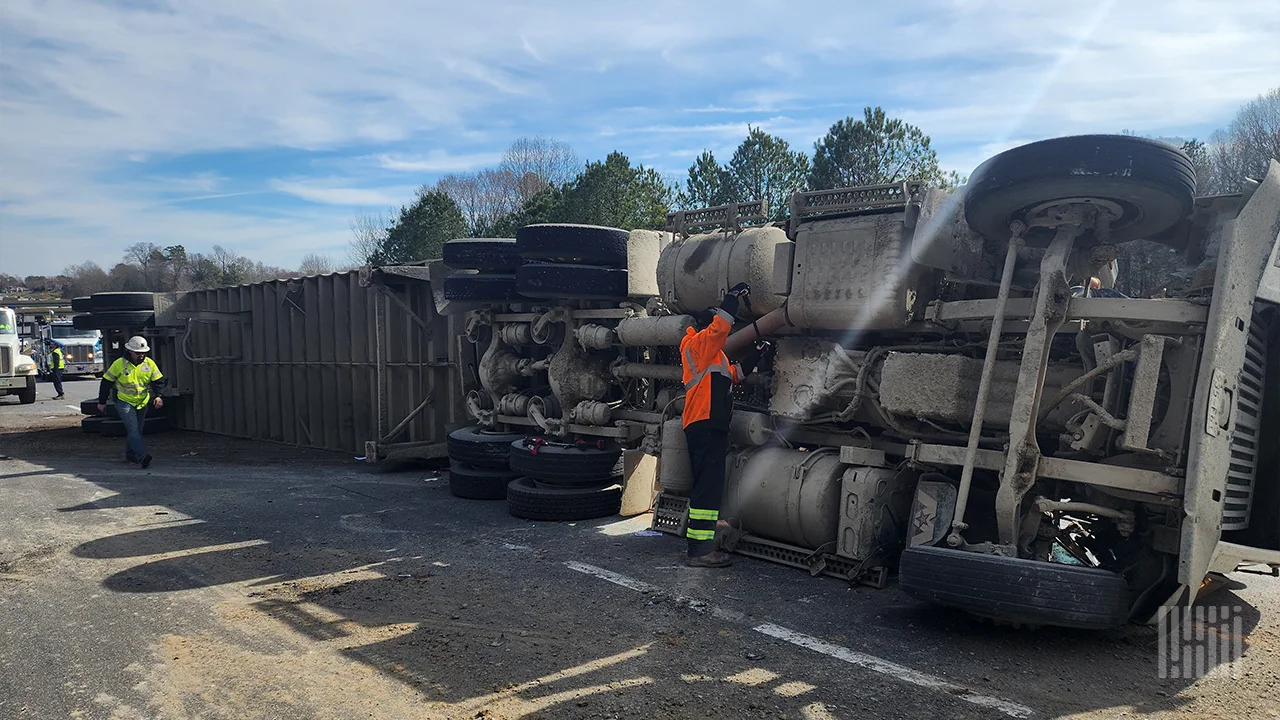
The commercial auto insurance market is facing its fourteenth consecutive year of underwriting losses, with the combined ratio finishing at 107.2 in 2024.
This means that for every $1.00 collected in premiums, insurers paid out $1.07 in claims and expenses.
The industry's response to these losses has been to raise rates, which has led to a surge in trucking insurance premiums.

The average annual increase in trucking insurance premiums between 2017 and 2025 was 8.3 percent, more than double the general inflation rate.
This increase is largely due to liability premiums, which climbed nearly 38 percent between 2015 and 2024, reaching a record 10.2 cents per mile.
The cost of excess layer insurance for heavy-duty trucks also increased significantly during this period.
The industry's response to the trucking crisis has been to point to various factors such as social inflation, third-party litigation funding, and the rise of non-domiciled individuals as contributing causes.
However, these factors are not the whole story, and the industry's own decisions over the past decade have played a significant role in creating the risk pool it is now facing.
The new entrant process for commercial trucking companies has become increasingly lax, with many insurers offering quick purchase options and instant pricing without requiring underwriters to review applications.
This has led to a situation where non-domiciled individuals with no license or experience can get instantly underwritten for less than what legitimate insurance actually costs.
The result of this laxity is predictable: the trucking crisis deepens, with record losses and rising premiums.
The industry must take responsibility for its own decisions and work towards creating a more sustainable risk pool.
Ultimately, the solution to the trucking crisis lies in finding a balance between affordability and sustainability.
The industry's response to these losses has been to raise rates, which has led to a surge in trucking insurance premiums.